








![Hon. Festus Keyamo SAN arrives MMIA past 11:50 p.m. Feb 23 to lead oversight of Terminal 1 fire. Joined FAAN MD & team actively managing situation. Directed morning inspection Tuesday to guide restoration & confirm safety standards. Reaffirmed focus on passenger safety. Story: [link] #KeyamoMMIA #FireIncident #FAAN](https://fullcliphq.com/wp-content/uploads/2026/02/mym-150x150.jpg "MMIA Fire: Keyamo Inspects Lagos Airport After Terminal 1 Blaze Disrupts Flights")






















































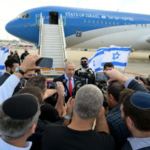





















































































































































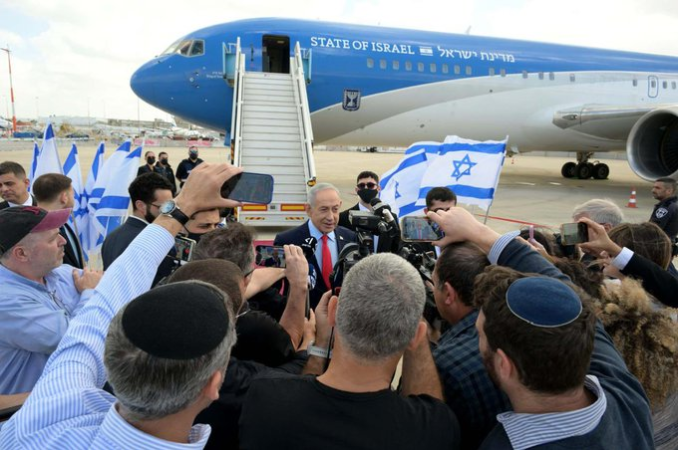
Israeli Prime Minister Benjamin Netanyahu arrived in Washington, D.C., on the evening of February 10, 2026, for a high-stakes White House meeting with President Donald Trump scheduled for February 11.
The visit, Netanyahu’s seventh face-to-face encounter with Trump since the start of Trump’s second term in early 2025 (or sixth on U.S. soil, per varying official counts), was advanced from its original mid-February date amid urgent concerns over the direction of U.S.-Iran nuclear negotiations.
Netanyahu’s motorcade, provided with extensive Secret Service protection, traversed the capital under extraordinary security measures. Authorities fully closed Interstate 695W, deployed a large convoy of armored vehicles, and maintained two helicopters overhead — arrangements typically reserved for the U.S. president himself. The dramatic nighttime arrival, captured in widely circulated drone footage, underscored heightened threat perceptions surrounding the Israeli leader’s presence on U.S. soil following a year of intense regional conflict.
Before departing Israel aboard the “Wing of Zion” government aircraft, Netanyahu stated that Iran would be the “first and foremost” item on the agenda. He emphasized his intent to present Trump with Israel’s “principles” for any negotiations with Tehran, principles he described as vital not only for Israeli security but for broader regional and global stability. Reports indicate Netanyahu plans to advocate for stringent terms, including:
-
Limits on Iran’s ballistic missile range (potentially to 300 km).
-
Complete dismantlement of key nuclear infrastructure.
-
Verifiable oversight mechanisms and “anywhere, anytime” inspections.
-
Curbs on support for proxy groups such as Hezbollah, the Houthis, and Hamas.
The timing of the trip follows recent indirect U.S.-Iran discussions in Oman, which both sides have signaled could lead to follow-on talks. Israeli officials have expressed apprehension that a potential agreement might fall short of Israel’s red lines, prompting preparations for military contingencies – including possible strikes – if diplomacy fails. Netanyahu has repeatedly framed the negotiations as a pivotal moment, with Trump publicly noting that the Israeli prime minister “wants a good deal” while warning Tehran that “something very tough” lies ahead if a deal is not reached.
Netanyahu’s frequent Washington trips highlight the unusually close coordination between the two leaders on Middle East policy. The visit also includes meetings with senior administration figures, such as special envoy Steve Witkoff and Strategic Affairs Minister Ron Dermer, before the main Oval Office session. Netanyahu is expected to return to Israel by early Friday, February 13.
The arrival has drawn significant attention online, with footage of the motorcade sparking debates over security protocols, resource allocation in the capital, and the broader implications of U.S.-Israel alignment amid evolving Iran diplomacy.