











![Hon. Festus Keyamo SAN arrives MMIA past 11:50 p.m. Feb 23 to lead oversight of Terminal 1 fire. Joined FAAN MD & team actively managing situation. Directed morning inspection Tuesday to guide restoration & confirm safety standards. Reaffirmed focus on passenger safety. Story: [link] #KeyamoMMIA #FireIncident #FAAN](https://fullcliphq.com/wp-content/uploads/2026/02/mym-150x150.jpg "MMIA Fire: Keyamo Inspects Lagos Airport After Terminal 1 Blaze Disrupts Flights")


























































































































































































































































































































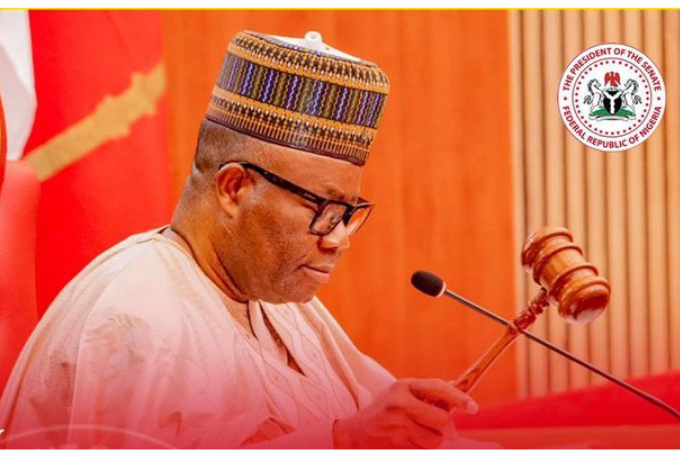
The Nigerian Senate on Wednesday approved amendments to the Electoral Act 2022, introducing stricter penalties for vote-buying and shorter timelines for election notices and candidate lists, but rejected proposals to make real-time electronic transmission of polling unit results to the Independent National Electoral Commission’s (INEC) IReV portal mandatory.
The decision has drawn sharp criticism from opposition parties, civil society groups, and prominent figures who argue it weakens electoral transparency ahead of the 2027 general elections.
The amended bill retains the existing provision allowing INEC to prescribe the method of result transmission, rather than mandating immediate uploads from polling units. Lawmakers also rejected the introduction of downloadable QR-coded voter cards, opting to maintain physical Permanent Voter Cards (PVCs) verified through the Bimodal Voter Accreditation System (BVAS).
Legislative Justification and Defense
Senate President Godswill Akpabio defended the outcome, stating that the amendments preserve the framework successfully used in previous elections while strengthening enforcement against electoral offenses. He highlighted the increased fine for vote-buying — raised to N5 million – and compressed timelines for key processes as measures to enhance credibility and efficiency.
The amendments followed extensive debate and committee review. Proponents of mandatory IReV uploads argued that real-time transmission would curb result alteration between polling units and collation centers, a persistent allegation in past elections. Critics of the rejection, including former Vice President Atiku Abubakar and election observers, described the decision as a setback for democratic consolidation, accusing the National Assembly of prioritizing political interests over public demand for verifiable elections.
Opposition and Civil Society Reaction
A faction of the Peoples Democratic Party (PDP) issued a strongly worded statement condemning the rejection of electronic transmission as “shameful and unfortunate.” National Publicity Secretary Comrade Ini Ememobong stated:
“This rejection is a clear indication that the National Assembly is not willing or ready to legislate for electoral sanctity and democratic consolidation. This is indeed a sad day for electoral democracy.”
The party called on lawmakers to reconsider and pass mandatory transmission to restore public confidence and reduce voter apathy.
Civil society organizations and election observers expressed disappointment, arguing that mandatory electronic transmission would significantly reduce opportunities for manipulation and boost transparency. Activists pointed to public demand for stronger safeguards, especially after controversies in the 2023 general elections.
INEC Context and Next Steps
The Senate’s position aligns with INEC’s existing guidelines, which already permit but do not compel real-time uploads. INEC has maintained that its current system – combining BVAS accreditation with manual collation and optional IReV uploads – balances technology with practical realities in Nigeria’s diverse terrain and infrastructure challenges.
The amended bill now heads to the House of Representatives for concurrence. If passed by both chambers and signed into law by President Bola Ahmed Tinubu, the changes will shape the legal framework for the 2027 general elections, local government polls, and future by-elections. The development comes amid ongoing national discourse on electoral integrity, with stakeholders divided on the pace and scope of technological adoption in Nigeria’s voting process.
| Provision | Status | Outcome / Detail |
| Real-Time IReV Uploads | Rejected | Rejects mandatory transmission; INEC retains discretion on the method of result transfer (Clause 60). |
| Vote-Buying Penalty | Approved | Fine increased from ₦2 million to ₦5 million, with a retained two-year imprisonment term (Clause 22). |
| Notice of Election | Approved | Timeline reduced from 360 days to 180 days before the election (Clause 28). |
| Candidate List Submission | Approved | Reduced from 180 days to 90 days before the general election (Clause 29). |
| Voter Identification | Rejected | Rejected downloadable QR-coded cards; Physical PVCs verified via BVAS remain mandatory. |
| Legal Evidence | Struck Out | Removed Clause 142 to prevent “waste of time in court” regarding oral vs. certified document evidence. |