










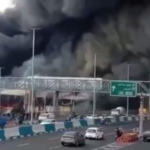
![Hon. Festus Keyamo SAN arrives MMIA past 11:50 p.m. Feb 23 to lead oversight of Terminal 1 fire. Joined FAAN MD & team actively managing situation. Directed morning inspection Tuesday to guide restoration & confirm safety standards. Reaffirmed focus on passenger safety. Story: [link] #KeyamoMMIA #FireIncident #FAAN](https://fullcliphq.com/wp-content/uploads/2026/02/mym-150x150.jpg "MMIA Fire: Keyamo Inspects Lagos Airport After Terminal 1 Blaze Disrupts Flights")


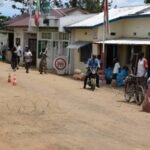



































































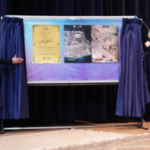






























































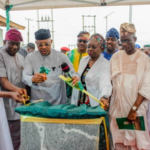






















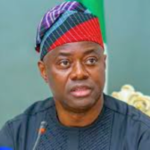


















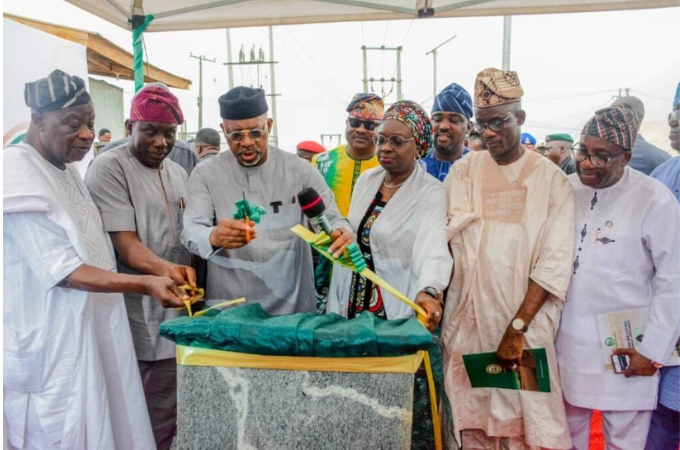
Governor Prince Dapo Abiodun has commissioned the rehabilitated 3.5-kilometre Laderin–Prof. Wole Soyinka Train Station Road in Abeokuta, describing the project as a vital intervention to enhance multimodal transportation and improve access to one of the state’s most important rail assets.
The ceremony, held on January 20, 2026, formed part of ongoing events marking Ogun State’s 50th anniversary since its creation on February 3, 1976, from the former Western State. The golden jubilee celebrations, themed around renewal, progress, and inclusive development under the administration’s “Building Our Future Together” mantra, have positioned accelerated infrastructure delivery as a legacy priority.
Strategic Role of the Road
The Laderin–Prof. Wole Soyinka Train Station Road serves as the primary access corridor to the Prof. Wole Soyinka Train Station, a modern terminal named after Nigeria’s Nobel laureate in Literature and Abeokuta native. The station is part of the Lagos–Kano standard-gauge railway network, linking Ogun directly to Lagos (via Apapa Port), Oyo State, and northern Nigeria. With five operational train stations, Ogun is now one of the most rail-integrated states in Nigeria.
Governor Abiodun emphasized that the rehabilitated road supports thousands of daily commuters, investors, and logistics operators. “Although access roads were not originally provided when the station was constructed, our administration deliberately intervened to rehabilitate this corridor in line with our multimodal transport agenda,” he said. The governor highlighted improved safety, reduced travel time, and enhanced freight capacity as direct benefits, aligning with Ogun’s ambition to become a logistics and industrial hub bridging Lagos and the hinterland.
Broader Infrastructure Push
Abiodun also disclosed progress on the Sagamu Interchange–Papalanto–Opele Road, a 100-kilometre east-west highway designed to ease congestion, open new trade corridors, and reduce travel pressure on Abeokuta. Other highlighted projects include:
- Accelerated reconstruction of the Lagos–Abeokuta Expressway (sections at Itori, Papalanto, Ifo, Ewekoro, and Sango Ota).
- Completion of the first lane of the Atan–Lusada–Agbara Road, with work advancing on the second lane.
- Practical completion of Tai Solarin Road in Ikenne.
Since 2019, the administration reports over 1,600 kilometres of roads constructed or rehabilitated, focusing on industrial access, township regeneration, and regional connectivity. These projects have been credited with attracting investments in manufacturing, agro-processing, and logistics, leveraging Ogun’s proximity to Lagos and its growing rail infrastructure.
Public Reaction
Reactions to the commissioning and the promise of 20 more roads have been mixed. Supporters praised the focus on strategic connectivity, describing the developments as evidence of visible progress compared to previous administrations. Online commentary highlighted improvements on major entry corridors into Ogun State.
Critics, however, pointed to perceived uneven distribution of projects. Residents in underserved areas such as Imeko and Sango Ota lamented poor township roads that continue to affect daily life and commerce. Some referenced recent controversies, including the brief detention of Pastor Kayode Olawoye by the Department of State Services (DSS) after protests over road conditions—though he was released following public outcry. These incidents have fueled calls for more equitable infrastructure coverage across rural and semi-urban zones.
Looking Ahead
As Ogun State continues its 50th anniversary observances throughout 2026, the Abiodun administration has positioned infrastructure—particularly roads and rail linkages—as central to its legacy of renewal and competitiveness. Observers will monitor whether the promised 20 additional road inaugurations address longstanding grievances in less prominent communities, balancing the state’s ambition for industrial growth with the everyday needs of its citizens.
![Hon. Festus Keyamo SAN arrives MMIA past 11:50 p.m. Feb 23 to lead oversight of Terminal 1 fire. Joined FAAN MD & team actively managing situation. Directed morning inspection Tuesday to guide restoration & confirm safety standards. Reaffirmed focus on passenger safety. Story: [link] #KeyamoMMIA #FireIncident #FAAN](https://fullcliphq.com/wp-content/uploads/2026/02/mym.jpg)