






![Hon. Festus Keyamo SAN arrives MMIA past 11:50 p.m. Feb 23 to lead oversight of Terminal 1 fire. Joined FAAN MD & team actively managing situation. Directed morning inspection Tuesday to guide restoration & confirm safety standards. Reaffirmed focus on passenger safety. Story: [link] #KeyamoMMIA #FireIncident #FAAN](https://fullcliphq.com/wp-content/uploads/2026/02/mym-150x150.jpg "MMIA Fire: Keyamo Inspects Lagos Airport After Terminal 1 Blaze Disrupts Flights")








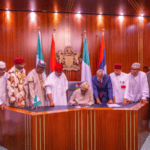


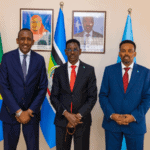










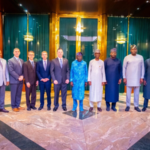


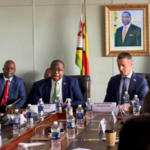
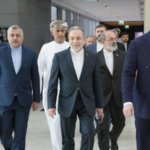

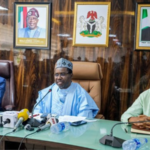




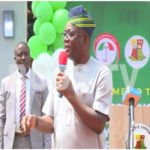

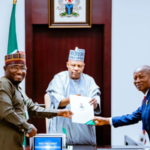













































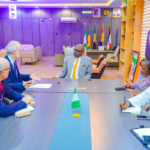


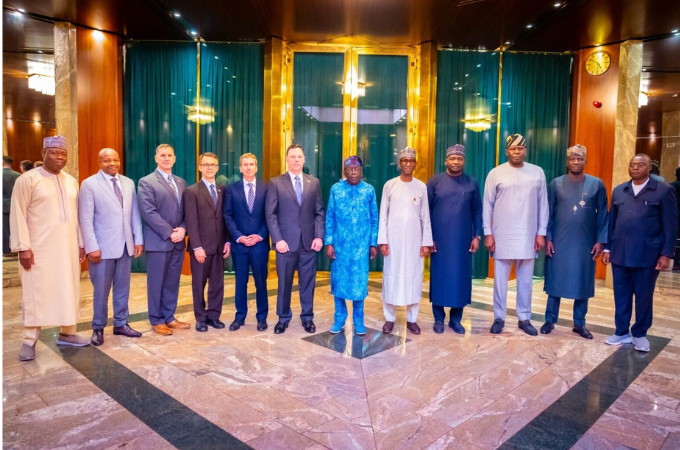
President Bola Ahmed Tinubu on Sunday, February 8, 2026, received a high-level delegation from the United States Africa Command (AFRICOM) at the State House in Abuja.
The meeting is widely seen as a key step in strengthening bilateral security cooperation amid Nigeria’s persistent fight against terrorism, banditry, and other transnational threats.
The delegation was led by AFRICOM Commander General Dagvin R.M. Anderson, who assumed command in August 2025. Accompanying him were U.S. Embassy Chargé d’Affaires Keith Heffern, AFRICOM Senior Foreign Policy Adviser Ambassador Peter Vrooman, and Command Sergeant Major Garric M. Banfield, the Command Senior Enlisted Leader.
President Tinubu was joined by Nigeria’s top security leadership, emphasizing the strategic weight of the discussions:
-
Mallam Nuhu Ribadu, National Security Adviser
-
General Christopher Musa (Rtd), Minister of Defence
-
General Olufemi Oluyede, Chief of Defence Staff
-
Lieutenant-General Waidi Shaibu, Chief of Army Staff
-
Lieutenant-General Emmanuel Uandiandeye, Chief of Defence Intelligence
-
Mohammed Mohammed, Director-General of the NIA
-
Tosin Ajayi, Director-General of the DSS
Details on U.S. Military Deployment to Nigeria
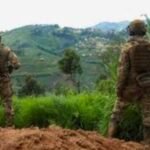
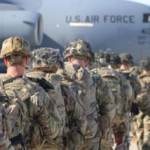
The Abuja meeting follows the recent confirmation by AFRICOM of a small team of U.S. military personnel deployed to Nigeria.
-
Scope: General Anderson stated in early February 2026 that the team provides “unique capabilities” to augment operations against Boko Haram/ISWAP in the Lake Chad Basin and banditry in the Northwest.
-
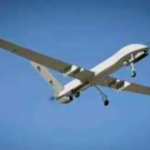
Nature: The deployment is non-combat, focusing on intelligence fusion, advisory support, and persistent ISR (Intelligence, Surveillance, and Reconnaissance).
-
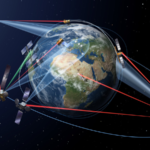
Tactical Support: Support includes the use of U.S. satellite systems and signal interception to map leadership movements and logistics corridors.
AFRICOM’s Pivot: From the Sahel to Nigeria
Nigeria’s role has become increasingly pivotal following AFRICOM’s forced exits from neighboring Sahelian countries.
-
Niger: The U.S. completed its withdrawal from Air Base 101 in Agadez in September 2025 after the junta terminated security agreements.
-
Mali & Burkina Faso: Security cooperation ended as these nations formed the Alliance of Sahel States (AES) and pivoted toward Russian “Africa Corps” support.
-
Strategic Shift: Washington is now focusing on reliable democratic partners like Nigeria to maintain regional surveillance depth and counter the spread of the Islamic State Sahel Province (ISSP).
Context and Broader Security Ties
The engagement comes during a period of “aggressive” U.S. targeting of ISIS-linked militants on the continent under the Trump administration. This includes the December 25, 2025, airstrikes in Sokoto State. For the Tinubu administration, this partnership offers a “capability asymmetry”—tools such as high-end financial tracking and geospatial data that Nigeria cannot easily sustain at scale.
![Hon. Festus Keyamo SAN arrives MMIA past 11:50 p.m. Feb 23 to lead oversight of Terminal 1 fire. Joined FAAN MD & team actively managing situation. Directed morning inspection Tuesday to guide restoration & confirm safety standards. Reaffirmed focus on passenger safety. Story: [link] #KeyamoMMIA #FireIncident #FAAN](https://fullcliphq.com/wp-content/uploads/2026/02/mym.jpg)