






![Hon. Festus Keyamo SAN arrives MMIA past 11:50 p.m. Feb 23 to lead oversight of Terminal 1 fire. Joined FAAN MD & team actively managing situation. Directed morning inspection Tuesday to guide restoration & confirm safety standards. Reaffirmed focus on passenger safety. Story: [link] #KeyamoMMIA #FireIncident #FAAN](https://fullcliphq.com/wp-content/uploads/2026/02/mym-150x150.jpg "MMIA Fire: Keyamo Inspects Lagos Airport After Terminal 1 Blaze Disrupts Flights")























































































































































































































































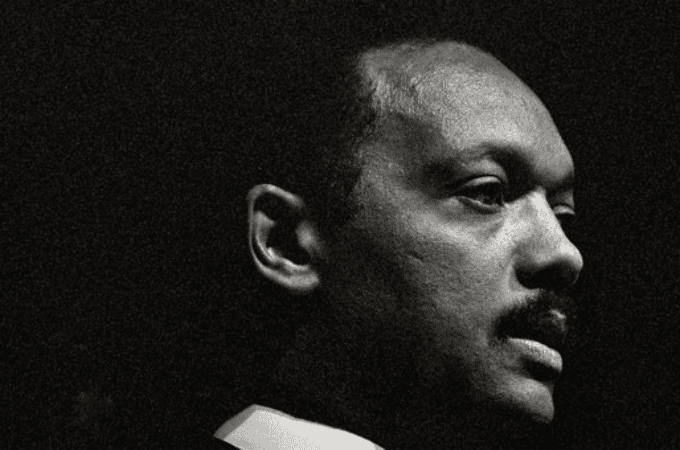
Rev. Jesse Jackson, the influential civil rights activist, Baptist minister, and trailblazing two-time Democratic presidential candidate, passed away at age 84, his family has announced.
The Jackson family issued a statement honoring him as a dedicated “servant leader” who devoted himself not only to his immediate relatives but to the marginalized, silenced, and overlooked people worldwide. They acknowledged the deep connection he forged with millions and asked that his memory be honored by carrying forward the fight for justice, fairness, and compassion.
Rev. Al Sharpton, a longtime colleague and friend, mourned the loss of “one of the greatest moral voices America has ever produced.” Sharpton praised Jackson’s lifelong presence at the forefront of dignity struggles – from international campaigns against apartheid to domestic fights for equity. “His voice carried weight in halls of power and prison cells alike. His presence transformed spaces. His faith remained unshaken,” Sharpton said.
No immediate cause of death was released. The family stated that Jackson died peacefully surrounded by loved ones. He had lived with progressive supranuclear palsy (PSP) for over a decade, a rare neurodegenerative condition that progressively impairs movement, balance, swallowing, and eye control. He publicly disclosed a Parkinson’s disease diagnosis in 2017 and had received outpatient treatment at Northwestern Medicine in Chicago.
Early Life and Civil Rights Leadership
Born in Greenville, South Carolina, Jackson grew up amid segregation. He earned a sociology degree from North Carolina A&T State University and pursued divinity studies at Chicago Theological Seminary. He became an organizer with the Congress of Racial Equality and joined the Southern Christian Leadership Conference (SCLC) under Dr. Martin Luther King Jr., taking part in the 1965 Selma-to-Montgomery march.
Jackson earned King’s admiration for leading Operation Breadbasket, an SCLC economic empowerment initiative for Black communities. After King’s assassination in 1968 (with Jackson present at the Lorraine Motel), he founded People United to Save Humanity (PUSH) in 1971 after leaving SCLC. PUSH expanded into economic advocacy, political activism, and social programs, later merging with the National Rainbow Coalition in 1996 to form Rainbow/PUSH Coalition.
1984 Presidential Campaign and Controversies
Jackson’s 1984 run for the Democratic presidential nomination marked a historic moment as the first serious Black candidacy at the national level. He secured more than 18% of the primary vote and won several contests, forcing the party to confront issues like poverty, voting rights, and affirmative action.
The campaign faced controversy when Jackson used a derogatory term for Jewish people and referred to New York City as “Hymietown” in a private conversation reported by the Washington Post. He initially denied the remarks, then admitted them and offered a heartfelt apology, acknowledging the harm caused. The incident strained relations with Jewish leaders and some Democrats but did not derail his broader message of economic justice and inclusion.
1988 Campaign and Lasting Impact
In 1988, Jackson expanded his reach, winning 11 primaries and caucuses and finishing second in delegates. His campaigns challenged party orthodoxy and elevated discussions on social programs, inequality, and representation.
Humanitarian Efforts and Later Years
Jackson played a key role in securing the release of detained Americans, including:
-
A U.S. Navy pilot from Syria in 1984
-
Americans in Cuba in 1984
-
Individuals in Iraq in 1990
-
Detainees in Gambia in 2012
President Bill Clinton awarded him the Presidential Medal of Freedom in 2000 for these efforts. He served as one of Washington, D.C.’s “shadow senators” in 1991, advocating for statehood. In later years, he remained a vocal critic of various administrations and endorsed Bernie Sanders in 2020.
Legacy and Memorial Plans
Jackson’s family said public observances will be held in Chicago, with additional celebration-of-life events to be announced by Rainbow/PUSH Coalition. He is survived by his wife Jacqueline and their five children, including former U.S. Representative Jesse Jackson Jr.
His passing closes a chapter on one of the most impactful voices in American civil rights, politics, and global humanitarian work.