












![Hon. Festus Keyamo SAN arrives MMIA past 11:50 p.m. Feb 23 to lead oversight of Terminal 1 fire. Joined FAAN MD & team actively managing situation. Directed morning inspection Tuesday to guide restoration & confirm safety standards. Reaffirmed focus on passenger safety. Story: [link] #KeyamoMMIA #FireIncident #FAAN](https://fullcliphq.com/wp-content/uploads/2026/02/mym-150x150.jpg "MMIA Fire: Keyamo Inspects Lagos Airport After Terminal 1 Blaze Disrupts Flights")











































































































































































































































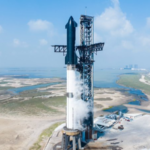


































































































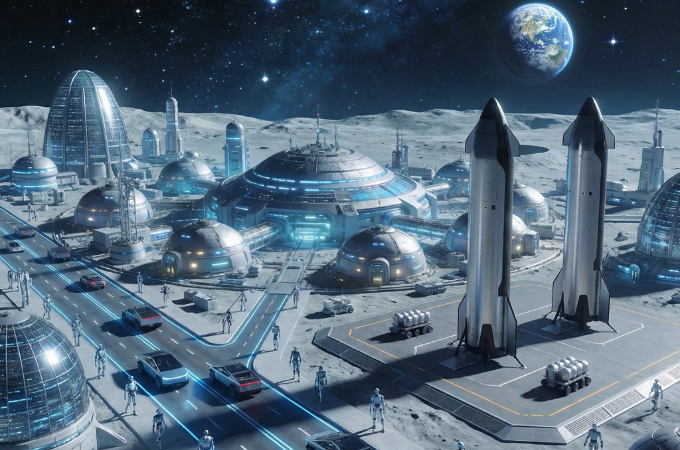
Elon Musk has announced that SpaceX is now prioritizing the development of a self-sustaining, “self-growing” city on the Moon over its long-standing Mars colonization goal.
The shift, revealed in a series of posts on X on February 8, 2026, emphasizes the need for a rapid off-world foothold to safeguard humanity against potential Earth-based catastrophes.
“For those unaware, SpaceX has already shifted focus to building a self-growing city on the Moon, as we can potentially achieve that in less than 10 years, whereas Mars would take 20+ years,” Musk posted. He stressed that the ultimate mission – extending consciousness and life beyond Earth – remains unchanged, but the Moon offers a faster, more practical route due to orbital mechanics.
Launches to Mars are limited by planetary alignments that occur only every 26 months, with transit times of about six months. In contrast, Moon missions can launch roughly every 10 days, with a journey of just two to three days. This allows for dramatically faster iteration, testing, and scaling — essential for turning an initial outpost into an expanding, independent settlement capable of growing without constant Earth resupply.
“The overriding priority is securing the future of civilization and the Moon is faster,” Musk explained in follow-up posts. He acknowledged that a self-sustaining Mars city remains the long-term objective, with initial Mars construction efforts expected to begin in 5–7 years and reach full scale in 20–30 years. However, the lunar-first strategy is driven by existential risk mitigation: a lunar civilization could survive even if Earth-based launches cease due to disaster.
The announcement has generated intense discussion online. Space commentator @XFreeze amplified the excitement in a widely shared thread on February 9, arguing that a lunar base could arrive much sooner than skeptics expect. Citing Musk’s post, @XFreeze highlighted synergies across Musk’s companies:
-
Starship’s massive payload capacity and full reusability, enabling unprecedented tonnage to the lunar surface.
-
Tesla Optimus humanoid robots for autonomous construction, reducing the need for human crews in hazardous early phases.
-
Tesla solar panels for scalable power generation in the Moon’s harsh environment.
-
Adapted Cybertrucks or similar vehicles for surface mobility and transport.
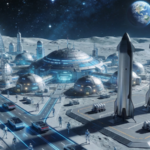
“When you factor in all the pieces working together, a Moon base isn’t decades away… it’s happening sooner than we think,” @XFreeze wrote. The thread included conceptual renderings of domed lunar habitats, robotic workers, and integrated infrastructure, fueling viral optimism about humanity’s multi-planetary future.
Major outlets – Reuters, Scientific American, Fox Business, and others — quickly covered the pivot as a strategic recalibration. Some noted the irony: Musk had previously downplayed the Moon as a “distraction” from Mars. Now, he frames it as the critical first step toward broader solar system expansion, potentially including lunar resource utilization (like fuel production) or even AI orbital compute facilities to generate revenue that could accelerate Mars efforts.
Skeptics remain, pointing to ongoing Starship development challenges, radiation exposure concerns, and the absence of solved logistics for long-term lunar habitation. Musk has addressed some critiques, noting that lunar activities might ultimately speed up Mars colonization by building launch infrastructure and cash flow.
As SpaceX ramps up Starship flight tests and prepares for NASA’s Artemis missions (where Starship serves as the Human Landing System), this Moon-first pivot could redefine timelines for human expansion beyond Earth. If Musk’s accelerated roadmap holds, the first elements of a permanent lunar presence – potentially including robotic precursors – could emerge within the next few years, marking one of the most transformative chapters in human history.
For now, the stars (and the Moon) feel closer than ever.