






























![Hon. Festus Keyamo SAN arrives MMIA past 11:50 p.m. Feb 23 to lead oversight of Terminal 1 fire. Joined FAAN MD & team actively managing situation. Directed morning inspection Tuesday to guide restoration & confirm safety standards. Reaffirmed focus on passenger safety. Story: [link] #KeyamoMMIA #FireIncident #FAAN](https://fullcliphq.com/wp-content/uploads/2026/02/mym-150x150.jpg "MMIA Fire: Keyamo Inspects Lagos Airport After Terminal 1 Blaze Disrupts Flights")











































































































































































































































































































































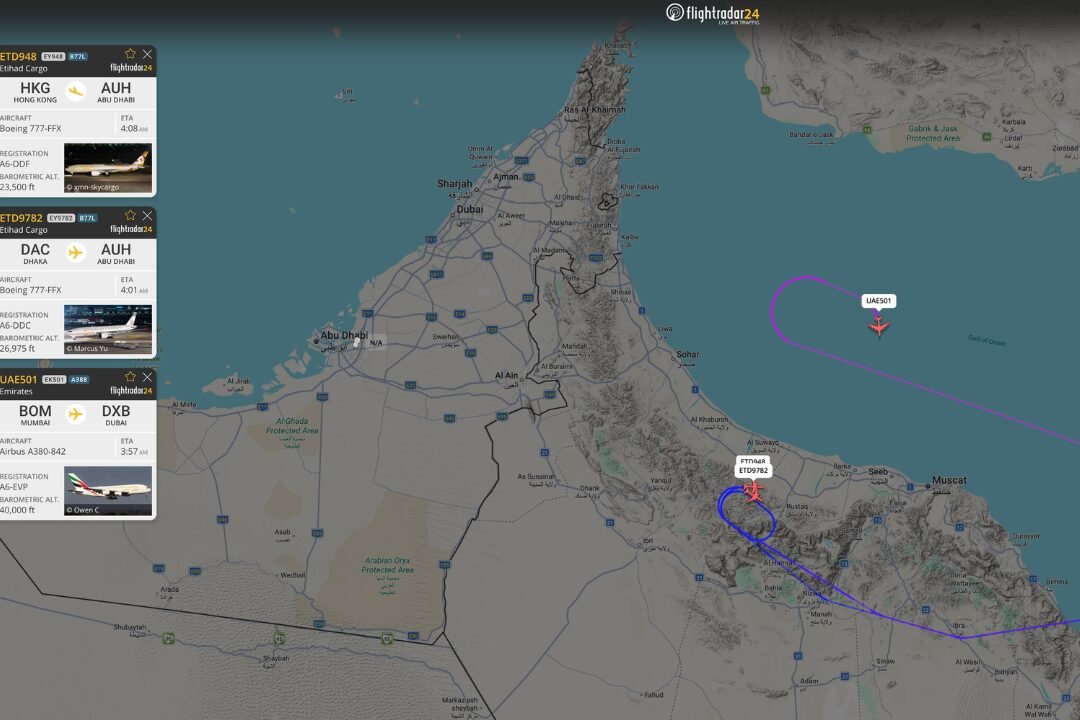
A partial resumption of commercial flights in the United Arab Emirates has begun, following three days of widespread cancellations, diversions, and airspace closures triggered by escalating military actions in the region involving the United States, Israel, and Iran.
While a few dozen departures occurred, operations remained inconsistent, with some flights still holding, turning back, or canceling due to persistent security threats.
Etihad Airways operated 12 flights out of Abu Dhabi International Airport on March 2 afternoon local time, including wide-body aircraft to destinations in Europe, Asia, and Africa. These included services to Amsterdam, Paris, Moscow, Karachi, Mumbai, Islamabad, New Delhi, Riyadh, Jeddah, Dammam, and Cairo. The first passenger-carrying flight since the disruptions – an Etihad Airbus A380 to London Heathrow – departed at 2:39 p.m. local time. Additional arrivals from Islamabad and Riyadh landed late Monday night.
Emirates, based in neighboring Dubai, announced limited operations, with several flights departing Dubai for Indian cities including Mumbai, Chennai, Hyderabad, and Bengaluru. Other carriers such as Saudia, AirSial, Fly Jinnah, Flynas, IndiGo, Royal Jordanian, Flydubai, and Air India utilized UAE airspace for select routes between Saudi Arabia, India, and other points.
Despite these movements, confusion persisted. Etihad stated that all scheduled commercial flights to and from Abu Dhabi remained canceled, with exceptions granted only for repatriation, cargo, or aircraft repositioning subject to strict safety approvals. An Etihad notice advised passengers to check directly with airlines, while the airport website showed conflicting information with some flights available for check-in.
Flight tracking data from Flightradar24 indicated ongoing issues: two Etihad cargo flights bound for Abu Dhabi diverted to Muscat, Oman, early March 3 local time amid reported missile threats. An Emirates Airbus A380 from Mumbai held off the UAE coast before turning back, then performed a double U-turn and landed in Dubai around 3:00 a.m. Flights to Riyadh faced disruptions, with at least six holding or diverting after reports of attacks near the US embassy in the Saudi capital.
Airlines faced operational challenges in resuming services – a Lufthansa Airbus A380 departed Abu Dhabi for Munich with only two pilots aboard after completing scheduled maintenance; the carrier cited restrictions preventing the positioning of required flight attendants and uncertainties around passenger access to the airport for check-in, security, and boarding.
The disruptions stem from airspace closures and heightened risks following coordinated US-Israeli strikes on Iranian targets and Iran’s retaliatory missile and drone attacks across the Persian Gulf. A Nepali national was killed and seven injured by debris from an intercepted Iranian drone near Abu Dhabi airport on Sunday, March 1. UAE airspace had been fully closed earlier, stranding travelers and prompting some wealthy individuals to charter private flights or arrange overland evacuations.
The US State Department issued evacuation advisories for Americans in over a dozen Middle Eastern countries, including the UAE and Saudi Arabia, recommending commercial means where possible. Interest in the resumed flights was high, with over 100,000 people tracking key departures on Flightradar24.
Airlines rerouted operations through alternative corridors, including increased use of Caucasus airspace to bypass restricted zones over over Russia and Iran. Flights from Qatar, Bahrain, and Kuwait remained suspended as of March 2.
The situation reflects the broader impact of regional instability on global aviation, with airlines navigating dynamic threats, airspace restrictions, and safety protocols. While partial reopenings provided some relief for stranded passengers, the fluid security environment continued to cause cancellations, diversions, and uncertainty for travelers in the Gulf region.