
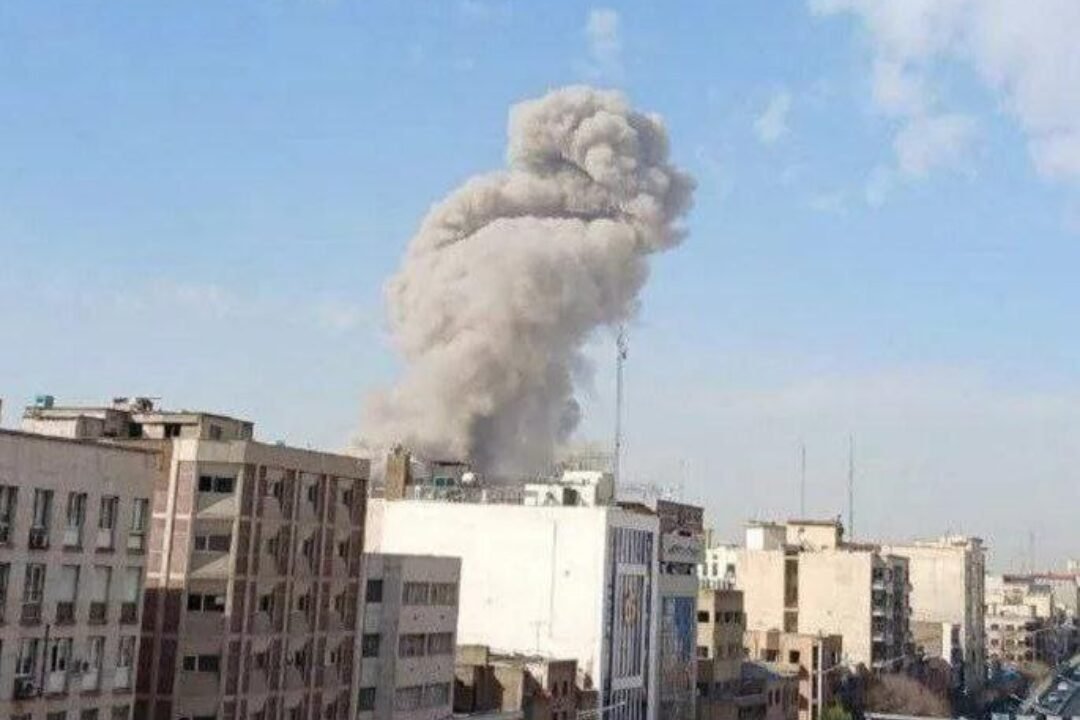
Israel and U.S. Launch “Operation Shield of Judah”: Joint Preemptive Strikes Target Tehran Command Centers and Nuclear Sites
Israeli forces have carried out targeted airstrikes inside Iran, hitting what officials describe as high-value political and leadership-related sites in Tehran.
Defense Minister Israel Katz says the operation was launched to neutralize imminent threats to Israeli security.
According to a BBC source, the office of the Supreme Leader, Ayatollah Ali Khamenei was also hit but he is said to have been away from town.
The strikes occurr as U.S.-Iran tensions reach boiling point. Indirect nuclear negotiations in Geneva had stalled over U.S. demands for deep cuts to enrichment levels, ballistic missile programs, and support for regional proxies including Hezbollah, Hamas, and the Houthis. President Donald Trump had repeatedly warned of military action if no agreement was reached, while a significant U.S. military buildup – including carrier strike groups and additional air assets – remained positioned in the region.
Israeli officials framed the operation as preventive, citing intelligence indicating heightened Iranian readiness, including recent exercises near the Strait of Hormuz. Unlike the broader June 2025 exchanges (which involved U.S. strikes on nuclear sites such as Fordow, Natanz, and Isfahan), initial reports indicate the February 28 action focused primarily on Tehran political infrastructure.
Key reported targets included:
-
Locations near the offices or residence of Supreme Leader Ayatollah Ali Khamenei (status of Khamenei’s presence or direct targeting remains unclear).
-
Sites in central Tehran, including areas around University Street and Jomhouri Avenue.
-
Buildings linked to the presidency and Ministry of Intelligence.
Iranian state media acknowledged explosions in the capital but provided limited details on damage or casualties. Social media footage showed smoke rising over downtown Tehran, with air defenses reportedly active. Iran closed its airspace immediately following the strikes.
Israel declared a nationwide state of emergency, closing schools, non-essential workplaces, and international airspace, while enforcing strict home-front protocols limiting public gatherings. Air raid sirens sounded across the country in anticipation of Iranian missile or drone retaliation. Regional airspace restrictions forced numerous flight diversions.
The strike carries high risk of escalation. Iran has warned of broad retaliation against Israel, U.S. bases in the region, or international shipping if attacked. A response involving ballistic missiles, drones, or proxy actions by Hezbollah or other groups could rapidly widen the conflict. Gulf states face potential indirect threats if Iran targets energy routes or neighboring producers.
Oil markets are on edge. While no confirmed strikes on Iranian production or export facilities (such as Kharg Island or major refineries) have been reported, any disruption to the Strait of Hormuz – through which roughly 20 – 25% of global seaborne oil and LNG passes – could trigger sharp price spikes. Informed observers warn Brent crude could move toward $80+ per barrel in the immediate term if retaliation affects shipping or Gulf output, with more severe shocks possible in a prolonged crisis.
The broader context stems from the June 2025 Israel-Iran war (a 12-day exchange of direct missile strikes), U.S. intervention against Iranian nuclear sites, and a subsequent ceasefire. Iran’s nuclear program remained a core issue, with the IAEA documenting violations and enrichment approaching weapons-grade levels. The Trump administration resumed indirect talks in early 2026 but faced persistent gaps on enrichment, missiles, and proxies.
No official Iranian casualty or damage figures have been released. The situation remains highly volatile, with both sides on high alert. Travelers, businesses, and governments are urged to monitor official statements from Israel, the U.S., Iran, and regional authorities for real-time updates on security and airspace status.
