
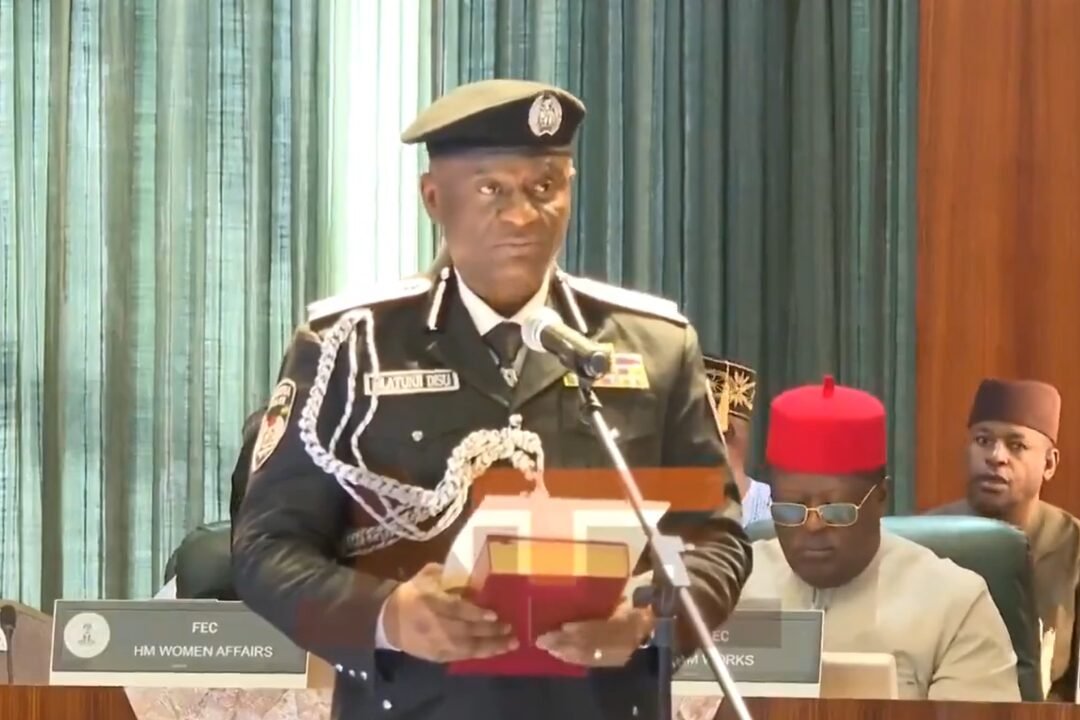
“State Police Is Here to Stay”: IGP Olatunji Disu Employs 8-Man Committee to Blueprint Nigeria’s New Policing Landscape
Inspector-General of Police Olatunji Disu has inaugurated an eight-member committee to examine and propose a framework for state policing in Nigeria, injecting renewed momentum into the long-stalled debate on decentralizing the country’s centralized police structure.
The set up comes against a backdrop of worsening insecurity, elite consensus on reform, and persistent fears that state-controlled police could be abused for political ends.
Speaking at the inauguration in Abuja on March 4, 2026, Disu described the task as “significant and timely,” stressing that Nigeria’s evolving security challenges demand innovative approaches, strategic collaboration, and bold reforms to make policing more responsive to local realities while upholding the rule of law. He assured personnel that the Nigeria Police Force’s constitutional role as the primary national law enforcement institution would remain intact, with federal police increasingly focusing on complex, transnational crimes such as terrorism, organised crime, cybercrime, and trafficking networks that require national coordination.
“By bringing law enforcement closer to the communities, state police institutions can deepen local knowledge of security dynamics and enable quicker and more targeted responses to emerging threats,” Disu said. He urged the committee to study global best practices, examine funding sources, and ensure professionalism, discipline, and integrity in any proposed structure. “The vision we seek is one of synergy, not competition; partnership, not duplication,” he added.
The Committee and Leadership
Disu, who was sworn in as the 23rd IGP on March 4, 2026, following the resignation of Kayode Egbetokun, reaffirmed his support for state police, declaring that the policy “has come to stay.” The committee is led by Professor Olu Ogunsakin as Chairman.
The committee members include:
-
CP Bode Ojajuni (Secretary)
-
DCP Okebechi Agora
-
DCP Suleiman Gulma
-
ACP Ikechukwu Okafor
-
CSP Tolulope Ipinmisho
-
CP Emmanuel Ojukwu (Rtd)
Constitutional and Historical Context
The push for state police has long been caught between constitutional rigidity and political mistrust. Section 214 of the 1999 Constitution (as amended) vests policing exclusively in the Federal Government. Any move to establish state-controlled structures would require a constitutional amendment, needing two-thirds support in the National Assembly and approval from at least 24 state Houses of Assembly.
Just as regional police formations during the First Republic were widely accused of partisanship, critics fear governors could weaponize state police against political rivals. Funding remains another hurdle, with many states already struggling with salary arrears, raising questions about their ability to sustainably finance a police force.
Stakeholder Reactions
Stakeholders offered mixed reactions. Afenifere spokesman Justice Faloye expressed cautious hope but warned against dismissing the committee as potentially an election strategy for 2027. Former PDP Deputy National Chairman Bode George called for safeguards, including independent oversight commissions and guaranteed funding insulated from political interference.
The inauguration signals institutional willingness within the police hierarchy to engage with reform. The committee has been given four weeks to submit its report. Ultimate success, however, depends on constitutional amendment, political trust, and robust safeguards against abuse.
