















































![Hon. Festus Keyamo SAN arrives MMIA past 11:50 p.m. Feb 23 to lead oversight of Terminal 1 fire. Joined FAAN MD & team actively managing situation. Directed morning inspection Tuesday to guide restoration & confirm safety standards. Reaffirmed focus on passenger safety. Story: [link] #KeyamoMMIA #FireIncident #FAAN](https://fullcliphq.com/wp-content/uploads/2026/02/mym-150x150.jpg "MMIA Fire: Keyamo Inspects Lagos Airport After Terminal 1 Blaze Disrupts Flights")













































































































































































































































































































































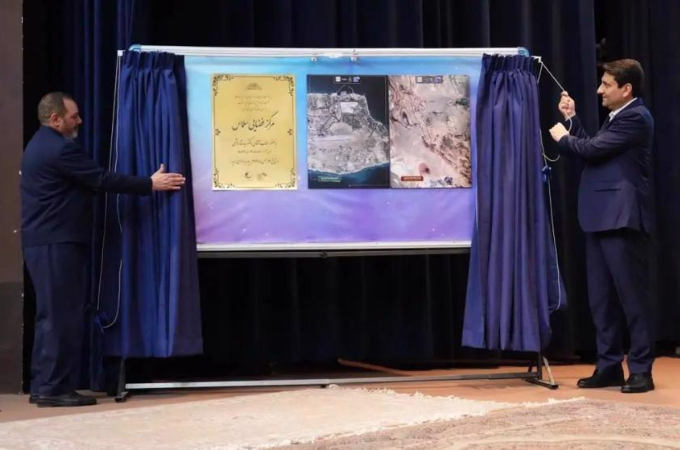
The Iranian Space Agency (ISA) has officially released the first public images from the Paya satellite (also known as Tolou-3) to celebrate National Space Technology Day.
Described as the most advanced Earth observation satellite in Iran’s history, the unveiling took place at a high-profile ceremony in Tehran attended by Minister of ICT Seyed Sattar Hashemi and Defense Minister Brigadier General Aziz Nasirzadeh.
The imagery showcased the satellite’s ability to capture detailed urban infrastructure, agricultural monitoring, and natural resource data, signaling a significant leap in Iran’s indigenous space capabilities.
Paya (Tolou-3): Technical Specifications
Paya is a 150kg mini-satellite, the heaviest ever built and successfully operated by Iran. It marks several “firsts” for the nation’s space program:
-
Imaging Resolution: It features dual-imaging sensors providing 5-meter resolution in panchromatic (black-and-white) and 10-meter in color.
-
AI Enhancement: Through the use of onboard artificial intelligence-based processing, the effective resolution is boosted to approximately 3 meters.
-
Mirror-Based Optics: For the first time, Iran has employed a mirror-based optical system (telescopic) rather than traditional lens cameras, allowing for higher precision and a more compact design.
-
Operational Life: Equipped with a propulsion subsystem for orbital corrections, it is designed for a lifespan of at least three years at an altitude of 500+ km.
The Triple Launch Context
The Paya satellite was launched into orbit on December 28, 2025, from Russia’s Vostochny Cosmodrome aboard a Soyuz-2.1b rocket. It was part of a triple-header mission that also included:
-
Kowsar: A high-resolution imaging satellite (approx. 4m resolution) developed by the private sector.
-
Zafar-2: An Earth-observation satellite with a 15-meter resolution designed for environmental monitoring.
| Feature | Paya (Tolou-3) | Kowsar | Zafar-2 |
| Mass | 150 kg | 30 kg | 113 kg |
| Resolution | 5m (3m w/ AI) | 4m | 15m |
| Primary Use | National Management | Smart Agriculture | Disaster Relief |
Strategic Expansion: Salmas Space Center
During the February 3 ceremony, officials also inaugurated the Salmas Space Center in West Azerbaijan province. This new facility will serve as a primary ground station for receiving and processing data from Paya and future constellations, reducing Iran’s reliance on foreign ground infrastructure.