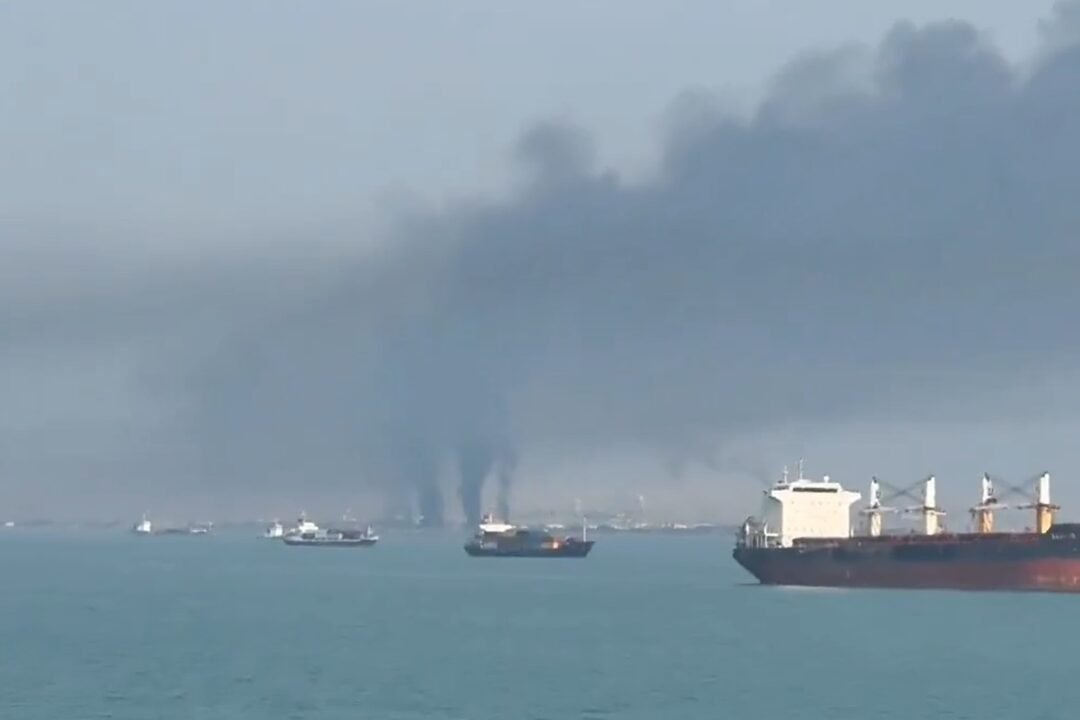







































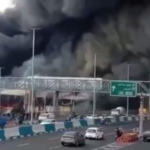
![Hon. Festus Keyamo SAN arrives MMIA past 11:50 p.m. Feb 23 to lead oversight of Terminal 1 fire. Joined FAAN MD & team actively managing situation. Directed morning inspection Tuesday to guide restoration & confirm safety standards. Reaffirmed focus on passenger safety. Story: [link] #KeyamoMMIA #FireIncident #FAAN](https://fullcliphq.com/wp-content/uploads/2026/02/mym-150x150.jpg "MMIA Fire: Keyamo Inspects Lagos Airport After Terminal 1 Blaze Disrupts Flights")


















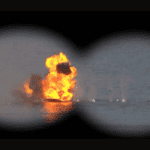




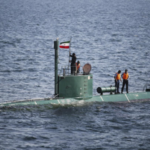








































































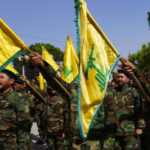




































































































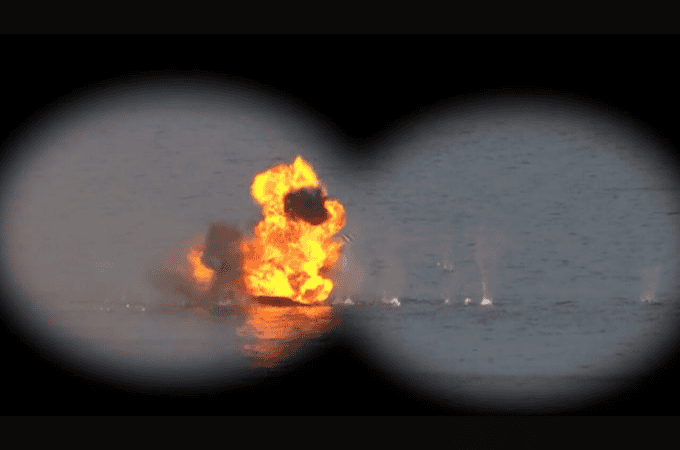
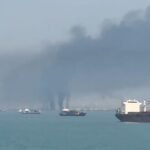
Iran’s Islamic Revolutionary Guard Corps (IRGC) Navy launched large-scale live-fire exercises in the Strait of Hormuz on February 17, 2026, temporarily restricting parts of the vital waterway while indirect nuclear negotiations with the United States proceeded in Geneva, Switzerland.
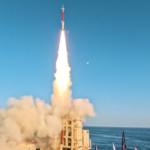
The drills, named “Smart Control of Hormuz Strait,” were supervised by IRGC Commander-in-Chief Major General Hossein Salami and coordinated in the field by Major General Mohammad Pakpour. They involved fast-attack craft, anti-ship cruise missile (ASCM) batteries deployed on Qeshm and Hormuz islands, and combined naval operations to test readiness, security protocols, and simulated responses to potential threats.
Iranian state media, including Tasnim News Agency and Sepah News, reported that the exercise aimed to demonstrate the IRGC’s ability to maintain full control over the strait against any “security or military threats.” Select transit lanes were closed for several hours for safety reasons during the drills.
The timing – just 24 hours before the second round of U.S.-Iran indirect talks in Geneva – was seen as deliberate. Informed observers view the maneuvers as a show of asymmetric strength, signaling Iran’s capacity to disrupt global energy flows if diplomacy fails.
U.S. Naval Presence in the Region
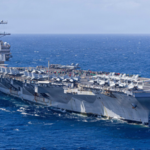
The USS Abraham Lincoln carrier strike group is currently positioned in the North Arabian Sea, maintaining a stand-off distance of approximately 150 nautical miles from the strait. The Trump administration has described the deployment as essential “Maximum Pressure 2.0” to deter Iranian actions and support negotiations.
Strategic Importance of the Strait of Hormuz
The Strait of Hormuz is the world’s most critical maritime chokepoint, connecting the Persian Gulf to the Gulf of Oman and serving as the main export route for oil and LNG from major producers.
-
Transit Volume: Around 20 million barrels per day of petroleum liquids passed through in 2024, representing about 20% of global oil consumption (U.S. Energy Information Administration data).
-
Narrow Geography: At its narrowest, the strait is only 21 nautical miles wide, with shipping lanes restricted to two miles in each direction, making it highly vulnerable to mines, drones, or shore-based missiles.
-
Limited Bypass Options: Pipelines in Saudi Arabia and the UAE offer only about 5 million barrels per day of spare capacity, leaving roughly 75% of regional exports dependent on the strait.
Market Reaction
Energy markets responded cautiously. West Texas Intermediate (WTI) crude futures settled near $63.39 per barrel on February 17, 2026, with early trading showing modest gains of 0.8%.
Traders are balancing a geopolitical risk premium (estimated $3–$5 per barrel) tied to potential disruption against forecasts of a 2026 global oil supply surplus of 1.2 million barrels per day. While prices remain well below 2025 peaks (which briefly approached $410 after Operation Midnight Hammer), a full, sustained closure of the strait could trigger an immediate surge toward $120+ or higher.
The Geneva Nuclear Talks
The IRGC drills occurred one day before the second round of indirect U.S.-Iran nuclear talks in Geneva, mediated by Oman.
The first session was held in Muscat on February 6, 2026. U.S. officials described some progress on procedural “guiding principles,” while Iran’s Foreign Minister Abbas Araghchi called the atmosphere “more constructive” than the prior round but cautioned that drafting specific terms would be difficult.
No firm date has been set for a third meeting.