


































![Hon. Festus Keyamo SAN arrives MMIA past 11:50 p.m. Feb 23 to lead oversight of Terminal 1 fire. Joined FAAN MD & team actively managing situation. Directed morning inspection Tuesday to guide restoration & confirm safety standards. Reaffirmed focus on passenger safety. Story: [link] #KeyamoMMIA #FireIncident #FAAN](https://fullcliphq.com/wp-content/uploads/2026/02/mym-150x150.jpg "MMIA Fire: Keyamo Inspects Lagos Airport After Terminal 1 Blaze Disrupts Flights")


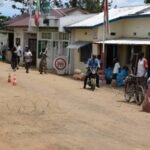












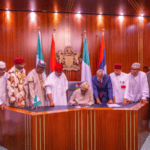






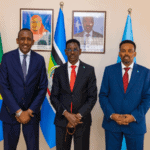



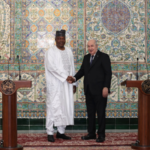





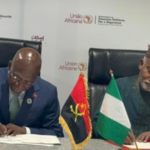


















































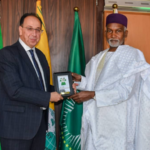



































































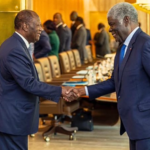



























































Nigér has signed a five-year health cooperation agreement with the United States valued at $128 million, becoming the second member of the Alliance of Sahel States (AES) to enter into such a bilateral framework under President Donald Trump’s America First Global Health Strategy.
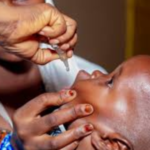
The pact, formalized today, provides $107 million in US assistance, with Niger committing $71 million from its national budget. The agreement focuses on direct bilateral cooperation to strengthen the country’s health system, improve epidemic preparedness, enhance frontline service delivery, and expand priority interventions in malaria prevention, maternal and child health, and infectious disease surveillance.
According to a statement from the US Embassy in Niamey, the partnership aims to build resilient, autonomous, and sustainable health systems in Niger while addressing cross-border health security. “Through this five-year agreement protocol, the United States and Niger are paving the way toward resilient, autonomous and sustainable health systems in Niger, while protecting Americans by preventing the spread of infectious diseases through improved surveillance and epidemic response,” the embassy said.
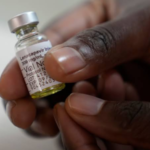
The funding will support local health infrastructure, laboratory capacity, frontline health workers, vaccination programs, and outbreak response mechanisms. Emphasis is placed on reducing administrative overhead by channeling resources directly to facilities and surveillance programs rather than through intermediaries.
Niger follows Burkina Faso, which signed a similar accord in February 2026 worth up to $147 million in US support over five years, with Burkina Faso contributing approximately $107 million domestically. That agreement targeted domestic health services, disease monitoring, and outbreak capacity. With two of the three AES members – Niger, Burkina Faso, and Mali – now engaged in structured health cooperation with the US, the strategy appears to gain traction in the Sahel region.
Mali has not yet concluded a comparable deal, though recent diplomatic steps, including the lifting of certain sanctions on key officials, suggest potential for future engagement. The AES, formed amid shifting political alignments in the Sahel, has drawn international interest as a bloc navigating security, economic, and geopolitical challenges.
The America First Global Health Strategy prioritizes long-term bilateral agreements, co-financing by partner governments, and streamlined funding to national systems. US officials frame these partnerships as advancing sustainable development while serving strategic interests in a region marked by political transitions, security threats, and competition from external actors.
For Niger, the agreement aligns with national priorities amid recurring challenges from malaria, meningitis, seasonal outbreaks, and limited resources. Strengthening surveillance networks and investing in frontline workers are viewed as essential for resilience against infectious diseases.
From the US perspective, the deals with Niger and Burkina Faso support health outcomes while securing sustained presence in a geopolitically sensitive area. By tying cooperation to measurable indicators over multi-year periods, the framework seeks durable partnerships that blend development assistance with broader strategic objectives.
Observers note that embedding health cooperation in bilateral structures reflects a pragmatic foreign policy approach in contested regions. Immediate benefits are expected in expanded vaccination coverage, maternal care, and disease surveillance, while longer-term implications may include deeper diplomatic and economic ties.
The agreement underscores a recalibration of Sahelian relations with the United States, positioning public health investment as a tool for strategic realignment in one of Africa’s most volatile corridors.