












































![Hon. Festus Keyamo SAN arrives MMIA past 11:50 p.m. Feb 23 to lead oversight of Terminal 1 fire. Joined FAAN MD & team actively managing situation. Directed morning inspection Tuesday to guide restoration & confirm safety standards. Reaffirmed focus on passenger safety. Story: [link] #KeyamoMMIA #FireIncident #FAAN](https://fullcliphq.com/wp-content/uploads/2026/02/mym-150x150.jpg "MMIA Fire: Keyamo Inspects Lagos Airport After Terminal 1 Blaze Disrupts Flights")































































































































































































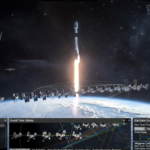












































































































































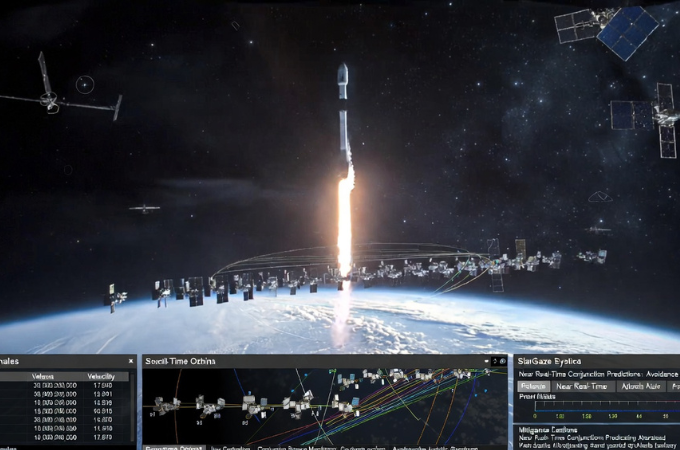
SpaceX has unveiled Stargaze, a novel Space Situational Awareness (SSA) system that leverages data from nearly 30,000 star trackers aboard its Starlink satellites to detect and track millions of objects in Earth orbit daily.
The company announced it will provide precise positional awareness, trajectory predictions, and close-approach alerts to all satellite operators free of charge. This move is designed to mitigate the growing threat of orbital debris and ensure the long-term sustainability of Low-Earth Orbit (LEO).
At a Glance: Stargaze Capabilities
-
Sensors: ~30,000 optical star trackers across the Starlink constellation.
-
Daily Detections: Approximately 30 million objects identified daily.
-
Object Size: Tracks fragments as small as 10 centimeters.
-
Model: Open-access, free-of-charge data sharing for all satellite operators.
-
Access: Currently in closed beta via xAI’s developer console.
Facts: From Navigation to Observation
Star Trackers are high-fidelity optical sensors traditionally used for “Attitude Determination”—allowing a satellite to orient itself by recognizing star patterns. SpaceX has repurposed these sensors into a massive, space-based observation network. Unlike ground-based radar, which is hindered by the atmosphere and limited geographic coverage, Stargaze provides a 24/7, unobstructed view of LEO. By using the sheer density of the Starlink constellation, SpaceX has created the world’s most comprehensive real-time “map” of the orbital environment.
Technical Capabilities and Real-World Impact
Stargaze identifies and monitors objects by processing raw imagery from the constellation’s distributed sensor network. The system generates high-fidelity ephemeris (position and velocity data) to predict potential “conjunctions” or close approaches.
The 2025 Case Study:
SpaceX highlighted a real-world example from 2025 where Stargaze provided just one hour’s warning of a potential collision. This critical alert allowed a Starlink satellite to perform an automated evasive maneuver, reducing the miss distance from a dangerous 9,000 meters to only 60 meters.
Market Context: Preventing Kessler Syndrome
The launch arrives as the LEO environment reaches a critical density. Current estimates suggest that over 12,000 active satellites now orbit Earth, with SpaceX operating roughly 60% of them.
-
The Goal: To prevent the Kessler Syndrome—a theoretical chain reaction where collisions create debris that triggers further collisions, eventually rendering LEO unusable.
-
Industry Shift: While competitors like LeoLabs and Slingshot Aerospace provide paid SSA services, SpaceX’s free model aims to “force” a new global standard of transparency and voluntary data sharing.
Availability and Participation
SpaceX emphasized that Stargaze is a public-good initiative. While the system is currently in closed beta, wider access is planned for Spring 2026. Operators who contribute their own ephemeris data to the network will gain enhanced screening accuracy and priority alerts.
The system’s backend is integrated into xAI’s infrastructure, leveraging advanced AI modeling to handle the massive data throughput required to predict the movements of millions of fast-moving objects simultaneously.