
ECOWAS Parliament Calls for Urgent Overhaul of Education Systems to Align with Regional Socio-Economic Needs
Lawmakers at the ECOWAS Parliament have urged a comprehensive reform of educational systems across West Africa to better match learning outcomes with the evolving socio-economic realities of the region.
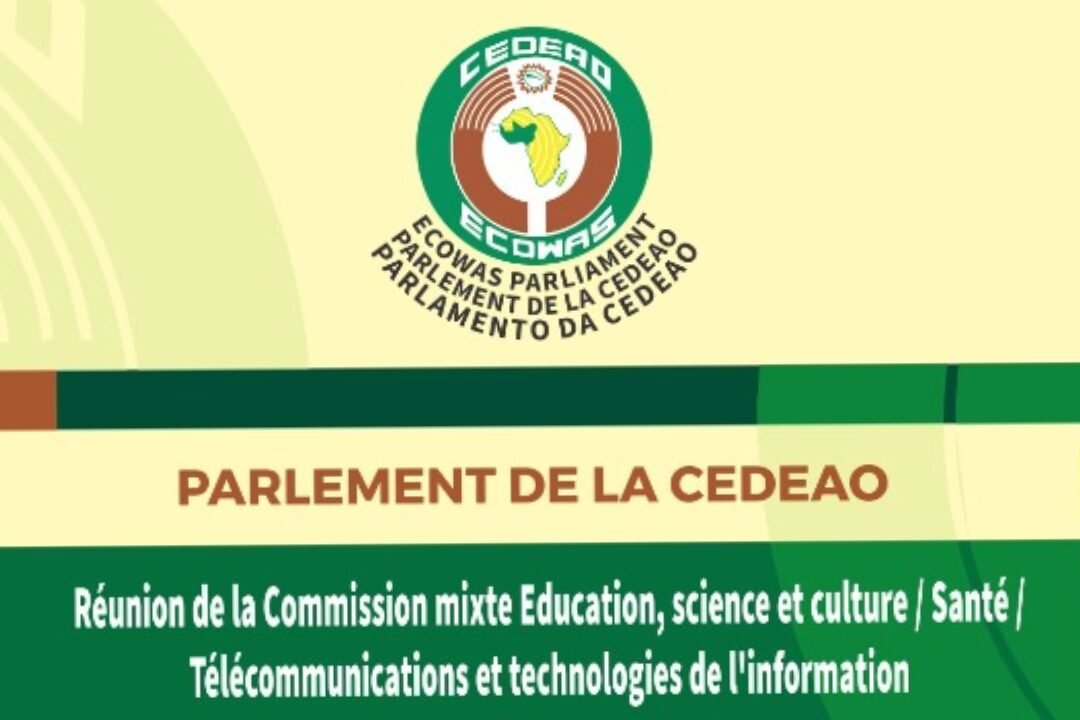
The call was made during the opening of a joint delocalized meeting of the Committees on Education, Science and Culture; Health; and Telecommunications and Information Technology, held in Lomé on March 10, 2026.
Themed “Strengthening Curriculum Alignment with Socio-Economic Needs of the ECOWAS Region,” the session brought together parliamentarians, policy experts and stakeholders to examine how education can equip the region’s rapidly growing youth population for emerging economic opportunities and future labour markets.
Speaking at the opening, the President of the National Assembly of Togo, Komi Selom Klassou — represented by ECOWAS Parliament Speaker Mémounatou Ibrahima — described education as the foundation of prosperous nations and regional sovereignty.
“Education is the foundation of any prosperous nation. Through it, we shape not only minds and bodies but also the future of our societies,” Klassou said. He warned that failure to align curricula with labour market demands risks weakening productivity, competitiveness and overall stability across West Africa. “This theme is a call to action. It urges us to transform our demographic wealth — our dynamic youth — into a lever for building a prosperous future,” he added.
Klassou emphasised that educational reform must be grounded in Protocol A/P3/1/03, adopted by the ECOWAS Conference of Heads of State and Government in 2003, which commits member states to promoting quality, accessible and relevant education throughout the region.
Pillars of the Proposed Reform
The meeting outlined several critical pillars for reform to address the widening gap between academic training and practical opportunity:
-
Improved Labour Market Analysis: Data-driven assessments to identify current and future industry needs.
-
Curriculum Modernization: Transitioning from certificate-driven education to competency-based learning frameworks.
-
Technical and Vocational Education and Training (TVET): Strengthening practical skills and entrepreneurship.
-
Digital and Green Skills: Integrating digital literacy and environmental sustainability into all levels of learning.
-
Public-Private Partnerships: Deeper collaboration between educational institutions and the private sector.
Parliamentary Perspectives
Chairman of the Committee on Education, Science and Culture, Kweku George Hagan, reinforced the urgency of reform. “Currently, our labour markets are shifting faster than our curriculum. The widening gap between training and opportunity has created a troubling paradox – vacancies without skilled workers,” he said.
Leader of the Togolese delegation to the ECOWAS Parliament, Soklingbé Senou, stressed that education must move beyond “the production of certificates.” He called for curricula that directly respond to real job market needs to improve employability and innovation across the ECOWAS region.
Participants at the Lomé meeting are expected to produce actionable recommendations aimed at harmonizing qualifications and fostering regional cooperation to enhance economic integration.
