
Iran Appoints Mojtaba Khamenei as New Supreme Leader Amid Active Conflict and Succession Threats
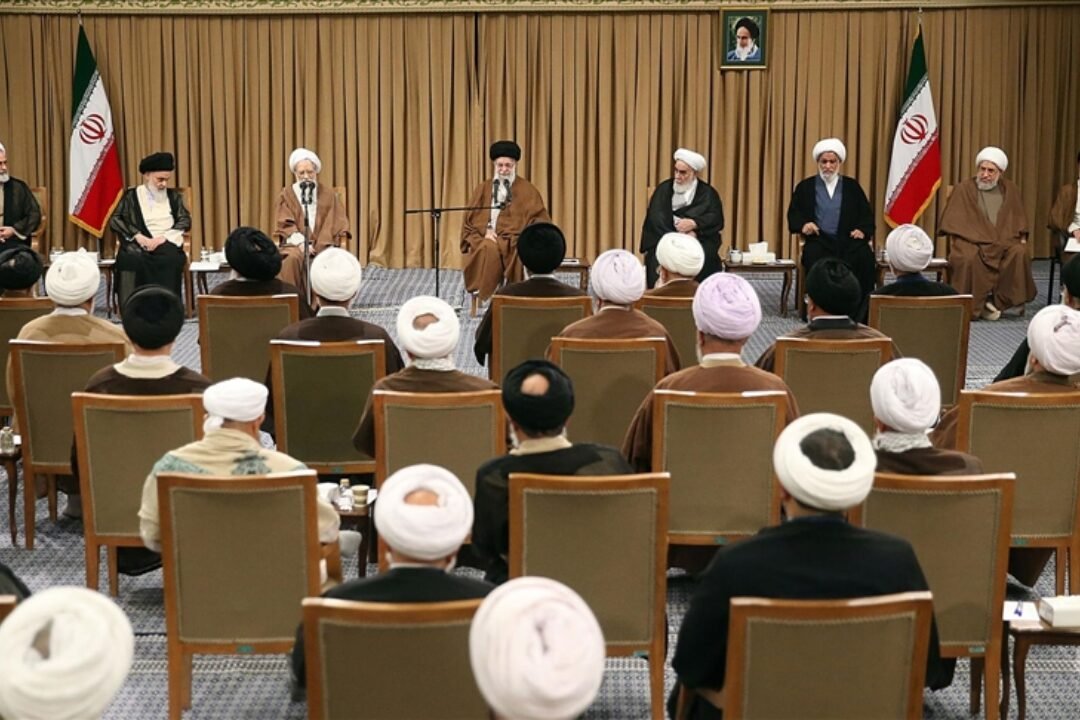
Iran’s Assembly of Experts has appointed Ayatollah Sayyed Mojtaba Hosseini Khamenei as the country’s new Supreme Leader, succeeding his father Ayatollah Ali Khamenei, who was killed in a joint U.S.-Israeli airstrike on February 28, 2026.
The decision was announced on state television early on Monday, local time following an emergency session of the 88-member clerical body. State media described the vote as “decisive,” with Mojtaba Khamenei, 56, receiving majority support. Senior military and political figures, including representatives from the Islamic Revolutionary Guard Corps (IRGC) and Foreign Minister Abbas Araghchi quickly pledged allegiance.
Background: Assassination and Outbreak of War
Ayatollah Ali Khamenei, Supreme Leader since 1989, was killed in the opening hours of Operation Epic Fury, a large-scale U.S.-Israeli air campaign targeting Iranian leadership, ballistic missile sites, military installations, internal security infrastructure, and elements of the nuclear programme. Iranian state media and international sources confirmed the precision strike on his Tehran compound. The attack also killed senior figures, including members of his family, Defense Minister Amir Nasirzadeh, IRGC commander Mohammed Pakpour, and other high-ranking officials.
Profile: Mojtaba Khamenei
Mojtaba Khamenei, second son of the late Supreme Leader, has operated largely behind the scenes for decades. A mid-ranking cleric holding the title of Ayatollah, he has never held formal public office but has wielded significant informal influence through his father’s office. Observers describe him as closely aligned with the IRGC, with involvement in intelligence, military coordination, and suppression of domestic dissent.
Born 8 September 1969, he studied Islamic jurisprudence and theology in Qom under prominent conservative scholars, including Ayatollah Mahmoud Hashemi Shahroudi, Ayatollah Lotfollah Safi Golpaygani, and Mohammad-Taqi Mesbah-Yazdi. He has taught advanced jurisprudence (dars-e kharej) in Qom seminaries for many years.
Mojtaba married Zahra Haddad-Adel, daughter of former parliament speaker Gholam-Ali Haddad-Adel. Reports indicate Zahra and at least one child were also killed in the initial strikes on the family compound.
He has been under U.S. sanctions since 2019 for his alleged role in representing his father unofficially and involvement in repressing protests. Rumours of succession grooming have circulated for years, though Ayatollah Ali Khamenei reportedly opposed hereditary succession to avoid perceptions of monarchy-like rule.
Pattern of Targeting Successors
Israel has repeatedly acted against newly selected or designated leaders of adversarial groups or states. A notable recent instance occurred in Gaza in late 2024, when Yahya Sinwar was killed shortly after being named overall leader of Hamas following the assassination of Ismail Haniyeh. Similarly, in Hezbollah’s case, Hashem Safieddine was widely seen as Hassan Nasrallah’s successor after Nasrallah’s death in September 2024; Safieddine was killed in an Israeli airstrike weeks later. These incidents have been cited by Israeli officials as deliberate efforts to disrupt command structures and deter continuity in hostile organisations.
The appointment of Mojtaba Khamenei occurs under similar threats. Israeli Defence Minister Israel Katz stated on social media that “any leader selected by the Iranian terror regime to continue leading the plan for Israel’s destruction… will be a certain target for assassination, no matter his name or where he hides.” The statement reflects a consistent Israeli policy of targeting leadership figures perceived as threats, regardless of formal succession processes.
Implications for Iran and the Region
Mojtaba Khamenei’s selection is widely seen as a signal of hardline continuity: resistance over compromise, IRGC dominance over reformist elements. Expert observers note that:
-
It strengthens the IRGC’s grip on power at a time when the military faces intense external pressure.
-
It may accelerate Iran’s pursuit of nuclear capabilities as a deterrent.
-
Domestically, state media portrays unity, but critics express concern over dynastic elements in a theocratic system.
The conflict has claimed over 1,100 lives in Iran (per Iranian sources), multiple US service members, and civilians across the region. As Iran navigates war, economic strain, and internal consolidation, the coming weeks will test whether Mojtaba Khamenei can unify the regime — or whether external pressure will trigger another succession.
