
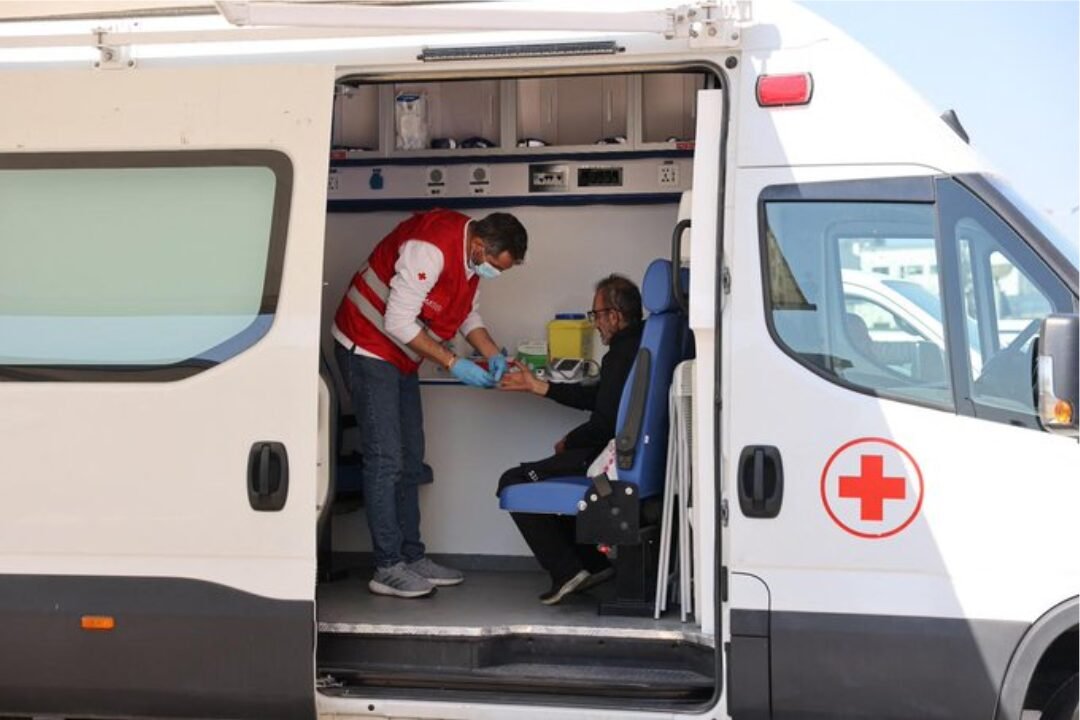
China’s Red Cross Society Pledges $200,000 in Humanitarian Aid to Iranian Red Crescent as Conflict Escalates
The Red Cross Society of China has committed $200,000 in emergency humanitarian assistance to the Iranian Red Crescent Society, with funds earmarked specifically for condolences and relief support to parents who have lost children in the current conflict, particularly students killed in attacks.
The announcement came from China’s foreign ministry during a regular press briefing, where spokesperson Guo Jiakun reiterated Beijing’s stance against indiscriminate strikes on civilians and non-military targets.
According to The Times of Israel, the aid package reflects China’s expressed readiness to offer further necessary support to Iran and its people as the regional crisis deepens. The contribution arrives against a backdrop of escalating hostilities involving U.S. and Israeli military operations in Iran, which have resulted in significant civilian casualties, infrastructure damage, and widespread displacement since late February.
The ongoing war has triggered a massive humanitarian response from the Iranian Red Crescent Society (IRCS), which has deployed thousands of volunteers and staff across affected provinces. The International Federation of Red Cross and Red Crescent Societies (IFRC) launched a CHF 40 million (approximately $51.5 million) emergency appeal earlier this month to bolster IRCS efforts, aiming to reach up to five million people over 16 months with shelter, health services, water and sanitation, and psychosocial support. The Chinese donation forms part of broader international mobilisation to address acute needs, including those stemming from reported strikes on civilian sites such as schools.
Reports indicate that civilian deaths in Iran have included numerous children and students, with incidents like a strike on a girls’ school in Minab early in the conflict claiming over 160 lives, mostly young girls, according to Iranian authorities and international monitoring. Such events have drawn widespread condemnation, including from China, which has repeatedly voiced opposition to attacks violating international norms on civilian protection. Guo emphasised that Beijing condemns all forms of indiscriminate violence against non-combatants, aligning with calls for de-escalation and diplomatic resolution.
China’s position has been consistent since the conflict’s onset, criticising military actions lacking UN authorisation and urging restraint to prevent spillover. Foreign ministry statements have highlighted concerns over violations of sovereignty, territorial integrity, and the risks to regional stability, particularly in the Gulf where shipping and energy routes remain vulnerable. Beijing has evacuated thousands of its nationals from impacted areas and urged caution for citizens in the Middle East.
The humanitarian dimension has grown critical as hostilities disrupt essential services, damage homes, schools, and medical facilities, and force mass displacement. The IRCS has mobilised over 6,500 personnel and hundreds of teams for search and rescue, medical aid, and relief distribution in nearly 200 cities. The IFRC’s appeal underscores the scale, noting infrastructure disruptions affecting millions and the need for sustained international backing.
The conflict’s toll extends beyond Iran, with cross-border exchanges involving proxies like Hezbollah in Lebanon and disruptions in Gulf waters. Civilian protections remain a focal point, with UN agencies and rights groups documenting child casualties, school closures, and humanitarian access challenges. China’s pledge for targeted aid to bereaved families highlights the human cost, particularly among youth caught in the violence.
As the situation evolves, further assistance from global donors may be required to address long-term recovery needs, including rebuilding damaged infrastructure and supporting displaced populations. Beijing’s statement also reaffirmed preparedness for additional help, contingent on developments.
