









































































![Hon. Festus Keyamo SAN arrives MMIA past 11:50 p.m. Feb 23 to lead oversight of Terminal 1 fire. Joined FAAN MD & team actively managing situation. Directed morning inspection Tuesday to guide restoration & confirm safety standards. Reaffirmed focus on passenger safety. Story: [link] #KeyamoMMIA #FireIncident #FAAN](https://fullcliphq.com/wp-content/uploads/2026/02/mym-150x150.jpg "MMIA Fire: Keyamo Inspects Lagos Airport After Terminal 1 Blaze Disrupts Flights")



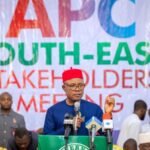


































































































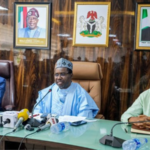









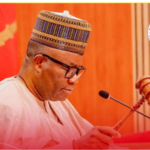
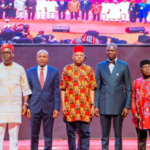


































































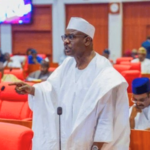




















































































































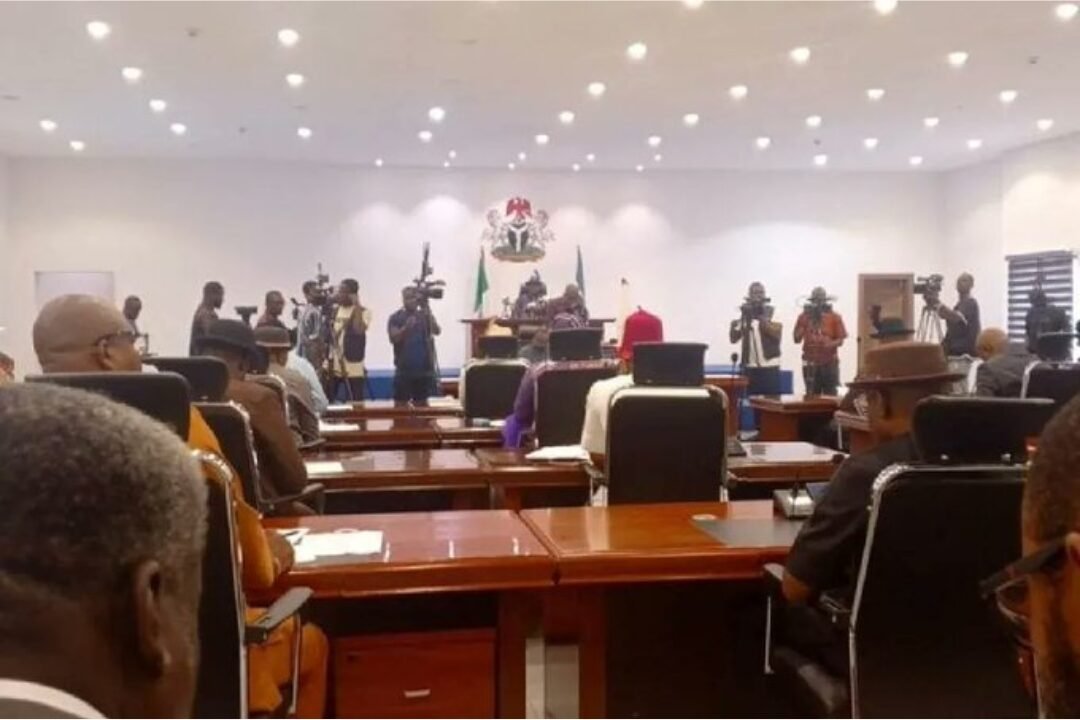
Nine senators formally defected from their original parties to the African Democratic Congress (ADC) during Thursday’s plenary session in the Nigerian Senate, representing one of the largest single-day shifts in the upper chamber in recent political history.
Senate President Godswill Akpabio announced the changes after reading letters submitted by the lawmakers, notifying the chamber of their decisions to leave the Peoples Democratic Party (PDP), Labour Party (LP) and All Progressives Grand Alliance (APGA).
Five of the defectors hail from the PDP: Aminu Waziri Tambuwal (Sokoto South), Mohammed Ogoshi Onawo (Nasarawa South), Binos Dauda Yaroe (Adamawa South), Austin Akobundu (Abia Central), and Lawal Adamu Usman (Kaduna Central). Three came from the LP: Ireti Kingibe (Federal Capital Territory), Victor Umeh (Anambra Central), and Tony Nwoye (Anambra North). The ninth, Enyinnaya Abaribe (Abia South), left the APGA.
In his letter, read aloud by Akpabio, Tambuwal cited persistent internal crises, leadership disputes, ongoing litigations, and deepening divisions within the PDP as reasons for his exit. He described these issues as having eroded the party’s unity and strategic focus, making continued membership untenable. Similar motivations were implied in other communications, though not all letters were quoted in detail during the session.
The defections have immediately altered the Senate’s composition. The ruling All Progressives Congress (APC) retains 85 seats, while the ADC now holds nine. The PDP is reduced to eight, with the remaining seats distributed among smaller parties: New Nigeria Peoples Party (NNPP) one, National Democratic Coalition (NDC) one, APGA one, and Social Democratic Party (SDP) one. Three seats remain vacant following the deaths of Senators Barinada Mpigi (Rivers South-East), Godiya Akwashiki (Nasarawa North), and Okey Ezea (Enugu North).
Unlike recent trends where opposition figures have migrated toward the APC, this movement flows in the opposite direction. It underscores growing unease among some political actors about the perceived consolidation of power under the ruling party since President Bola Tinubu’s inauguration. Critics have warned of a drift toward one-party dominance, though Tinubu has consistently rejected such claims, emphasising Nigeria’s multi-party democratic framework.
The ADC’s sudden growth ties directly to a coalition of opposition leaders who adopted the party in July 2025 as a unified platform to challenge the APC in the 2027 general elections. Key figures linked to this effort include former Vice President Atiku Abubakar, former Labour Party presidential candidate Peter Obi, former Rivers State Governor Rotimi Amaechi, former Kaduna State Governor Nasir El-Rufai, and former Senate President David Mark. The group has framed its strategy as an attempt to consolidate fragmented opposition forces and present a viable alternative in the presidential race.
The timing aligns with preparations for the 2027 polls. Following amendments to the Electoral Act in 2026, the Independent National Electoral Commission (INEC) revised the timetable to avoid overlapping with Ramadan. Presidential and National Assembly elections are now scheduled for January 16, 2027, with governorship and state assembly votes set for February 6, 2027. Party primaries will run from April 23 to May 30, 2026, candidate nominations from June 27 to July 11, 2026, and national campaigns from August 19, 2026. The voter register is expected to be finalised and published by December 15, 2026.
The Senate leadership indicated it would scrutinise Abaribe’s defection more closely. Questions have arisen over whether his reported removal from APGA leadership structures in September 2025 meets constitutional criteria for defecting without forfeiting his seat under Section 68(1)(g) of the 1999 Constitution, which permits defection only in cases of party division or merger. Akpabio granted Abaribe one week to reconsider or provide further clarification.
These developments occur amid broader political fluidity. Recent months have seen defections in both directions, including some lawmakers moving to the APC, while opposition voices argue for stronger alternatives to counter what they describe as incumbent advantages in resources and incumbency power. The ADC’s emergence as a vessel for this coalition could reshape opposition dynamics, particularly if it attracts additional figures disillusioned with existing parties.
Analysts note that such realignments often reflect calculations about electability, funding, and strategic positioning ahead of primaries. The involvement of high-profile names suggests an intent to build a broad-based movement capable of mounting a credible challenge. However, sustaining unity among diverse interests remains a key test, given Nigeria’s history of coalition fractures.
For the ruling APC, the shift serves as a reminder of lingering opposition potential despite its Senate majority. Party officials have downplayed the impact, pointing to the APC’s dominant position and ongoing governance deliverables as factors that will shape voter preferences in 2027.
As the political landscape evolves, attention will focus on whether the ADC can translate Senate numbers into grassroots momentum and candidate consensus. With primaries less than two months away in some projections, the coming weeks will prove decisive in determining if this defection wave marks the start of a genuine realignment or remains a limited tactical move.