
































































![Hon. Festus Keyamo SAN arrives MMIA past 11:50 p.m. Feb 23 to lead oversight of Terminal 1 fire. Joined FAAN MD & team actively managing situation. Directed morning inspection Tuesday to guide restoration & confirm safety standards. Reaffirmed focus on passenger safety. Story: [link] #KeyamoMMIA #FireIncident #FAAN](https://fullcliphq.com/wp-content/uploads/2026/02/mym-150x150.jpg "MMIA Fire: Keyamo Inspects Lagos Airport After Terminal 1 Blaze Disrupts Flights")































































































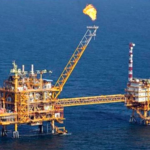























































































































The Petroleum Products Retail Outlets Owners Association of Nigeria (PETROAN) has warned that the pump price of Premium Motor Spirit (PMS) could climb as high as ₦2,000 per litre in the coming weeks if the ongoing US-Israel-Iran conflict continues to disrupt global petroleum supply chains.
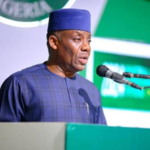
In a keynote address titled “Deconstructing Energy Trilemma” delivered in Port Harcourt at an event organized by the Department of Petroleum Economics and Policy Studies at Ignatius Ajuru University of Education, PETROAN National President Billy Gillis-Harry urged the Nigerian National Petroleum Company Limited (NNPCL) to urgently reactivate domestic refining capacity as a buffer against international market shocks.
According to a statement signed by PETROAN National Public Relations Officer Dr Joseph Obele and obtained by Nairametrics on Monday, Gillis-Harry highlighted that sustained drone and missile attacks are threatening critical oil routes and infrastructure, creating widespread uncertainty in global supply chains.
He pointed out that before the crisis escalated, PMS sold at ₦774 per litre but has now crossed ₦1,000 – a 30 per cent increase. Automotive Gas Oil (AGO/diesel), previously ₦950 per litre, is now selling above ₦1,400 – a 49 per cent rise. Projecting forward, he warned that PMS could approach ₦2,000 per litre and AGO near ₦3,000 per litre if the conflict persists without resolution.
The PETROAN president specifically called on NNPCL Group Chief Executive Officer Bayo Ojulari to facilitate the immediate restart of production at Nigeria’s government-owned refineries, particularly the Area 5 Plant at the Port Harcourt Refinery and the Warri Refinery.
“Local refining would reduce exposure to international market volatility, especially as Nigeria has abundant crude oil resources under the custody of the NNPC Ltd,” Gillis-Harry said. He added that government-owned refineries are less vulnerable to global supply disruptions compared to privately owned facilities that rely on imported crude.
He warned that continued fuel price increases would worsen inflation, trigger job losses, deepen economic hardship, raise transportation costs and drive up the prices of goods and services nationwide. PMS, he noted, remains essential for daily mobility, while AGO powers manufacturing and industrial operations.
Gillis-Harry assured Nigerians that President Bola Ahmed Tinubu’s reform policies will ultimately bring relief and stimulate economic growth, but stressed that domestic refining is a critical short-term shield against external shocks.
The sharp rise in pump prices follows the deregulation of Nigeria’s downstream petroleum sector under the current administration. The Nigerian Midstream and Downstream Petroleum Regulatory Authority (NMDPRA) has attributed the fluctuations to pure market dynamics, with spokesperson George Ene-Ita stating in an interview with the News Agency of Nigeria (NAN) on Sunday that “pump price vagaries are purely a result of market dynamics” in a fully deregulated regime.
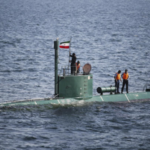
Global crude benchmarks have surged in response to the conflict. Brent futures rose about 20 per cent last week, while West Texas Intermediate climbed roughly 25 per cent amid fears of supply disruptions. On Saturday, Israeli forces reportedly struck oil storage facilities in Tehran – the first confirmed attack on Iran’s oil infrastructure since the war began. Iran has also targeted oil facilities in several Middle East and Gulf countries.
The Group of Seven (G7) finance ministers are set to discuss a joint release of oil from emergency reserves coordinated by the International Energy Agency (IEA). Three G7 countries, including the United States, have so far expressed support for the idea, with ministers and IEA Executive Director Fatih Birol scheduled to hold a call to assess the impact of the Iran war on global energy markets.
PETROAN’s warning underscores Nigeria’s vulnerability as a net importer of refined products despite being one of Africa’s largest crude producers. Restarting the Port Harcourt and Warri refineries – both of which have been under rehabilitation for years — could significantly reduce reliance on imported PMS and AGO, cushion pump prices, and ease pressure on foreign exchange reserves.