









































































































































































































































































































































![Hon. Festus Keyamo SAN arrives MMIA past 11:50 p.m. Feb 23 to lead oversight of Terminal 1 fire. Joined FAAN MD & team actively managing situation. Directed morning inspection Tuesday to guide restoration & confirm safety standards. Reaffirmed focus on passenger safety. Story: [link] #KeyamoMMIA #FireIncident #FAAN](https://fullcliphq.com/wp-content/uploads/2026/02/mym-150x150.jpg "MMIA Fire: Keyamo Inspects Lagos Airport After Terminal 1 Blaze Disrupts Flights")


































































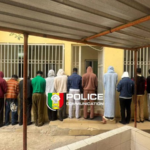















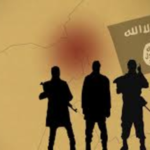









































































































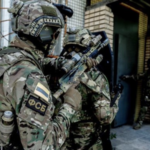

















































Turkish security forces have detained 184 individuals suspected of links to the ISIS (DEAŞ) terrorist organization in a coordinated two-week operation spanning 35 provinces, the Ministry of Interior has announced.
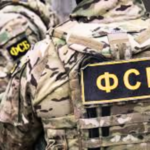
The sweep was led by the General Directorate of Security’s Intelligence Branch and Counter-Terrorism Department, working closely with the National Intelligence Organization (MİT) and relevant Public Prosecutor’s Offices. It focused on three main categories: individuals who had previously been active in ISIS, those subject to outstanding arrest warrants, and persons providing financial or logistical support to the group.
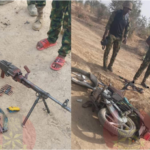
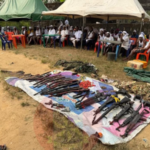
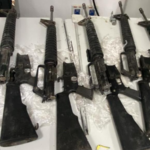
Of the 184 suspects, 22 were formally arrested and remanded in custody, while 33 were released under judicial control measures (adli kontrol). Proceedings for the remaining detainees are ongoing. Security forces seized eight unlicensed pistols, one unlicensed rifle, along with organisational documents and digital materials during the raids.
The operation reflects Türkiye’s sustained campaign to eliminate ISIS influence within its borders, a threat that has persisted long after the group lost its territorial caliphate in Syria and Iraq in 2019. Domestic ISIS cells have since shifted toward propaganda dissemination, low-level recruitment, financial facilitation, and occasional planning of small-scale activities rather than large coordinated attacks.
ISIS first established a significant presence in Türkiye in the early 2010s, exploiting porous borders and the Syrian civil war to facilitate foreign fighter flows, logistics, and fundraising. The group carried out its deadliest attacks inside Türkiye between 2015 and 2017, including the October 2015 Ankara train station bombing (109 killed), the January 2016 Sultanahmet tourist attack (11 killed), the March 2016 Istanbul Atatürk Airport bombing (45 killed), the June 2016 Atatürk Airport attack (45 killed), the New Year’s Eve 2017 Reina nightclub massacre (39 killed), and the December 2016 Kayseri military bus bombing (15 soldiers killed).
These attacks prompted a major shift in Turkish counter-terrorism strategy. From mid-2016 onward, Türkiye launched intensive domestic operations (including large-scale raids in Istanbul, Ankara, Gaziantep, Şanlıurfa, and Adana), dismantled dozens of cells, arrested thousands of suspected members and facilitators, and significantly disrupted recruitment and transit routes. Cross-border military interventions – Operation Euphrates Shield (2016–2017), Olive Branch (2018), Peace Spring (2019), and Spring Shield (2020) – targeted ISIS and YPG positions in northern Syria, further degrading the group’s operational capacity near Türkiye’s border.
Despite the territorial defeat of ISIS’s self-proclaimed caliphate, Turkish authorities have continued periodic large-scale domestic sweeps. Operations in 2023-2025 targeted propaganda networks, foreign terrorist fighters (YTS), and financial facilitators, with hundreds detained annually. The March 2026 operation continues this pattern, demonstrating that even residual networks – now focused on clandestine support and radicalisation – remain a priority.
The Ministry of Interior statement praised the operation’s success: “Our security forces, together with MİT, prosecutors, and our heroic police officers, continue operations against ISIS’s activity and financing structures.” The announcement carried the hashtag #TürkiyeninHuzuru (Türkiye’s Peace/Security), underscoring the government’s framing of counter-terrorism as essential to national stability.
The operation is part of a broader multi-year effort to prevent any resurgence of ISIS inside Türkiye. Authorities maintain that proactive disruption of support structures and financing channels significantly reduces the risk of renewed attacks.