
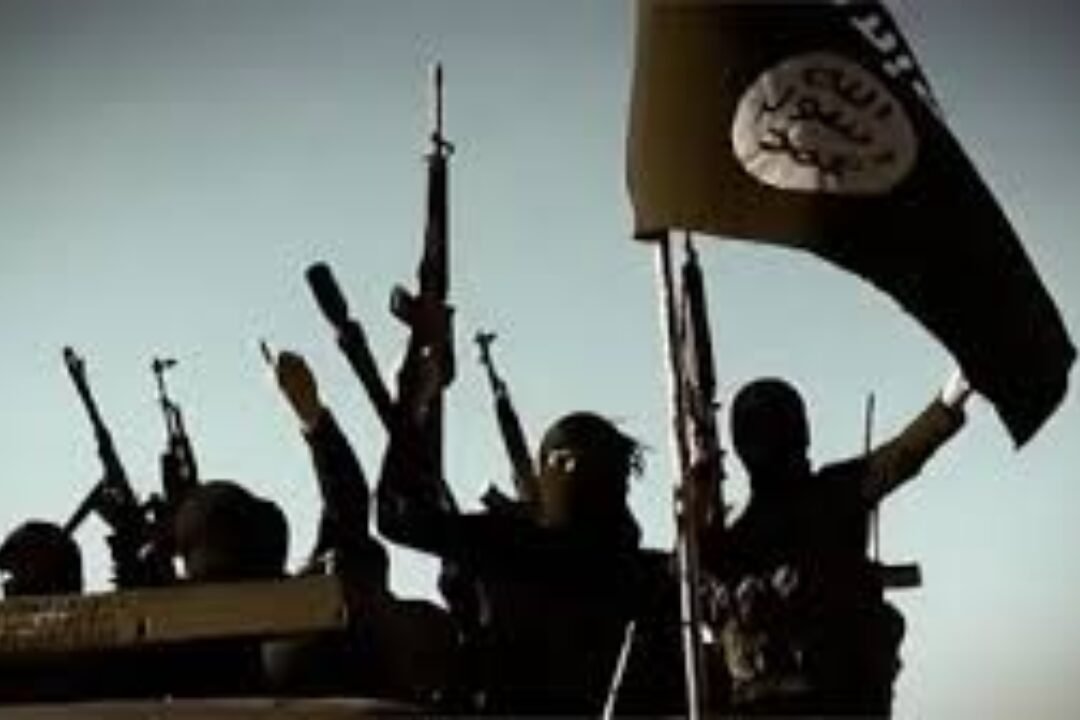
ISIS Releases Propaganda Urging Arson Attacks on Churches and Synagogues in the West This Easter Weekend
The terror group, Islamic State (ISIS) has issued a new propaganda call urging its supporters to set fire to churches and synagogues in the United States, Europe, Russia, India, and other locations during the Easter holiday period.
The appeal appeared in the group’s weekly newsletter al-Naba, according to reports by the New York Post citing translations of the material.
In the statement, ISIS frames the call as retaliation for the temporary closure of the al-Aqsa Mosque in Jerusalem during the Muslim holy month of Ramadan.
The text reportedly declares: “In the face of the tragedy of the closure of the blessed al-Aqsa Mosque, it is incumbent upon Muslims everywhere… to rise up and set fire to the Jewish synagogues scattered across America, Europe, Russia, India, and elsewhere.”
It also extends the call to churches in various regions, including the US and Europe, while referencing additional targets in the UAE, Syria, Tunisia, and Morocco.
This latest incitement fits ISIS’s long-standing pattern of using online propaganda – often disseminated via Telegram channels, affiliated media outlets, and publications like al-Naba – to inspire “lone wolf” or small-cell attacks rather than directing complex operations from a central command.
Since losing its territorial caliphate in Iraq and Syria by 2019, ISIS has shifted emphasis toward decentralized jihadist actions worldwide, praising (cowardly) independent actors who respond to its messaging.
Similar past calls have targeted Christian sites, especially around holidays, though actual large-scale follow-through has been inconsistent and frequently thwarted by law enforcement.
The threat emerges against a backdrop of ongoing regional instability.
In late February 2026, the United States launched Operation Epic Fury, a major military campaign aimed at dismantling Iran’s ballistic missile capabilities, navy, proxy networks, and nuclear-related infrastructure.
U.S. Central Command described the operation as “laser-focused” on degrading Iran’s ability to threaten the region or acquire nuclear weapons, with strikes continuing into March and April.
This escalation follows years of confrontation with Iran, a state sponsor of terrorism that has backed groups like Hezbollah and the Houthis.
ISIS and Iran-backed Shia militias are ideological rivals – ISIS views Shia Muslims as apostates deserving death under its extreme Salafi-Takfiri doctrine – yet both exploit broader Middle East conflicts.
ISIS propaganda frequently seeks to capitalize on grievances involving Israel and Jerusalem to rally Sunni extremists.
The al-Aqsa reference taps into longstanding sensitivities around the site, which has sparked violence in the past.
Security officials in the US and Europe have routinely heightened alerts around Easter and other major Christian holidays due to jihadist messaging.
Historical precedents include ISIS-inspired plots against churches in Europe and the US, as well as the devastating 2019 Sri Lanka Easter bombings (claimed by ISIS) that killed over 250 people.
More recently, authorities have disrupted smaller-scale threats, including plots involving teenagers in Germany targeting churches and synagogues.
Meanwhile, ISIS remains a potent ideological force even without significant territory as its core goals include reestablishing a global caliphate, enforcing strict Sharia, and provoking conflict between Muslims and non-Muslims.
The group continues to claim responsibility for or inspire attacks through propaganda, with affiliates active in Africa (e.g., ISIS-West Africa Province), Afghanistan (ISIS-Khorasan), and elsewhere.
In the West, the primary risk stems from radicalized individuals acting on online calls rather than directed operatives.
Notably, ISIS has a history of prioritising attacks on “near enemies” (rival Muslim governments and sects) over distant ones, though it has repeatedly incited violence against Christians, Jews, and Western targets.
