
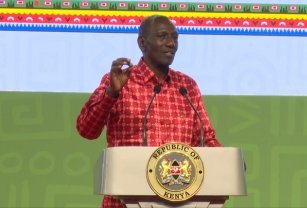
William Ruto Declares African Union “Not Fit for Purpose,” Calls for Urgent Structural Reforms
Kenyan President William Ruto has delivered a blunt assessment of the African Union, declaring that the continental body in its current form is “not fit for purpose” and lacks the capacity to provide the leadership Africa needs as it grapples with mounting political, economic, security and demographic pressures.
Speaking at the Mashariki Cooperation Conference in Mombasa (with some sessions reportedly held in Diani, Kwale County), Ruto told intelligence chiefs from across the continent that the AU requires fundamental reforms to become more effective. “I can tell you without an iota of doubt that the African Union, as it is today, is not fit to provide the leadership that this continent needs going into the future,” he said. “Therefore, there is need for the reforms of the African Union.”
Ruto revealed that fellow African heads of state had tasked him with leading efforts to review and overhaul the AU’s institutions and organs, positioning him as the AU Champion for Institutional Reform. He urged the gathered intelligence leaders to contribute ideas toward building a more capable, forward-looking continental organisation that can help Africa unlock its potential amid rapid global changes. His remarks build on ongoing AU reform discussions.
Earlier in 2026, at the 39th Ordinary Session of the AU Assembly in Addis Ababa, Ruto presented a report on institutional reforms. Proposals under consideration include developing a unified “African foreign policy,” reviewing the financing model, prioritising peace and security, and restructuring organs to reduce duplication. An ad-hoc committee on reforms, which Ruto chairs, has been active since at least late 2025.
The Mashariki Cooperation Conference focused on strengthening regional security architecture, intelligence sharing and cooperation – areas where the AU’s effectiveness is often questioned. While Ruto’s speech was high-level, details shared in related discussions and his prior reform work point to several priorities: shifting AU Commission and official selections toward merit-based appointments rather than political horse-trading, clarifying mandates and eliminating bureaucratic overlaps between the AU, Regional Economic Communities and member states, strengthening enforcement mechanisms against unconstitutional changes of government and violations of democratic principles, increasing internal funding to reduce heavy dependence on external donors, and enhancing Africa’s coordinated voice in global forums such as the G20 and the United Nations.
These ideas echo earlier reform efforts, including those advanced under former AU Chairperson Paul Kagame, which emphasised efficiency but faced implementation challenges due to differing national interests and political will. The AU, which succeeded the Organisation of African Unity in 2002, has been praised for advancing peace missions, normative frameworks on governance and human rights, and continental initiatives such as Agenda 2063.
However, critics – including many Africans – point to persistent weaknesses: chronic underfunding and over-reliance on external partners, weak enforcement of decisions that allows coups, electoral disputes and conflicts to persist, overlapping mandates with regional bodies that lead to fragmentation, and a perception that it sometimes functions more as a “presidents’ club” that prioritises regime stability over accountability or bold collective action.
Ruto’s candid remarks have sparked lively debate online and in African media. Some have praised the honesty, agreeing that the AU has underperformed and needs stronger institutions to tackle issues like insecurity, economic integration, energy and food crises. Others have questioned the timing or motives, suggesting Ruto should focus on Kenya’s domestic challenges – including high taxes, youth unemployment and cost-of-living pressures – or accusing him of aligning with external influences.
The president’s call resonates with public sentiment in parts of Africa, where the AU is often viewed as bureaucratic and slow-moving despite its symbolic importance as the continent’s collective voice. Supporters of reform argue that without meaningful changes, Africa risks marginalisation in a multipolar world marked by great-power competition, climate pressures, youth bulges and technological shifts.
Africa is the world’s youngest and fastest-growing continent demographically, with immense potential in resources, markets and innovation. Yet persistent governance gaps, conflicts and fragmented responses continue to hinder progress. A reformed AU — leaner, more meritocratic, better funded internally where possible, and more decisive on core issues — could better drive implementation of the African Continental Free Trade Area, coordinate security responses and amplify Africa’s influence internationally.
Ruto’s address, delivered to intelligence professionals, underscores the security dimension: effective continental institutions are seen as vital for early warning, countering transnational threats and fostering stability. Whether these proposals translate into concrete action will depend on buy-in at the AU Assembly level and beyond.
Past reform initiatives have delivered partial successes but often stalled on financing and sovereignty concerns. Observers will watch closely for outcomes at upcoming AU summits, including any extraordinary session on reforms. As Ruto put it, the stakes are high: without urgent adaptation, Africa may fall behind in a rapidly evolving global order.
