
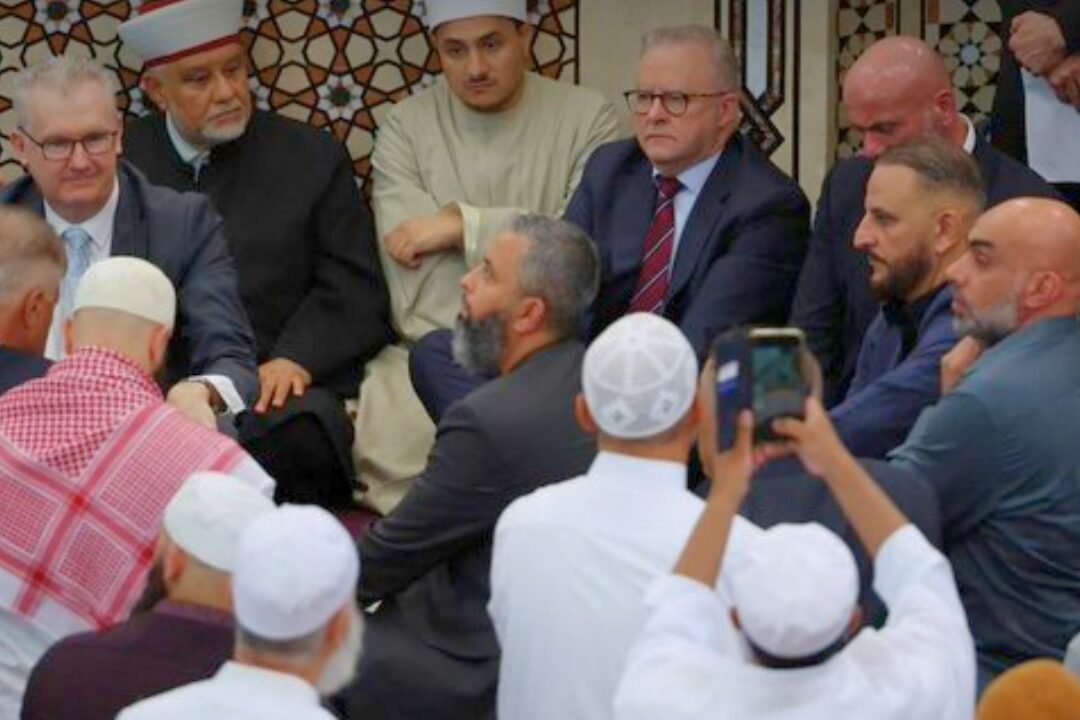
Australia Prime Minister Faces “Genocide Supporter” Chants During Sydney Mosque Visit
Australian Prime Minister Anthony Albanese and Home Affairs Minister Tony Burke encountered sharp vocal protests during a visit to Lakemba Mosque in Sydney’s southwest today, with some worshippers accusing them of supporting genocide amid heightened sensitivities over the Israel-Gaza conflict.
Footages broadcast by Australian media captured the moment when members of the congregation began shouting at the leaders, with chants including direct accusations of being “genocide supporters.” The outburst occurred as Albanese and Burke moved through the mosque, a major community centre serving one of Australia’s largest Muslim populations and long associated with interfaith initiatives and outreach.
The precise purpose of the visit – whether for prayer, a community meeting, or discussions on local issues – was not immediately specified in early reporting. The incident reflects deep-seated frustration within segments of Australia’s Muslim community over the federal government’s approach to the Israel-Gaza war, which escalated following the October 7, 2023, Hamas attacks and Israel’s subsequent military response.
Critics have repeatedly pressed the government to adopt a stronger position, including calls for an immediate and permanent ceasefire, substantially increased humanitarian aid to Gaza, recognition of Palestine as a state, and a reassessment of military and diplomatic ties with Israel. The Albanese administration has maintained that Israel has a right to defend itself while repeatedly urging restraint, humanitarian access, adherence to international law, and steps toward a two-state solution – a stance that has drawn criticism from both pro-Palestinian advocates and pro-Israel groups for perceived inadequacy or imbalance.
Since late 2023, Australian political figures from multiple parties have faced similar disruptions at public events, university campuses, rallies, and community venues. Protests have highlighted divisions over foreign policy, with some accusing the government of insufficient action on Gaza and others warning that certain demonstrations have crossed into antisemitism – allegations most organisers firmly deny.
The Lakemba episode occurred in a multicultural electorate where global conflicts frequently intersect with local politics. No arrests or reports of physical violence emerged from the incident, and the visit appears to have proceeded in some capacity despite the interruption.
With ongoing debates over foreign policy, community relations, and electoral dynamics, incidents of this nature are likely to intensify scrutiny of how leaders balance international alliances, human rights commitments, religion and social cohesion at home.
