
White House Urges Allies to Support Hormuz Maritime Security or Increase U.S. Oil Imports
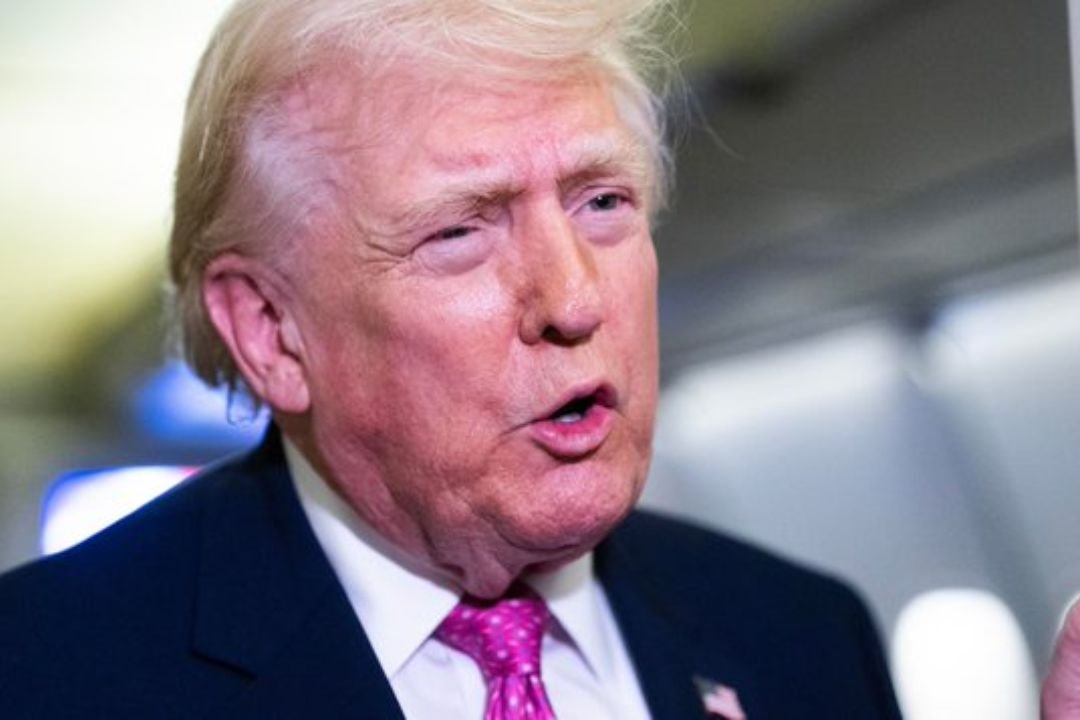
President Donald Trump has sharply criticized key allies, particularly the United Kingdom, for not joining U.S.-Israeli military strikes against Iran and suggested they should either buy more American oil or take responsibility for reopening the blockaded Strait of Hormuz.
In a pointed message shared by the White House on X today, Trump directly addressed nations struggling with jet fuel shortages caused by the disruption of the strategic waterway.
“All of those countries that can’t get jet fuel because of the Strait of Hormuz, like the United Kingdom, which refused to get involved in the decapitation of Iran, I have a suggestion for you…” the post read, according to White House communications.
The remarks reflect the administration’s “America First” approach, emphasizing that countries benefiting from secure global energy routes should share the burden rather than rely solely on U.S. military efforts.
The comments come as the U.S.-Israeli campaign against Iran, dubbed “Operation Epic Fury,” enters its second month. The operation began on February 28, 2026, with airstrikes that killed Supreme Leader Ali Khamenei and other senior officials. U.S. and Israeli forces claim to have significantly degraded Iran’s missile capabilities, air defenses, and naval assets.
Iran has responded by effectively closing the Strait of Hormuz, a narrow chokepoint that normally carries about 20% of the world’s oil trade. Iranian forces have attacked or harassed vessels, declared the waterway unsafe for ships linked to the U.S., Israel, or their partners, and imposed selective restrictions. The disruption has triggered sharp rises in global oil prices, with Brent crude climbing above $110 per barrel and causing jet fuel and diesel shortages in several countries.
Trump has repeatedly urged allies to contribute naval forces or escorts to secure the strait, arguing that nations which declined to participate in the initial strikes should not expect the U.S. to bear the full cost of keeping the waterway open. He has specifically criticized the UK for refusing overflight or basing rights for offensive operations and for what he sees as delayed or insufficient support.
European leaders have shown reluctance to escalate their involvement, citing risks of wider conflict and domestic political concerns even as NATO as a body has not committed to a Hormuz mission.
The president has also floated the idea that affected allies should simply purchase more U.S. oil as an interim solution while the strait remains disrupted.
The Hormuz crisis has created one of the largest energy supply shocks in recent history. Gulf producers have curtailed output, Asian economies face rationing pressures, and European natural gas prices have risen sharply. In the United States, gasoline prices have climbed toward $4 per gallon in some regions.
Trump’s latest message underscores growing frustration within the administration over what it views as insufficient burden-sharing by traditional allies. Supporters see it as a necessary correction after decades of the U.S. providing disproportionate security for global energy flows.
Critics, however, argue that the initial decision to launch strikes without broader coalition support has contributed to the current impasse and strained alliances.
As the conflict continues, the White House has signaled that further U.S. action could depend on whether allies step up or if Iran shows willingness to negotiate a reopening of the strait. Diplomatic channels remain active, but no breakthrough has been reported.
The outburst highlights deep tensions over how global security responsibilities should be divided in an era of heightened great-power competition and regional instability.
