
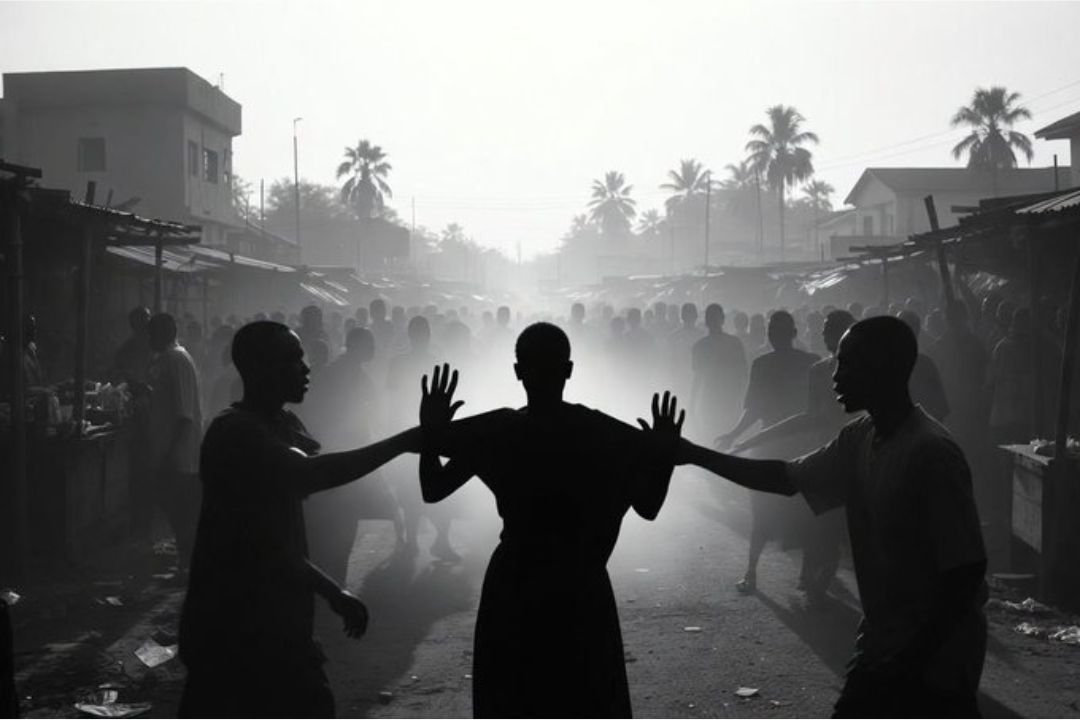
Advocates Demand Nationwide Ban on Harmful Cultural Festivals Following Ozoro Assaults
Legal practitioners and mental health experts in Nigeria have called for the abolition or reform of cultural practices that enable sexual and gender-based violence (GBV) against women, arguing that traditions which violate human rights must give way to constitutional protections and societal progress.
Select experts have spoken out to Punch, following disturbing incidents during the Alue-Do fertility festival held on March 19, 2026, in Ozoro, Isoko North Local Government Area of Delta State. Viral videos from the event showed groups of young men chasing, groping, and forcibly stripping women in public, prompting widespread outrage and condemnation.
Seasoned lawyers and psychiatrists have described such practices as unconstitutional, psychologically damaging, and a reflection of deep-rooted gender inequality. They stressed that while culture plays an important role in Nigerian society, any tradition that normalises violence or subjugation of women must be urgently reviewed or scrapped.
Eliana Martins, Country Vice President of the International Federation of Women Lawyers (FIDA) Nigeria, described the Ozoro incident as both shocking and symptomatic of persistent harmful traditions. She noted that some responses to the videos even blamed women for venturing outdoors, underscoring societal tolerance for abuse.
“Any cultural practice that encourages or enables gender-based violence violates the mental and physical well-being of women,” Martins said. She emphasised that such acts infringe on constitutional rights, including freedom of movement, personal safety, and dignity.
Martins argued that traditions repugnant to natural justice, equity, and good conscience should be eradicated. She called on traditional rulers – as custodians of culture – to lead reforms, citing examples of progressive leaders who have already begun modernising practices in their domains.
The lawyer also pointed out that Nigeria possesses adequate legal frameworks against GBV, but weak enforcement remains the core challenge. “It is not that we do not have laws. The problem lies in enforcement. We must move from outrage to action,” she added.
Dr Abiola Akiyode-Afolabi, a lawyer and founding Director of the Women Advocates Research and Documentation Centre (WARDC), echoed these sentiments. She maintained that culture is not static and must evolve to protect rather than endanger women and girls.
“Culture must never be used as a justification for harmful practices,” Akiyode-Afolabi said. She advocated for targeted reform of specific elements within festivals and rites that enable sexual violence, rather than a blanket rejection of cultural identity.
The incident in Ozoro involved the Alue-Do festival, traditionally regarded as a fertility rite during which women are expected to remain indoors. Instead, it was marred by reports of harassment, groping, and public stripping. The Delta State Police Command arrested 16 suspects, including the community head, Chief Omorede Sunday. The state government condemned the acts as barbaric and warned against using tradition to justify criminal behaviour.
However, Police have stated that while cases of molestation and sexual assault were reported, no formal complaints of rape had been filed as investigations continued. Several women’s rights groups and civil society organisations have demanded a thorough probe and accountability.
Meanwhile, the United Nations Children’s Fund (UNICEF) lists GBV in Nigeria as encompassing rape, domestic violence, child marriage, female genital mutilation, and other forms tied to tradition.
Prof Taiwo Obindo, a former President of the Association of Psychiatrists in Nigeria, highlighted the mental health consequences for survivors. He explained that sexual assault can lead to post-traumatic stress disorder (PTSD), depression, anxiety, and long-term psychological trauma.
“Such experiences can result in victims breaking down immediately or developing symptoms over time,” Obindo said.
