
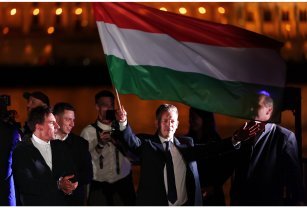
Viktor Orbán Concedes Defeat After 16 Years as Péter Magyar’s Tisza Party Claims Supermajority
In a stunning reversal after 16 years in power, Hungarian Prime Minister Viktor Orbán has conceded defeat in the country’s parliamentary elections, paving the way for a new government led by the opposition Tisza Party and its leader Péter Magyar.
Orbán made the announcement in a video statement shared widely on social media, acknowledging that the results, though not yet final, were “understandable and clear”. He said the responsibility and opportunity of governance had not been given to his Fidesz party this time, and he congratulated the winning side.
With exceptionally high voter turnout reported at around 77.8 per cent – higher than in previous elections – early counts showed Tisza on track for a strong majority, potentially securing approximately 136 seats in parliament. Orbán’s Fidesz trailed significantly with roughly 31 per cent of the vote. A two-thirds supermajority (133 seats) would give the winner the power to amend the constitution, raising the stakes for future institutional reforms.
The result marks a dramatic shift in Hungarian politics. Péter Magyar, a former insider who broke ranks with Fidesz following high-profile scandals, founded the Tisza Party in March 2024. Positioning himself as a moderate conservative focused on practical issues such as rising living costs, corruption and public services, Magyar appealed to voters frustrated with entrenched power. His party’s strong showing in the 2024 European elections had already signalled growing momentum, which culminated in this parliamentary breakthrough.
Orbán’s long rule since 2010 transformed Hungary’s political landscape. His government rewrote the constitution, influenced judicial appointments and gained significant control over much of the media landscape. Critics, including Transparency International, have repeatedly ranked Hungary as the most corrupt EU member state in recent years, citing cronyism and weakened checks and balances.
Orbán cultivated a nationalist, anti-immigration stance and often clashed with the European Union over rule-of-law issues, migration policy and support for Ukraine. Supporters credit him with defending Hungarian sovereignty, boosting family policies and resisting what he calls “Brussels overreach”.
Detractors argue his rule eroded democratic norms, packed institutions with loyalists and created a system designed to resist change. The high turnout proved decisive. Under Orbán, lower participation among opposition voters had long favoured Fidesz. This time, Hungarians mobilised in record numbers, overcoming structural advantages built into the electoral system.
For the incoming government, significant challenges lie ahead. Orbán’s reforms left behind a judiciary and state institutions stacked with Fidesz appointees. Media concentration remains high, and constitutional tools could allow the outgoing forces to complicate governance, including through budget veto powers.
Key issues facing Péter Magyar and Tisza include restoring fuller cooperation with the European Union and accessing withheld funds, tackling inflation and living costs that fuelled voter discontent, and balancing foreign policy while managing Hungary’s energy dependencies. Domestic reforms to address corruption and restore institutional independence are also expected, though they may trigger legal and political pushback. Reactions on social media reflected deep polarization.
Some celebrated the result as a victory for democracy and a rebuke to what they called “illiberal” governance, while others warned of potential EU-driven changes, including shifts in migration policy or support for Ukraine. Many noted Orbán’s relatively graceful concession, contrasting it with past disputes in other countries. Hungary’s vote occurs amid heightened global tensions, including fragile ceasefires and ongoing conflicts in the Middle East.
While unrelated directly, the outcome could influence EU cohesion on foreign policy, sanctions and enlargement — areas where Orbán often played a dissenting role. For the European Union, a post-Orbán Hungary might ease internal divisions but also test Brussels’ approach to member states.
For Russia and other actors, the loss of a vocal ally in Central Europe marks a symbolic setback. As final results are tallied and government formation begins, Hungary stands at a crossroads. The election demonstrates the power of voter mobilisation against long-term incumbency, yet the durability of any changes will depend on navigating the very institutions Orbán engineered to endure.
This marks a historic moment for Hungarian democracy. Whether it leads to a lasting reset or another chapter in the country’s turbulent politics remains to be seen as observers worldwide will watch closely as Péter Magyar prepares to take the reins.
