
Iran Rejects Trump’s 48-Hour Ultimatum as Reports of Mass Casualties Among Senior Leadership Emerge
Iran has rejected a 48-hour ultimatum issued by US President Donald Trump concerning a potential peace deal and the reopening of the Strait of Hormuz, as unconfirmed reports circulated of a recent American airstrike killing more than 50 senior Iranian leaders.
The development underscores the continued intensity of the US-Israeli military campaign against Iran, now in its fifth week. According to Al Jazeera English and cross-verified reporting from Reuters and CBS News, Iran’s central military command described the ultimatum as “helpless, nervous, unbalanced and stupid.” Gen. Ali Abdollahi Aliabadi of the Khatam al-Anbiya Central Headquarters stated that such threats would only open “the gates of hell” for the United States.
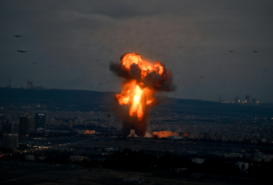
The remarks were made as social media amplified claims of significant additional Iranian leadership casualties. A Fox News clip on Saturday suggesting the latest strike had eliminated over 50 senior figures quicky went viral, as the post coincided with President Trump’s Truth Social update featuring video footage of a large explosion in Tehran, which he linked to the removal of military leaders.
While official confirmation of the precise casualty figure remains pending from US Central Command or Israeli authorities, the claim fits a pattern of targeted operations against Iranian command structures since late February.
The joint US-Israeli operation, referred to as Operation Epic Fury, began on February 28, 2026, with coordinated airstrikes across multiple Iranian sites. Early phases involved nearly 900 precision strikes within the first 12 hours, focusing on leadership compounds, ballistic missile installations, air defence systems, nuclear-related facilities and military infrastructure.
Iranian state media confirmed the death of Supreme Leader Ayatollah Ali Khamenei in an initial strike on his compound in Tehran. Several other high-ranking officials were also reported killed at that stage, including Ali Larijani, Gholamreza Soleimani, Esmaeil Khatib, Mohammad Pakpour, Aziz Nasirzadeh and Ali Shamkhani. President Trump stated in early March that around 48 to 49 top Iranian leaders had been eliminated in coordinated actions, describing the campaign as progressing ahead of schedule and disrupting succession plans.
Khamenei’s death led to the formation of an interim leadership council, followed by the selection of his son Mojtaba Khamenei as the new Supreme Leader on March 8. Remaining IRGC and political figures offered pledges of allegiance to maintain continuity.
The most recent reported strike has prompted discussion about Iranian operational practices. Commentators observed that repeated gatherings of senior officials have created exploitable intelligence opportunities, despite efforts to enhance communications security.
Meanwhile, President Trump described the shared footage as evidence of a “massive strike” that removed leaders responsible for what he termed poor decision-making. The stated objectives of the campaign include degrading Iran’s nuclear programme, dismantling its ballistic missile arsenal, neutralising threats from the Islamic Revolutionary Guard Corps and associated proxies, and applying pressure for negotiations.
Strikes have extended to oil infrastructure, steel production facilities linked to missile manufacturing, logistical bridges, naval assets in the Persian Gulf and Iran’s nuclear sites with warnings that they could endanger massive populations, given the potential exposure to radiation.
Iran has responded with missile barrages and drone attacks targeting Israel, US bases and regional allies, while attempting to interfere with shipping in the Strait of Hormuz. US officials have acknowledged losses, including downed aircraft and the deaths of at least seven American service members. Civilian casualties have also been reported, with one early incident near a naval base said to have struck a girls’ school, resulting in significant deaths according to Iranian accounts.
Recent strikes have additionally impacted universities, power plants and petrochemical facilities, according to multiple sources. The Strait of Hormuz has emerged as a central point of contention.
President Trump has warned of further strikes on energy infrastructure if the waterway is not reopened, tying the demand to a broader potential agreement that could see Iran cease nuclear enrichment in return for sanctions relief. He had previously referenced a 10-day deadline before shortening it to 48 hours on Saturday.
By this timeline, it is not out of place to expect more fireworks by Monday.
Iranian authorities have maintained limited retaliatory actions and rejected any framework perceived as an ultimatum. The conflict has also seen Israeli operations extend into southern Lebanon, contributing to additional civilian casualties and regional instability.
Elements linked to Iran’s network of regional allies have been involved in exchanges, though the primary focus remains on direct US-Israeli actions against Iranian targets. Strategic evaluations of the campaign differ. Supporters contend that the systematic targeting of leadership and military assets has reduced the risk of a nuclear-armed Iran and weakened support for proxy groups.
