
Brent Crude Tops $103 After US Announces Targeted Blockade of Iran, Sparking Fresh Market Turmoil
Global oil markets have been thrown into fresh turmoil on Monday as Brent crude futures spiked above $103 per barrel – a jump of more than $7 from Friday’s close – after the United States announced a targeted naval blockade on all Iranian ports.
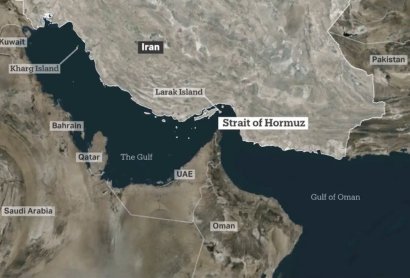
West Texas Intermediate (WTI) crude also climbed sharply, trading around $104 per barrel in early Asian trading. The sharp rise reflects renewed fears over potential disruptions to energy supplies from the Persian Gulf, even though the blockade is designed to spare the main transit route through the Strait of Hormuz for non-Iranian traffic.
Informed observers warn that sustained uncertainty could push benchmarks even higher, potentially reigniting inflationary pressures on global economies already sensitive to energy costs. Even worse, blockades could spring up on other international transit routes as the Iran template generates global discomfort.
The price surge comes just days after a fragile two-week ceasefire had briefly eased tensions, sending oil prices tumbling below $100 and even as low as the mid-$90s in early April. The latest development reverses much of that relief and highlights how quickly geopolitical events can swing commodity markets.
President Donald Trump directed the action after marathon US-Iran peace negotiations in Islamabad, Pakistan, collapsed without agreement on April 12. US Vice President JD Vance, who led the American delegation, stated that Iran had refused to accept key US demands related to its nuclear programme, regional proxy activities, and the secure reopening of the Strait of Hormuz.
U.S. Central Command (CENTCOM) confirmed the blockade will take effect at 10 a.m. ET (1400 GMT) on Monday, April 13, targeting all maritime traffic entering or exiting Iranian ports and coastal areas in the Arabian Gulf and Gulf of Oman. It says enforcement will be “impartial” against vessels of all nations.
However, CENTCOM explicitly stated that US forces “will not impede freedom of navigation for vessels transiting the Strait of Hormuz to and from non-Iranian ports.” This distinction aims to limit broader disruption to the strait – a critical chokepoint carrying about 20% of global seaborne oil trade and significant volumes of liquefied natural gas – while economically isolating Iran by cutting off its port access and associated revenues.
The Strait of Hormuz remains the focal point of volatility. Iran has historically used its strategic position to influence shipping, and during the recent conflict (which escalated in late February 2026), it reportedly imposed controls and tolls that disrupted flows and drove prices to peaks above $120 per barrel earlier in the crisis.
Although the current US measure does not close the strait itself for third-party shipping, markets are pricing in risks of Iranian retaliation, such as mining operations, attacks on tankers, or attempts to disrupt transit. There are also concerns about reduced Iranian oil exports (even if sanctioned) and potential spillover if enforcement leads to incidents involving international vessels.
Oil had already swung dramatically during the 2026 Iran conflict: rising sharply from pre-war levels around $70, peaking over $119–$120 amid the initial closure or disruption of the strait, then plunging after the ceasefire announcement as hopes rose for normalised flows. The latest blockade announcement has reversed some of that relief, with spot prices and futures reflecting a renewed geopolitical risk premium.
Broader economic ripple effects could include higher fuel costs for consumers worldwide, increased shipping and aviation expenses, and pressure on inflation in import-dependent economies across Asia, Europe and beyond. Major stock markets in Asia opened lower on Monday as the blockade threat injected new uncertainty into financial markets.
Japan’s benchmark Nikkei 225 fell 0.9 per cent in morning trading, while South Korea’s KOSPI dropped more than 1 per cent. US stock futures also fell, with those tied to the S&P 500 down about 0.8 per cent. Commercial shipping operators have been urged to exercise caution and seek updated guidance as enforcement begins.
The blockade follows a six-week conflict involving the US, Israel and Iran, with significant regional spillover. A conditional two-week ceasefire had been in place, but the Islamabad talks – described as the highest-level direct US-Iran engagement in decades – failed to bridge gaps on core issues like uranium enrichment limits and post-ceasefire security arrangements. Trump has framed the move as a response to Iranian “extortion” via tolls and threats to navigation, emphasising that the US Navy will protect international shipping.
Iranian officials have warned that any US military vessels approaching could violate the ceasefire and vowed a firm defence of their territory. While the narrowly tailored blockade seeks to apply pressure without triggering a full closure of the Hormuz route, the potential for miscalculation remains high. Any Iranian counter-action or escalation could quickly amplify oil market volatility and draw in other regional or global players.
As operations commence on April 13, traders, governments and energy companies will closely watch real-time shipping data, Iranian responses, and any signals from Washington or Tehran about renewed diplomacy. The two-week ceasefire window adds urgency: failure to de-escalate could prolong supply risks well into the second quarter of 2026 and beyond.
