
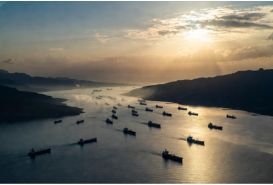
Iran Declares Conditional Ceasefire, Agrees Two-Week Safe Passage Through Strait of Hormuz
Iran has declared a conditional ceasefire and agreed to allow coordinated safe passage for shipping through the Strait of Hormuz for a two-week period, marking a significant pause in weeks of escalating military confrontation with the United States and Israel.
The announcement, issued late on April 7 by Foreign Minister Seyed Abbas Araghchi on behalf of Iran’s Supreme National Security Council, came after mediation efforts by Pakistani leaders and signals of acceptance from the US side.
According to the official statement released by Iran’s Foreign Ministry and promptly referenced by the White House on X, the move responds to appeals from Pakistani Prime Minister Shehbaz Sharif and Army Chief Field Marshal Asim Munir, as well as recent US proposals for negotiations.
The statement explicitly credits Pakistan’s diplomatic engagement and notes that the US has accepted the general framework of Iran’s 10-point proposal as a basis for talks, alongside its own 15-point counter-proposal.
The development follows a period of heightened tensions during which Iran had restricted maritime traffic through the Strait of Hormuz – a critical chokepoint carrying roughly one-fifth of global oil and liquefied natural gas shipments. US President Donald Trump had issued repeated public deadlines and warnings of strikes on Iranian infrastructure, including bridges and power plants, if the waterway remained closed.
Hours before the Iranian announcement, Trump indicated willingness for a two-week pause tied to reopening the strait. The two-week window is described by both sides as a confidence-building measure intended to facilitate technical coordination, stabilise insurance markets and allow diplomatic negotiations to advance toward a longer-term resolution.
Iranian officials have stressed that the pause is temporary and conditional on the cessation of attacks against Iranian targets. US officials, including White House Press Secretary Karoline Leavitt, characterised the outcome as advancing American interests while opening the door to more comprehensive talks aimed at a “conclusive and lasting end” to the conflict.
The Strait of Hormuz remains one of the world’s most strategically important energy arteries. Any sustained disruption has the potential to trigger sharp increases in global oil prices and broader supply chain instability. Iran’s offer of coordinated safe passage, while acknowledging technical limitations and maintaining oversight by its armed forces, reflects Tehran’s insistence on sovereignty over the waterway while aligning with international expectations on freedom of navigation.
Pakistan’s role as mediator has drawn attention as an unusual but effective channel. Both Washington and Tehran have publicly thanked Islamabad for its shuttle diplomacy, highlighting the country’s relationships with both parties. Prime Minister Sharif and Army Chief Munir had urged extensions of deadlines to allow space for talks, a request Iran directly referenced in its statement. Oil markets reacted with relief in early trading on April 8, as futures contracts eased on expectations of resumed flows through the strait.
Analysts described the two-week timeline as providing breathing room for insurance underwriters, shipping companies and diplomatic teams to engage without immediate resumption of hostilities.
Iranian state media presented the announcement as a strategic decision demonstrating Tehran’s strength and willingness to de-escalate on its own terms. Some voices within the US administration viewed it as a result of sustained pressure, while congressional critics expressed concern over the tone and unpredictability of earlier US statements.
Regional observers and Iranian opposition figures have cautioned that the temporary nature of the agreement leaves underlying issues unresolved, including Iran’s nuclear programme, support for regional proxies and broader security guarantees. They note that the pause could allow time for internal repositioning even as it reduces immediate risks of wider confrontation.
The announcement caps a phase of direct military exchanges that had raised fears of a broader regional war. With the two-week period now in effect, attention shifts to whether this fragile opening can serve as a foundation for more durable diplomacy or whether longstanding disputes will lead to renewed escalation once the window closes.
Shipping companies have begun preparing vessels to transit the strait under the new coordinated arrangements. Technical teams from Iran and international partners are expected to establish communication protocols to ensure safe passage during the specified period. US and Iranian officials have indicated that negotiations on the full 10-point and 15-point frameworks will continue during the pause.
White House statements described the development as a “victory” that advances American strategic objectives while preventing further economic disruption. Iran, for its part, has maintained that any final agreement must deliver a permanent end to what it terms an “illegal war.”
The coming days will test the practical implementation of the safe-passage arrangement and the level of trust between the parties.
