
Trump Draws Red Line Around Qatar: U.S. Will Obliterate Iran’s South Pars if Attacks Continue
President Donald Trump has issued a blunt and dramatic warning to Iran, vowing that the United States would “massively blow up the entirety of the South Pars Gas Field” if Tehran launches further attacks on Qatari energy infrastructure.
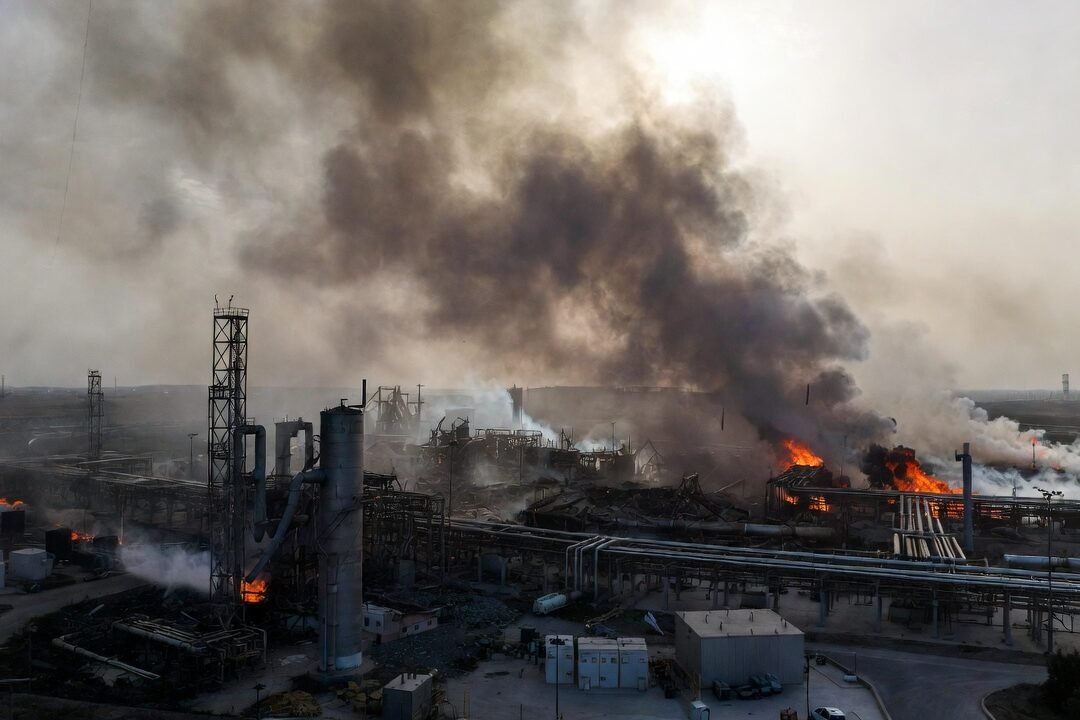
The statement came hours after Israel struck facilities at Iran’s South Pars natural gas field – the world’s largest natural gas reserve, shared with Qatar’s North Field – and Iran retaliated by targeting energy sites in Qatar and Saudi Arabia.
In a lengthy post on the official White House X account and his Truth Social platform, Trump distanced the United States from the Israeli strike on South Pars, insisting Washington “knew nothing about this particular attack” and that Qatar “was in no way, shape, or form, involved in it.” He described Israel’s action as an act of anger, saying the country had “violently lashed out,” before declaring that “no more attacks will be made by Israel” on South Pars – unless Iran “unwisely decides to attack a very innocent, in this case, Qatar.”
Trump’s warning was explicit and severe: if Iran strikes Qatari LNG facilities again, “the United States of America, with or without the help or consent of Israel, will massively blow up the entirety of the South Pars Gas Field at an amount of strength and power that Iran has never seen or witnessed before.” He emphasised reluctance to authorise such destruction due to “long term implications” for Iran’s future but made clear he would not hesitate if Qatar’s infrastructure is targeted again.
The statement effectively drew a unilateral U.S. “red line” around Qatari energy assets while attempting to cap further Israeli strikes on the shared field.
The exchange of strikes on energy infrastructure has already sent markets into turmoil. Oil prices briefly approached $110 per barrel, while European and Asian natural gas prices surged more than 30 percent in early trading today.
Informed observers warn that prolonged outages at Qatar’s Ras Laffan LNG complex – one of the world’s largest – could force Qatar to declare force majeure on contracts, worsening supply concerns for Europe and Asia amid already tight global markets.
Qatari officials reportedly contacted U.S. envoys and CENTCOM commanders immediately after Iran’s initial strike, seeking urgent clarification on U.S. involvement in the Israeli action. Some reports suggested coordination may have occurred despite Trump’s public denial.
As the conflict enters its third week – with reported strikes across multiple Gulf states, mounting U.S. troop injuries, and the Strait of Hormuz under severe pressure – Trump’s warning has suddenly reframed the energy dimension of the war. Whether it deters further Iranian retaliation or provokes even greater escalation remains uncertain, but global markets are primed for prolonged volatility.
