
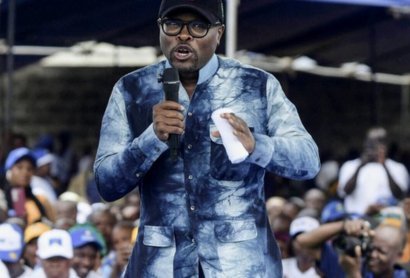
Romuald Wadagni Elected President of Benin with 94% of the Vote as Opposition Leader Concedes Defeat
Romuald Wadagni, the candidate of Benin Republic’s ruling party and serving Minister of Economy and Finance, has been elected President of Benin with 94% of the votes cast, according to provisional results announced by the National Autonomous Electoral Commission (CENA) late on Monday, April 13 into Tuesday, April 14, 2026.
The 49-year-old secured a decisive first-round victory for a seven-year term, while his main challenger, Paul Hounkpè of the moderate opposition Forces Cauris pour un Bénin Émergent (FCBE), received nearly 6%. Hounkpè did not wait for the official provisional figures before conceding defeat.
In a press release issued shortly after voting ended, he congratulated Wadagni, who is widely regarded as the handpicked successor of outgoing President Patrice Talon. Many observers had anticipated this outcome, citing the ruling party’s strong organisational advantage and the limited space for effective opposition campaigning in recent years.
The provisional results showed voter turnout at nearly 59%, an improvement on the 50% recorded during the 2021 presidential election when Talon was re-elected with 86% of the vote. The chairman of the electoral commission, Sacca Lafia, confirmed that polling took place across the country despite some reported attempts to disrupt the process in certain northern localities. He said defence and security forces had successfully ensured the integrity of the vote, though he provided no further details on the specific incidents.
The results will now be transmitted to the Constitutional Court, which is expected to proclaim the final official outcome in the coming days. Wadagni’s landslide victory caps a decade of significant economic transformation under President Talon, during which Benin recorded strong GDP growth, improved infrastructure, and increased private investment in key sectors such as agriculture, ports, and digital services.
However, the country continues to grapple with persistent challenges, including youth unemployment, rising living costs, and concerns about the narrowing of political space. The election was largely peaceful, but the overwhelming dominance of the ruling candidate has once again prompted questions from some analysts and civil society groups about the depth of democratic competition in Benin.
Hounkpè’s early and graceful concession was widely noted as a sign of political maturity, even as it underscored the current imbalance of power. In his statement, Hounkpè wished Wadagni success in leading the country and called for national unity in the post-election period.
For Wadagni, the immediate priority will be to consolidate the economic gains of the past ten years while addressing the expectations of Benin’s youthful population for more inclusive growth, job creation, and greater political openness. His background as a technocrat and finance minister suggests a continuation of fiscal discipline, investment promotion, and regional integration policies.
At the same time, many citizens hope the new administration will find ways to broaden participation and respond more effectively to social demands. The smooth conduct of the vote and the improved turnout in several areas have been welcomed by international observers, although calls for stronger democratic safeguards and more competitive politics are likely to persist.
As Benin prepares for the formal inauguration later this year, attention will turn to how Wadagni balances continuity with the need for fresh approaches to the country’s remaining developmental and governance challenges.
This result reinforces the ruling party’s hold on power in a country that has seen steady economic progress but faces ongoing questions about the quality of its democratic institutions.
The coming months will reveal whether Wadagni can translate his strong mandate into tangible improvements in the lives of ordinary Beninese while managing expectations for greater inclusivity.
