
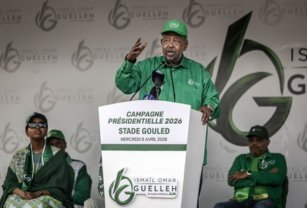
Djibouti President Ismael Omar Guelleh Wins Sixth Term with 97.8% of Votes
President Ismael Omar Guelleh of Djibouti has been re-elected for a sixth term with 97.8 per cent of the vote, according to results announced by state-owned Radio Television Djibouti on Saturday.
The outcome extends the 78-year-old leader’s 27-year hold on power in the small but strategically located East African nation. The election was held on Friday, with official turnout reported at 80.4 per cent.
Guelleh faced a single opposition candidate, Mohamed Farah Samatar, from a small party with no seats in parliament. Two of the country’s main opposition parties boycotted the poll, citing concerns over the impartiality of electoral authorities.
Guelleh posted an image of himself on X with the French word “RÉÉLU”, meaning “re-elected”. The result was never in doubt after parliament voted last October to remove the 75-year age limit for presidential candidates and scrapped a previous requirement for a referendum to approve constitutional changes.
Djibouti, home to fewer than one million people, occupies a key position on the Gulf of Aden at the entrance to the Red Sea. It hosts military bases belonging to the United States, China, France, Italy and Japan.
Since 2023, the country has also served as a docking point for several commercial ships damaged in attacks by Yemen’s Houthi militants. Guelleh was handpicked in 1999 to succeed his uncle, Hassan Gouled Aptidon, the country’s first president after independence from France in 1977.His ruling party dominates national institutions, and his victory consolidates a political system in which the opposition has limited influence.
Human rights organisations have long accused Djiboutian authorities of repressing political opponents, activists and journalists. The government has denied allegations of widespread abuses and rejected criticism of the electoral process. In 2020, security forces put down rare anti-government street protests that erupted after the arrest of a former air force pilot who had denounced alleged corruption and clan-based discrimination.
The president’s government has invested heavily in port infrastructure, positioning Djibouti as the main gateway to landlocked Ethiopia. In contrast to several other Horn of Africa nations, Djibouti has remained relatively stable in recent years.
In the previous presidential election in 2021, Guelleh secured more than 97 per cent of the vote. International observers have not yet issued detailed assessments of the poll’s conduct. The African Union and other regional bodies typically monitor such elections, but no immediate statements were available on Saturday.
The outcome is expected to maintain continuity in Djibouti’s foreign policy, which balances relations with major global powers through its strategic military hosting arrangements.
The country’s location makes it an important hub for international shipping and regional security operations. Guelleh’s extended rule has drawn both praise for stability and criticism from those who argue it has limited democratic development.
Supporters point to infrastructure gains and economic ties with Ethiopia, while detractors highlight the concentration of power and restrictions on political pluralism.
As Guelleh begins his new term, attention will turn to how his administration addresses ongoing regional challenges, including security threats from the Red Sea and economic pressures linked to global energy markets. The president is expected to be sworn in for his sixth term in the coming weeks.
