
Death Toll Reaches 73 in Weekend Attack on South Sudan Gold Mine near Juba
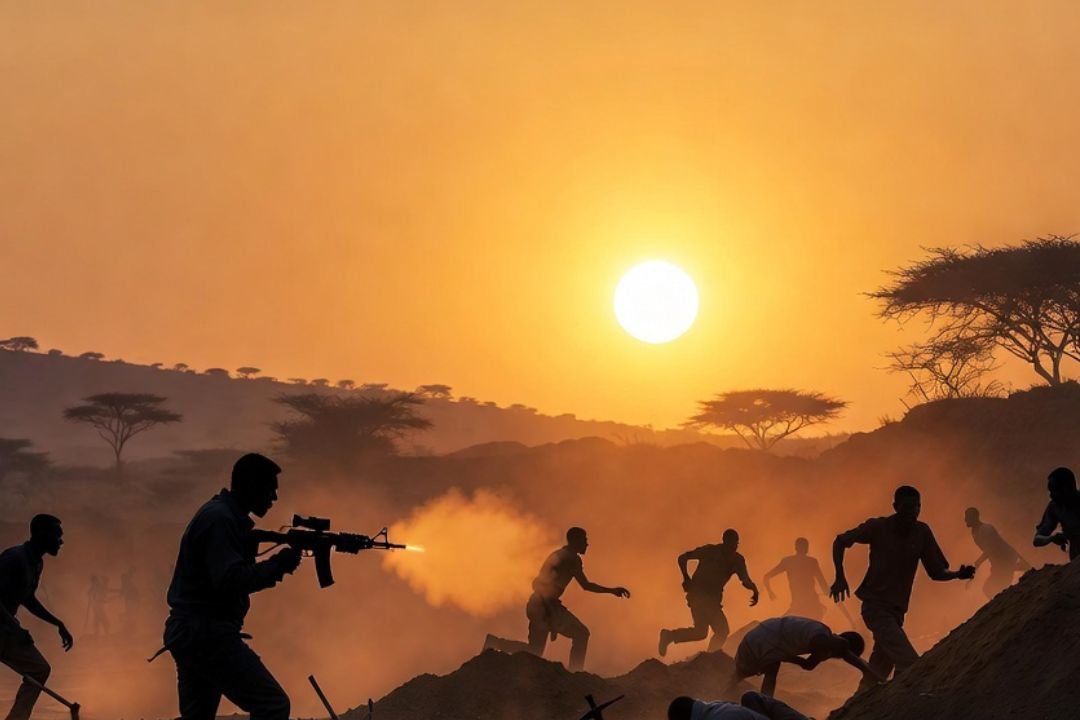
Unidentified gunmen killed at least 73 local miners and seriously injured 25 others in a weekend raid on a remote gold mining site in Central Equatoria State, South Sudanese officials reported on Monday, exposing the fragile security situation in one of the world’s most unstable and impoverished nations.
The assault targeted the Khor Kaltan mining area, located approximately 70 kilometres southwest of the capital Juba near Jebel Iraq. Vice President James Wani Igga condemned the violence as a “heinous massacre” and described the victims as hardworking citizens who form the backbone of the local economy.
In a statement released yesterday, Igga confirmed that at least 73 local miners have been tragically killed and 25 others seriously injured. He ordered urgent medical evacuations for the wounded, directed a formal investigation to identify the perpetrators and their motives, and called for reinforced security at mining sites and rural trade areas to prevent further attacks. Some reports indicate the death toll could rise, with additional victims possibly still missing in surrounding forests.
Police described the attackers simply as “unknown gunmen” and conflicting claims have emerged. Representatives of the opposition Sudan People’s Liberation Movement-in-Opposition (SPLM-IO), linked to Riek Machar, denied involvement and accused government forces loyal to President Salva Kiir.
Government sources have not confirmed any specific group, leaving the exact motive – whether a dispute over mining control, criminal opportunism, or political – under investigation.
Images shared on social media showed bodies lying at the open mining ground, highlighting the brutality of the incident.
South Sudan has struggled with chronic instability since gaining independence from Sudan in 2011. A civil war that erupted in 2013 between forces aligned with President Kiir and then-Vice President Machar resulted in hundreds of thousands of deaths and displaced millions. The 2018 peace agreement established a unity government, but implementation has been slow, and sporadic violence linked to political rivalries, ethnic tensions, and resource competition continues, particularly in states such as Central Equatoria and Jonglei.
Artisanal gold mining provides a vital source of income in remote regions where formal employment is scarce. However, these unregulated sites frequently become flashpoints for conflict as armed groups, criminal networks, and local factions compete for control. The Khor Kaltan and Jebel Iraq areas have a history of similar security incidents. Past government efforts to regulate or suspend informal mining have achieved only limited success due to economic pressures and difficult terrain.
Humanitarian organisations have long warned that miners in these isolated zones face heightened risks, including sudden raids and extortion, with limited access to emergency healthcare. The Vice President’s call for swift medical evacuations underscores the logistical challenges of responding in such remote locations.
Igga, who also chairs the government’s Economic Cluster, emphasised the economic importance of the victims. His public response and directives for emergency measures may help calm immediate fears, but many residents near the site are reportedly too afraid to return to work. Local leaders have joined calls for stronger protection and direct support for affected families.
The broader challenges facing South Sudan remain profound. The country ranks among the poorest globally, with widespread food insecurity, weak infrastructure, and recurring inter-communal clashes. Progress on security sector reform, disarmament, and inclusive governance has been uneven despite the nominal unity government that includes both Kiir and Machar.
The United Nations Mission in South Sudan (UNMISS) continues to monitor volatile areas and support peace-building efforts, though its resources are stretched across multiple hotspots. International rights groups stress the need for transparent investigations, accountability, and sustained dialogue to address the root causes of violence.
This latest incident also illustrates how natural resources can fuel rather than resolve instability. Gold offers rare economic opportunity in an otherwise struggling economy, yet contests over its control often deepen divisions. Porous borders with neighbouring countries add further complexity by enabling the movement of armed actors.
Opposition figures argue that genuine power-sharing and broader economic opportunities are essential to breaking the persistent cycle of violence.
The massacre at Khor Kaltan serves as a grim reminder of the fragility that still defines much of South Sudan more than 14 years after independence. Resource-related conflicts continue to claim innocent lives and obstruct the country’s path toward lasting stability and development.
South Sudanese leaders and the international community will now assess whether this tragedy produces meaningful accountability and concrete preventive steps, or whether it joins the long list of unresolved incidents that continue to undermine national reconciliation.
