
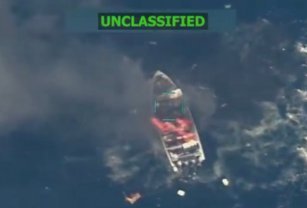
U.S. Southern Command Strikes Narco-Trafficking Vessels in Eastern Pacific
U.S. Southern Command has carried out two lethal strikes against vessels suspected of smuggling drugs in the Eastern Pacific Ocean, killing five people described as narco-terrorists.
The operation, which took place on April 11, is part of a wider campaign to disrupt the flow of narcotics heading toward the United States. According to an official statement from SOUTHCOM, the strikes were ordered by Marine Gen. Francis L. Donovan, the commander of the force.
Intelligence had confirmed the vessels were moving along known trafficking routes and were actively involved in drug smuggling. No American personnel were injured during the engagements.
Right after the strikes, the command notified the U.S. Coast Guard to launch search and rescue operations for the one survivor from the first vessel. Infrared video released by SOUTHCOM shows the moment the boats were hit — bright flashes, large explosions, and thick plumes of smoke rising from the dark ocean surface. The footage gives a clear sense of how quickly and precisely the operation unfolded.
These actions fall under Operation Southern Spear, a broader effort aimed at putting pressure on cartels and the groups that move cocaine, fentanyl precursors, and other drugs through the Western Hemisphere. The Eastern Pacific has become a major route for fast boats and low-profile semi-submersibles used by transnational criminal organizations, often linked to powerful South American cartels.
U.S. officials treat these trafficking networks as terrorist threats because of the violence, corruption, and overdose deaths they cause back home. This is not the first time SOUTHCOM has carried out such strikes. Throughout 2026, there have been multiple similar operations. In February, one set of strikes killed 11 people across three vessels. In March, there were several more, including one on March 8 that killed six, another on March 19 that left three survivors, and one on March 25 that killed four in the Caribbean.
The command has conducted dozens of these missions since late 2025, always following the same basic approach: confirm the target through intelligence, strike, and then immediately call in rescue teams for any survivors. In its latest statement, SOUTHCOM stressed that the vessels were clearly engaged in narco-trafficking.
Gen. Donovan’s team has been stepping up these operations, often releasing video to show the public what is happening. The task force pulls together Navy, Marine Corps, and other assets in the region, backed by intelligence from multiple agencies. The strikes reflect a tougher, more direct approach to stopping drugs at sea, going beyond the traditional method of Coast Guard boardings and seizures.
Supporters say these operations make life much harder for the traffickers and could reduce the amount of drugs reaching American streets. Critics, however, question how targets are chosen, how reliable the intelligence is, and whether classifying these individuals as “narco-terrorists” without public evidence is fair. Independent verification is difficult because SOUTHCOM does not release raw intelligence or details about recovered contraband in these announcements.
Groups that monitor such incidents say it’s hard to know exactly who was on board in remote ocean areas. So far, no major diplomatic protests or international incidents have been reported after the latest strikes. The operations are happening against a backdrop of serious security problems across Latin America and the Caribbean, where drug cartels generate billions in illegal money while fueling violence and instability.
SOUTHCOM covers a huge area – Central and South America, the Caribbean, and the surrounding waters – where these trafficking networks operate. U.S. officials have made it clear that pressure under Operation Southern Spear will continue, with forces staying alert across sea, air, and land.
