
Robotic Revolution: Ukraine Takes Enemy Position Exclusively With Unmanned Ground Vehicles and Aerial Drones
In a remarkable development that could reshape the future of warfare, Ukrainian forces have for the first time captured an enemy position using only aerial drones and unmanned ground vehicles, without sending any infantry into the fight.
The operation ended with Russian troops surrendering to the robotic systems and no losses recorded on the Ukrainian side.
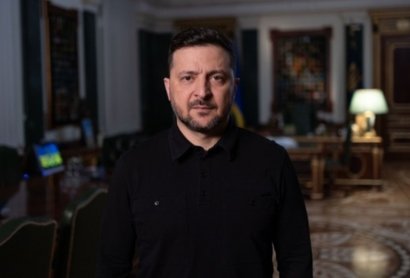
President Volodymyr Zelenskyy announced the achievement on April 13 during a speech to workers in Ukraine’s defence-industrial complex. “The future is here, on the battlefield, and Ukraine is creating it,” he said. “For the first time in the history of this war, an enemy position was taken exclusively by unmanned ground robotic systems and drones. The occupiers surrendered, and this operation was carried out without the involvement of infantry and without any losses on our side.”
Zelenskyy highlighted a range of domestically developed systems that made the operation possible, including the Ratel, Termite, Ardal, Lynx, Zmiy, Protector, Volya and several others.
These platforms have seen rapid deployment in recent months. Over the past three months alone, Ukrainian ground robotic systems have carried out more than 22,000 missions on the front lines, taking on dangerous tasks such as logistics, casualty evacuation, reconnaissance and direct engagement that would normally put soldiers at risk.
Although the exact location and date of the latest operation were not disclosed, reports describe a scenario in which the robotic systems advanced into heavily contested areas, surrounding and pressuring Russian positions from multiple directions. Aerial drones provided real-time intelligence, targeting support and suppression fire, while the unmanned ground vehicles handled ground manoeuvres, including possible mine-laying, direct fire or breaching obstacles.
Ukrainian infantry reportedly moved in only after the position was fully secured, crossing open ground without coming under enemy fire. Faced with machines advancing from all sides, the Russian defenders chose to surrender rather than continue fighting. This marks a significant evolution from earlier uses of unmanned systems, where robots mainly supported human troops.
In this case, the unmanned platforms independently achieved the objective of capturing the position and forcing capitulation. The success builds on earlier experiments by Ukrainian brigades, such as the 3rd Separate Assault Brigade and the 13th “Khartiia” Brigade of the National Guard. These units have been developing combined-arms tactics with drones and ground robots since late 2024.
In previous operations near Kharkiv, dozens of systems – including FPV drones for strikes, multirotor drones for surveillance and minelaying, and armed unmanned ground vehicles equipped with machine guns or grenade launchers – were used to dislodge Russian forces while keeping human soldiers out of direct danger.
There have even been earlier cases where Russian soldiers surrendered directly to a unmanned ground vehicle. Ukraine’s defence-tech sector has accelerated dramatically under the pressures of the full-scale invasion. Facing manpower shortages and the urgent need to protect lives, the country has integrated unmanned ground vehicles into 167 military units as of early 2026.
These systems now routinely handle resupply to exposed positions, casualty evacuation and offensive actions that once required soldiers to advance under fire. Key platforms mentioned by Zelenskyy include the versatile Ratel series, which can launch jam-resistant fibre-optic FPV drones and carry various payloads; the Ardal with advanced turrets capable of engaging targets from concealed positions; and heavier systems such as the Protector and Lynx for transport and sustained combat roles.
Improvements in AI-assisted targeting, thermal imaging and mobility over difficult terrain have made these systems increasingly effective. Analysts describe the operation as a watershed moment in modern warfare. While unmanned systems have long been used in the air and at sea, Ukraine is now demonstrating their ability to achieve complex ground objectives such as capturing positions and forcing surrenders.
By keeping soldiers out of the most dangerous zones, these technologies directly address one of the war’s harshest realities: high infantry casualties in attritional fighting. The innovation comes at a critical time.
Russia continues to make incremental advances in parts of the east and south despite suffering heavy losses, while Ukraine seeks asymmetric advantages through rapid innovation in drone and robotic systems. Experts believe the lessons learned here could influence military doctrines worldwide, especially for countries facing manpower shortages or aiming to minimise human losses.
Zelenskyy framed the achievement as both a tactical success and a powerful symbol. “Over 22,000 times, lives were saved. A robot went into the most dangerous zones instead of a soldier,” he said. As the conflict enters its fifth year, Ukraine’s defence industry – supported by domestic startups, international partnerships and wartime urgency – continues to push technological boundaries.
From swarms of low-cost FPV drones targeting expensive equipment to ground robots handling logistics and assault roles, the battlefield is changing in real time. This latest operation underscores a fundamental truth: necessity drives innovation.
While challenges remain, including countermeasures to electronic warfare and the need to scale production, Ukraine’s robotic successes offer a glimpse into the future of conflict — one in which machines increasingly bear the brunt of the fighting, potentially saving lives on all sides if these technologies are developed and used responsibly.
