
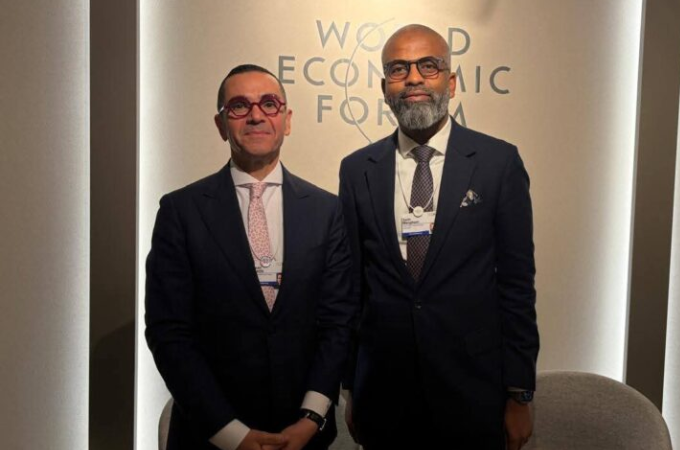
Egypt Explores Investment Opportunities with Uber, Olayan Group, and UPL at Davos
Egypt’s Minister of Investment and Foreign Trade, Hassan El Khatib, held a series of high-level meetings on the sidelines of the World Economic Forum (WEF) in Davos to discuss expansion plans, new investments, and strategic cooperation with three major international companies: Uber, Olayan Group, and UPL.
The discussions focused on strengthening Egypt’s investment climate, highlighting ongoing economic reforms, and aligning with national priorities such as smart transportation, food security, healthcare, energy, and tourism growth.
Meeting with Uber
El Khatib met Uber’s Global Chief Operating Officer Andrew Macdonald to review the company’s operations in Egypt and explore expansion in smart mobility and technology.
The minister described Egypt as one of Uber’s key regional markets, driven by strong demand and a large user base, particularly in Greater Cairo. He emphasized Uber’s contributions to the smart transport ecosystem, including income opportunities for approximately 150,000 drivers and direct employment at its regional customer service center, which serves Europe, the Middle East, and Africa and employs around 400 Egyptians.
Uber executives outlined plans for further growth, especially in tourism—aligned with Egypt’s goal to double tourist arrivals by 2030. Initiatives include tailored services at airports and tourist sites, improved service quality, and increased investment in response to user feedback.
Meeting with Olayan Group
El Khatib also met Olayan Group Chief Operating Officer Saleh Merghany to explore current and future investment opportunities. The minister reaffirmed Egypt’s commitment to supporting foreign investors and maintaining a stable, attractive business environment.
Merghany described Egypt as a “business incubator” for the group, enabling local development before regional expansion. Olayan is seeking to grow investments in food, energy, healthcare, and other promising sectors, leveraging Egypt’s market potential.
Meeting with UPL Group
The minister met UPL Group Chairman and CEO Jai Shroff to review the Indian company’s long-standing activities in Egypt, particularly in agriculture. UPL operates agricultural projects, owns ports, manages import capabilities, and is active in seeds, advanced fruit coating technologies for citrus and mango exports, and farm processing/packaging facilities.
El Khatib outlined Egypt’s national strategy for food security under President Abdel Fattah Al Sisi, noting cultivated land has increased from 6 million feddans to 9 million, with plans to add another 4.5 million feddans. He emphasized Egypt’s shift toward private-sector management of major agricultural projects under sound governance to improve efficiency.
The discussion also touched on India’s experience in digital financial inclusion, which Egypt aims to replicate to enhance access to services, digital payments, transparency, and targeted cash assistance.
Broader Context
Egypt’s population of approximately 110 million—60% under 30 and 30 million in education—provides a strong base for growth in agriculture, technology, and services. These meetings reflect Egypt’s strategy to attract foreign direct investment (FDI), deepen partnerships with global firms, and position the country as a regional hub amid economic reforms, including fiscal adjustments and updated investment laws.
The engagements underscore Egypt’s focus on sustainable development, food security, tourism recovery, and digital transformation while leveraging private-sector expertise and international best practices.
