
Kinshasa Sets Rigid Terms for National Dialogue Amid Escalating Eastern Conflict
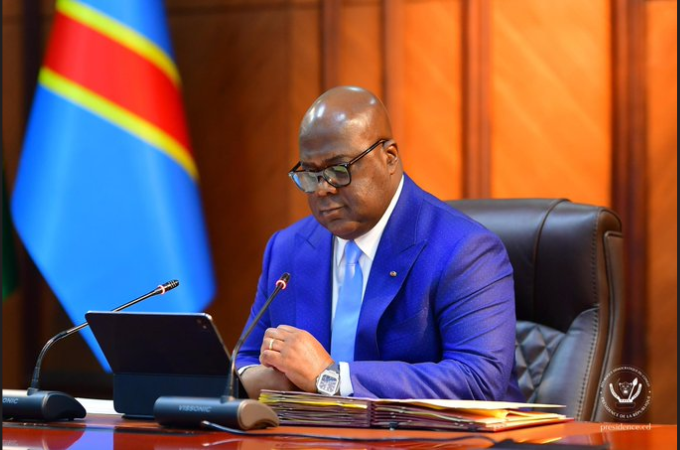
President Félix Tshisekedi reaffirmed his commitment to an inclusive national dialogue during a New Year’s address to the diplomatic corps on Saturday, February 1, 2026.
However, the Congolese leader established a series of stringent “red line” preconditions that may complicate the involvement of a fractured opposition. The announcement comes as the Democratic Republic of Congo (DRC) continues to grapple with a dual crisis: a persistent insurgency by Rwanda-backed M23 rebels in the east and a contentious domestic political climate following the previous election cycle.
The President’s address identified 2026 as a “decisive year” focused on the restoration of state authority and economic transformation. While the proposal for an inter-Congolese dialogue has gained momentum – supported recently by Angolan President João Lourenço – Tshisekedi insisted that any such process must remain under strict institutional control. He explicitly stated that the dialogue would not serve as a mechanism to challenge his legitimacy or the results of universal suffrage, effectively dismissing opposition claims regarding his management of the state.
Why It Matters: Strategic Stability and Sovereignty
The significance of this dialogue extends beyond mere political theater; it is a critical component for regional stability. By insisting that the process take place on home soil and under existing institutional frameworks, Tshisekedi is signaling a rejection of foreign-mediated “power-sharing” deals that have historically characterized Congolese transitions. For the international community, the success of this dialogue is the primary bellwether for whether the DRC can move toward durable security or sink further into a governance vacuum.
Furthermore, the economic implications are profound. The ongoing conflict in the east has displaced millions and choked trade routes. Establishing a unified political front in Kinshasa is seen by many informed observers as a prerequisite for the “governance reforms” and “economic transformation” the President promised. Without internal cohesion, the state’s ability to repel the M23 advance or attract foreign investment remains severely compromised.
Context: The Shadow of the Past
The Judicial Factor in Congolese Politics
In September 2025, a military court sentenced former president Joseph Kabila to death in absentia for treason and crimes against humanity. The court alleged Kabila played a role in supporting the M23 rebels, a claim the former leader has vehemently denied. This conviction looms large over the current dialogue proposal, as Tshisekedi has explicitly stated that political discussions “should not seek to overturn court decisions.” This effectively ensures that the judicial purge of the previous administration remains off the negotiating table.
A Lifeline on Lake Tanganyika
While political leaders debate in Kinshasa, the human cost of the conflict is felt most acutely in the border regions. In Uvira, a glimmer of hope emerged this week as transport resumed on Lake Tanganyika. The government had suspended traffic for over 45 days following the occupation of the area by AFC/M23 rebels. For local traders like Mama Sarah, who relies on the ferry to bring goods from Burundi, the suspension was a slow financial death.
The reopening of the Kalemie-Uvira route and international links to Tanzania and Zambia represents the return of a vital economic artery. This resumption of trade provides a necessary relief valve for a population that has endured months of shortages, fear, and market paralysis.
