
Iran Reimposes Strict Control Over Strait of Hormuz, Escalating Tensions with U.S. Amid Fragile Ceasefire
Iran’s military has reimposed strict control over the Strait of Hormuz, effectively closing the vital waterway to commercial traffic until the United States lifts its naval blockade on Iranian ports.
The reversal came less than 24 hours after Tehran had declared the strait “completely open” for the remainder of a U.S.-brokered ceasefire tied to a truce in Lebanon. The Islamic Revolutionary Guard Corps (IRGC) Navy stated that the strait has “returned to its previous state,” citing U.S. “violations” of the ceasefire agreement and the continued blockade as justification.
Iranian state media are reporting that approaching vessels will face strict enforcement, and maritime security sources confirm incidents involving Iranian gunboats firing on or warning off ships attempting passage, including reports of attacks on at least two Indian-flagged vessels.
U.S. Central Command (CENTCOM) has confirmed that its forces have turned back 21 vessels since the blockade on Iranian ports began on April 13, while allowing transit to non-Iranian ports. CENTCOM reiterated that U.S. forces “will not impede freedom of navigation for vessels transiting the Strait of Hormuz to and from non-Iranian ports,” but the situation has led to a sharp drop in overall traffic.
The United Arab Emirates has expressed deep disappointment and concern over the renewed restrictions. Abu Dhabi National Oil Company CEO Sultan Al Jaber stated that the strait remains effectively closed due to Iranian conditioning and restrictions on traffic, despite the ceasefire. The UAE, along with other Gulf states, has been lobbying for international action to ensure freedom of navigation, viewing the strait as critical to its energy exports and regional stability.
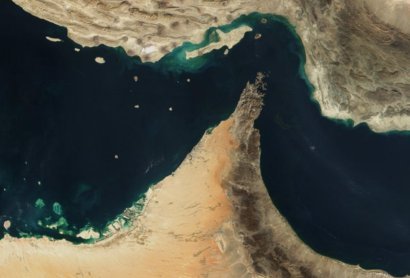
The Strait of Hormuz, a narrow chokepoint between the Persian Gulf and the Gulf of Oman, serves as the conduit for roughly 20-21% of global oil and liquefied natural gas (LNG) trade. Any sustained disruption risks sharp spikes in energy prices, supply chain chaos for importers in Asia and Europe, and broader economic ripple effects.
Satellite imagery and shipping trackers showed a dramatic drop in vessel traffic after the announcement, with ships turning back or aborting attempts to transit. India has summoned Iran’s ambassador over the reported shooting incidents, highlighting the immediate international fallout.
The episode unfolded against the backdrop of a fragile regional ceasefire. On April 17, Iranian Foreign Minister Abbas Araghchi announced the strait was fully reopened to commercial vessels for the duration of the 10-day Israel-Lebanon ceasefire, which was part of broader U.S.-mediated efforts to de-escalate the wider Iran-Israel-U.S. conflict. U.S. President Donald Trump responded by affirming that the strait was “open and ready for business” but insisted the American naval blockade on Iranian ports and ships “will remain in full force” until a comprehensive deal is reached – including limits on Iran’s nuclear program.
Hours later, on April 18, the IRGC reversed course, declaring the waterway under tight military control once more. Iranian officials framed the U.S. position as a breach of trust and “maritime piracy.” Supreme Leader Mojtaba Khamenei, in a rare statement circulated on Telegram, warned that Iran’s “brave navy stands ready to make the enemies taste the bitterness of new defeats.”
The blockage underscores internal dynamics in Tehran, where the IRGC appears to have overridden or clarified the civilian government’s earlier conciliatory signal. The U.S. imposed the naval blockade on Iranian ports following stalled talks in Pakistan earlier in April.
More than a dozen U.S. warships and supporting assets are involved in enforcing restrictions on vessels entering or exiting Iranian facilities, while allowing transit to non-Iranian ports in the region.
Meanwhile, President Trump has described the blockade as leverage to force negotiations on a “100% complete” agreement. He has hinted at possible renewed talks this weekend or early next week, potentially in Islamabad, but the current ceasefire window is set to expire around April 22.
Oil markets have reacted with volatility. The brief reopening on Friday had already contributed to some relief, but the renewed closure is expected to push prices higher in the short term, with major shipping firms exercising caution. Experts have warned that even if the strait reopens, restoring normal supply chains could take months due to rerouting, insurance costs, and backlogs.
International reactions have been swift. Beyond India’s diplomatic protest, concerns are mounting among Gulf states, China (a major buyer of Iranian and regional oil), and European energy importers. The United Nations Convention on the Law of the Sea is frequently cited in discussions, as unilateral closures of international straits raise legal questions.
With the ceasefire deadline approaching, both sides appear locked in a high-risk standoff. Iran views the U.S. blockade as incompatible with any genuine de-escalation, while the Trump administration sees sustained pressure as essential to curbing Tehran’s nuclear ambitions and regional influence. Diplomatic channels remain active, but the rapid flip-flop on the strait highlights deep mistrust and factional differences within the Iranian regime.
Observers warn that miscalculation could quickly unravel the fragile truce, with consequences far beyond the Gulf. This situation remains fluid. Further developments in talks, naval movements, or oil price reactions will shape the coming days.
