
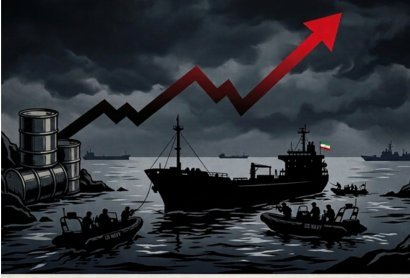
Oil Prices Surge Over 6% as US-Iran Tensions Escalate in Strait of Hormuz Following Ship Seizure
Global oil prices rose sharply on Monday amid heightened tensions between the United States and Iran following the seizure of an Iranian-flagged cargo ship by US forces near the Strait of Hormuz.
The incident has raised fresh concerns over the security of one of the world’s most critical energy chokepoints, through which roughly a fifth of global oil supplies typically passes.
According to Reuters and the Associated Press, President Donald Trump announced on Sunday that the US Navy had attacked and seized the vessel after it attempted to bypass a US-imposed blockade on Iranian ports. Iran’s joint military command responded by vowing a swift retaliation, casting doubt on a fragile ceasefire agreement that was due to last until Tuesday.
The development triggered an immediate reaction in commodity markets. Brent crude futures, the international benchmark, climbed more than 6 percent in early Asian trading, reaching around $96 per barrel. West Texas Intermediate crude, the US benchmark, recorded a similar gain, rising to approximately $90 per barrel.
This rebound erased much of the sharp decline seen on Friday when hopes for a diplomatic breakthrough briefly lifted sentiment. The Strait of Hormuz has become a focal point of the standoff.
Iran had briefly indicated that the waterway was open to commercial traffic over the weekend, allowing limited vessel movements.
However, Tehran reversed course, reasserting control and reportedly firing on several ships, prompting the US to maintain its naval blockade.
The latest seizure marks the first such direct interception since the blockade began. Traders and analysts are closely monitoring the situation for any signs of further disruption to oil flows.
While some vessels managed to transit the strait on Saturday, overall shipping activity remains significantly below normal levels. Any prolonged closure or heightened risk premium could exacerbate supply concerns, particularly as global energy markets remain sensitive to developments in the Middle East.
Financial markets reflected the uncertainty as the US dollar edged higher after a sharp sell-off the previous week. Stock futures in the United States slipped, with S&P 500 contracts falling around 0.7 percent following the index’s record close on Friday.
In Asia-Pacific, trading was mixed: Australia’s S&P/ASX 200 declined by about 0.5 percent, while Japan’s Nikkei 225 posted a modest gain of roughly 0.7 percent. Bond markets, which had rallied on Friday amid optimism over the temporary reopening, saw a retreat on Monday as investors reassessed geopolitical risks. Gold prices also experienced volatility, though specific movements varied across reports.
Meanwhile, President Trump indicated that US negotiators would return to Islamabad for a second round of talks with Iranian representatives, despite Tehran rejecting the notion of immediate progress. The ceasefire, initially aimed at de-escalating broader regional hostilities, now appears increasingly tenuous just days before its scheduled expiration.
Energy experts note that the Strait of Hormuz remains vital for exporters including Saudi Arabia, Iraq, the United Arab Emirates and Kuwait. Disruptions there have historically led to significant price spikes and volatility in global energy costs.
Current tensions follow a period of relative calm after earlier announcements of potential openings, which had contributed to a sharp drop in oil prices late last week. US Central Command has stated that the Iranian vessel, identified in some reports as the Touska, ignored multiple warnings before US forces fired on its engine room to disable it. Marines subsequently boarded the ship, which is now in American custody. No injuries to the crew were immediately reported, though the action underscores the enforcement of the blockade.
Iranian officials have described the seizure as a violation of the ceasefire and a provocative act. The country’s top military leadership has warned of consequences, raising the prospect of retaliatory measures that could further threaten maritime safety in the region.
Market participants appear divided between those betting on a swift diplomatic resolution and others preparing for extended volatility. Some observers suggest that while a full closure of the strait remains unlikely due to its economic impact on multiple nations, including Iran itself, even sporadic incidents can sustain a risk premium in oil pricing.
The broader economic implications extend beyond energy. Higher oil costs could feed into inflation pressures worldwide, affecting transportation, manufacturing and consumer goods. For importing nations, this translates into potential strain on budgets and growth forecasts.
In the United States, the developments come as the Trump administration balances military posture with negotiation overtures. The president has previously signalled openness to dialogue while maintaining a firm stance on security issues in the Gulf.
European and Asian importers, heavily reliant on Middle Eastern crude, are watching developments with concern. Insurance rates for vessels transiting the area have already risen, and shipping companies may reroute or delay cargoes, adding logistical costs that ultimately pass to end consumers.
Meanwhile, the reaction in equity markets highlights the interconnectedness of geopolitical events and investor sentiment. Friday’s record highs in US stocks were driven in part by expectations of eased tensions and resumed oil flows. Monday’s pullback illustrates how quickly such optimism can reverse.
Bond yields, which had fallen last week as safe-haven demand increased, showed signs of normalisation amid the renewed uncertainty. Currency movements, particularly the dollar’s rebound, reflect its traditional role during periods of global risk aversion. Looking ahead, attention will focus on any statements from OPEC+ members or major producers regarding potential supply adjustments.
However, with the immediate issue centred on transit rather than production capacity, the market’s response is likely to remain driven by shipping and risk perceptions. Diplomatic channels remain active, with talks in Pakistan offering a potential off-ramp.
Yet the rejection by Iran of a second round, as reported in some accounts, suggests deep divisions persist over key issues including nuclear concerns and regional security arrangements. For now, the fragile nature of the ceasefire continues to weigh on market confidence.
