
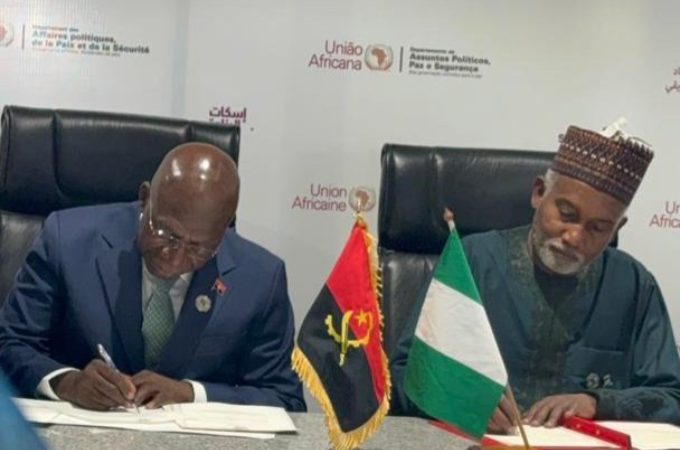
Strategic Mobility: Nigeria and Angola Ink Visa Waiver to Accelerate Diplomatic Ties
To synchronize the diplomatic machinery of Africa’s two leading oil producers, Nigeria and Angola have formally signed a bilateral agreement waiving visa requirements for holders of diplomatic and official/service passports. This strategic pact, finalized on the margins of the 39th African Union (AU) Summit, is designed to eliminate the administrative friction that has historically slowed high-level engagements between Abuja and Luanda.
Minister of Foreign Affairs, Hon. Yusuf Maitama Tuggar, and Angola’s Minister of External Relations, Ambassador Téte António, signed the Memorandum of Understanding (MoU) during a ceremony that Tuggar described as “long overdue.” While the waiver is currently restricted to government personnel, both ministers signaled that this move serves as the foundational architecture for a future where ordinary citizens of both nations might enjoy similar freedom of movement.
Eliminating the “Official Bottleneck”
For decades, even top-tier diplomats traveling between Nigeria and Angola were subject to rigorous visa applications, often requiring notes verbales and wait times that could exceed two weeks. This agreement effectively:
-
Accelerates Decision-Making: Facilitates immediate travel for emergency bilateral talks and regional security coordination.
-
Boosts Economic Synergy: Eases the movement of officials overseeing joint ventures in the energy, mining, and agricultural sectors.
-
Advances AU Integration: Directly supports Agenda 2063, the AU’s blueprint for a “continent of seamless borders.”
The Global Mobility Gap
The signing highlights a growing dichotomy in Nigerian travel freedom. While government officials now enjoy a wider net of visa-free African partners – including South Africa, Kenya, Rwanda, and Ethiopia – the average Nigerian traveler remains constrained.
| Metric | Current Status (Feb 2026) |
| Henley Global Rank | 89th (shared with Myanmar) |
| Visa-Free/VOA Score | 44 Destinations |
| Africa Rank | 7th Least Desirable Passport |
Minister Tuggar noted the symbolic significance of signing this deal in Addis Ababa, recalling that it was in this same capital that former Head of State Murtala Mohammed delivered his iconic “Africa Has Come of Age” speech, which solidified Nigeria’s historic support for Angolan sovereignty.
What This Means for the Future
By removing these barriers for the state, Nigeria is betting that “official mobility” will act as a catalyst for private sector growth. As government officials move more freely to harmonize trade policies and security protocols, the hope is that Luanda and Abuja will eventually extend these privileges to business leaders and tourists, reflecting the spirit of the African Continental Free Trade Area (AfCFTA).
