
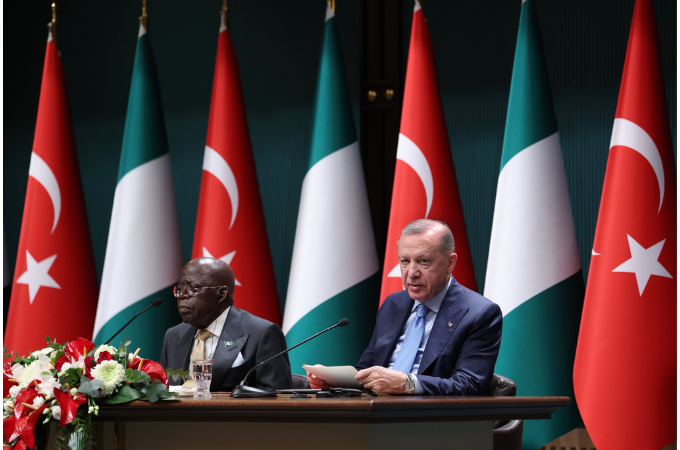
Nigeria and Türkiye Sign Landmark Defense Cooperation Deal During President Tinubu’s Ankara Visit
Nigeria and Türkiye have signed a landmark Defense Cooperation Agreement, marking one of the most significant upgrades in bilateral relations between both countries in more than a decade.
The deal was finalized during President Bola Ahmed Tinubu’s official state visit to Ankara on January 27, 2026, and capped a series of engagements that produced nine agreements and MoUs across defense, security, education, media, diplomacy, diaspora affairs, halal accreditation, higher education, and trade.
The signing ceremony took place at Türkiye’s Presidential Complex in the presence of President Recep Tayyip Erdoğan and President Tinubu.
What the Defense Deal Covers
The new agreement deepens military collaboration between Nigeria and Türkiye through:
- Joint military training programs
- Intelligence and information sharing
- Counter‑terrorism cooperation
- Defense technology transfer
- Potential procurement and co‑development of Turkish defense systems
President Erdoğan reaffirmed Türkiye’s support for Nigeria’s counter‑terrorism operations, particularly against Boko Haram and ISWAP, stating Türkiye is ready to expand cooperation where its systems — including Bayraktar TB2 drones and T129 ATAK helicopters — have already played a role in Nigeria’s security efforts.
President Tinubu described Nigeria as “open for serious partnership,” emphasizing that Nigeria has removed barriers to fair trade, investment, technology transfer, and joint prosperity. His delegation included senior defense and security officials, underscoring the importance of the cooperation framework.
Economic and Trade Elements
Beyond defense, the two leaders committed to significantly expanding economic ties.
President Erdoğan reiterated the shared goal of growing annual bilateral trade to $5 billion, up from:
- $877 million in 2024
- $688 million in the first 11 months of 2025
Türkiye expressed readiness to deepen investment in Nigeria’s energy sector, with potential collaboration involving the Turkish Petroleum Corporation (TPAO), BOTAŞ, and Nigerian agencies on oil and gas modernization.
The creation of a Joint Economic and Trade Committee (JETCO) is expected to help remove trade barriers and boost investment flows between both nations.
Diplomatic & Ceremonial Highlights
The visit featured symbolic elements, including:
- A formal welcome ceremony involving 103 cavalry units, marking the 103rd anniversary of the Republic of Türkiye
- A moment when President Tinubu briefly slipped during the reception — an incident downplayed quickly as he continued engagements in good health
Mixed Reactions
Reactions across social media were divided:
Supporters argue the defense pact provides:
- A long‑needed boost to Nigeria’s military capabilities
- Access to affordable and combat‑tested drones and helicopters
- Diversification away from dependence on Western suppliers
Critics raised concerns about:
- Türkiye’s regional foreign policy
- Possible overlap with Nigeria’s existing partnerships (U.S., U.K., EU, NATO allies)
- Lack of clarity on contract details and financing
Strategic Context
The defense agreement aligns with Nigeria’s broader strategy to widen security partnerships amid escalating threats from:
- Jihadist insurgencies
- Banditry and kidnapping
- Cross‑border organized crime
Türkiye has become a major defense exporter to Africa, with its drone platforms — especially the Bayraktar TB2 — now in use across multiple African states, including Nigeria.
The agreements also align with Nigeria’s push to boost investment under the Petroleum Industry Act (PIA) 2021 and position itself as a regional stabilizer in West Africa and the Sahel.
Next Steps
Implementation will move to joint committees and technical working groups focusing on:
- Training exchanges
- Defense technology transfer
- Military equipment procurement pathways
- Energy-sector modernization
- Trade facilitation under JETCO
Both Presidents expressed confidence that the agreements will strengthen security and accelerate economic growth for both countries.
