
Electoral Act: Senate Appoints 12-Member Panel to Harmonize Bill Amid E-Transmission Backlash
The Senate of the Federal Republic of Nigeria has constituted a 12-member conference committee to harmonize its version of the Electoral Act 2022 (Repeal and Reenactment) Amendment Bill 2026 with that of the House of Representatives.
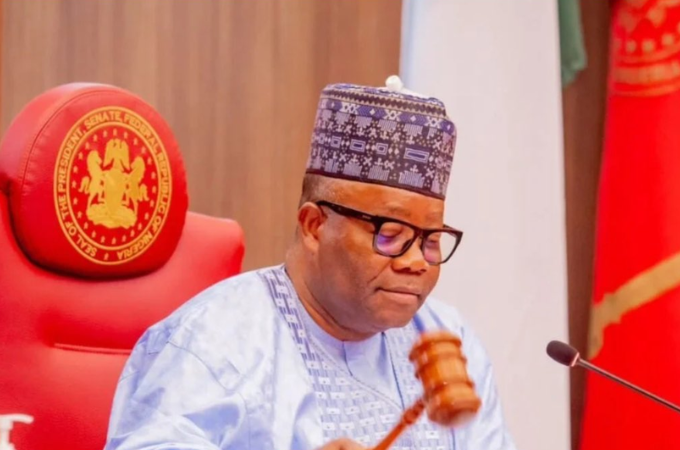
Senate President Godswill Akpabio announced the decision during an emergency plenary session on Tuesday, February 10, 2026, amid ongoing public protests and criticism over the removal of “real-time” electronic transmission of election results.
Akpabio increased the committee size from nine to 12 members after consultations with leadership. The appointed senators are:
-
Senator Simon Bako Lalong – Chairman
-
Senator Mohammed Tahir Monguno – Member
-
Senator Adamu Aliero – Member
-
Senator Orji Uzor Kalu – Member
-
Senator Abba Moro – Member
-
Senator Asuquo Ekpenyong – Member
-
Senator Aminu Iya Abbas – Member
-
Senator Tokunbo Abiru – Member
-
Senator Niyi Adegbonmire (SAN) – Member
-
Senator Jibrin Isah – Member
-
Senator Ipalibo Banigo – Member
-
Senator Onyekachi Nwebonyi – Member
Akpabio urged the committee to treat the assignment as urgent and expressed optimism that harmonisation could be concluded within days or one week, allowing President Bola Ahmed Tinubu to sign the amended bill into law before the end of February 2026.
The emergency session was convened following widespread backlash over the Senate’s February 4, 2026, decision to remove “real-time” transmission during third reading. The bill retains discretionary language, allowing INEC to prescribe the method of result transmission rather than mandating immediate uploads to the IReV portal.
Protests, including the Occupy National Assembly demonstration that began on February 9, 2026, have demanded mandatory real-time transmission to prevent manipulation and restore trust ahead of the 2027 elections. Prominent figures such as Peter Obi and Rotimi Amaechi have participated, with civil society groups, the Nigerian Guild of Editors (NGE), and the Nigeria Labour Congress (NLC) also calling for the change.
Nigeria’s Electoral Act History
Nigeria’s electoral laws have evolved over time to address transparency, technology, and credibility:
-
1999 Constitution (as amended): Establishes INEC’s powers to conduct elections and provides the legal foundation for electoral processes.
-
Electoral Act 2006: Governed 2007 and 2011 elections. Relied heavily on manual processes, widely criticised for result manipulation.
-
Electoral Act 2010: Introduced improvements such as early voter registration and greater INEC independence. Still lacked mandatory electronic transmission.
-
Electoral Act 2022: Signed by President Muhammadu Buhari on February 25, 2022. Key features included:
-
BVAS: Introduction of Bimodal Voter Accreditation System.
-
Section 60(2): Allows electronic transmission “as prescribed by the Commission” (discretionary).
-
Section 65: Physical collation requirements, sparking debates over technology versus manual override.
-
Used in the 2023 general elections, the 2022 Act faced criticism for delayed IReV uploads and allegations of tampering during collation.
Current Amendments and February 10 Senate Session
The Electoral Act 2022 (Repeal and Reenactment) Amendment Bill 2026, passed through third reading by the Senate on February 4, 2026, retained the discretionary transmission clause. This sparked protests starting February 9, 2026, at the National Assembly gate.
On February 10, 2026, the Senate held an emergency plenary session to address the controversy. Senator Enyinnaya Abaribe and 13 colleagues held a media briefing insisting the Senate had approved electronic transmission, not rejected it, and that “real-time” was deliberately chosen over “transfer” to avoid ambiguity. However, during clause-by-clause consideration on February 4, the word “transmission” was expunged and replaced with “transfer” as in the 2022 Act.
The bill remains inconclusive pending adoption of Votes and Proceedings and harmonization between chambers. If passed and signed by President Bola Ahmed Tinubu, the changes will shape Nigeria’s electoral framework for the 2027 general elections and beyond.
