
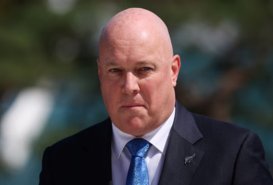
New Zealand PM Luxon Wins Confidence Vote in National Party Caucus, Quells Leadership Speculation
New Zealand Prime Minister Christopher Luxon has emerged from a National Party caucus meeting with a formal vote of confidence in his leadership, effectively quelling recent speculation about his position ahead of the general election scheduled for November 7.
The development comes as both the ruling National Party and Luxon personally register some of their lowest approval ratings in recent polling. Statements issued after the closed-door gathering as reported by RNZ and Reuters, state thatLuxon initiated the confidence motion himself during the routine caucus session. He later told reporters that the motion passed and that he retained the full support of his parliamentary colleagues. “I have the support of my caucus as their leader,” Luxon said, adding that the party had responded “clearly and decisively” and that the matter was now closed.
The confidence vote took place against a backdrop of intensifying media discussion over Luxon’s leadership and the coalition government’s prospects. Recent polls have shown National’s support slipping to around 30 percent or lower, with the combined ruling coalition – comprising National, ACT and New Zealand First – struggling to maintain a majority in projected seat counts.
Luxon’s own preferred prime minister rating has also fallen, reaching as low as 16 percent in some surveys, trailing opposition Labour leader Chris Hipkins. Luxon, a former airline executive who has led the National Party since 2021 and served as prime minister since the 2023 election, acknowledged the challenging economic environment contributing to the dip in popularity.
A weakening economy and rising unemployment have weighed on public sentiment in the months leading into the election campaign period. In response to the latest polling data, Luxon has maintained that he remains focused on delivering economic improvements and has no intention of stepping aside.
Senior party figures have publicly expressed confidence in his continued leadership, though private frustrations within parts of the caucus have been reported in local media. The prime minister described the confidence vote as a means to put an end to external speculation. “The last week, there has been intense media speculation about my leadership,” he noted, stating that the outcome had addressed those concerns directly.
The National Party governs in coalition with ACT and New Zealand First following its victory in the 2023 general election. Luxon’s assertion of caucus unity is intended to project stability as the government prepares its budget and final legislative agenda before the November poll.
Political observers note that while the confidence motion has formally closed the immediate leadership question, underlying challenges persist. Several recent surveys, including those from 1News-Verian and Talbot Mills, indicate that National’s support has declined significantly from earlier highs, with some projections suggesting the current coalition could fall short of the numbers needed to form the next government.
Opposition parties have seized on the polling to question the effectiveness of Luxon’s administration. The timing of the caucus meeting coincides with parliament’s return and heightened pre-election manoeuvring. With less than seven months until voters head to the polls on November 7, 2026, both the government and opposition are intensifying efforts to address voter concerns over cost of living, housing, healthcare and economic management.
Luxon has repeatedly emphasised his government’s commitment to delivering economic prosperity and has urged New Zealanders to judge the coalition on its policy delivery rather than short-term polling fluctuations. He has pointed to global economic headwinds as a factor affecting many incumbent governments worldwide.
Nevertheless, the latest figures represent some of the most difficult results for Luxon since taking office. In one poll released in mid-April, National recorded 30 percent support while Luxon’s preferred prime minister rating dropped four points to 16 percent. Analysts suggest that sustained poor performance could embolden further internal discussions, although senior ministers have publicly dismissed the prospect of a leadership change.
The confidence vote was held privately, in line with standard National Party caucus procedures. No details of the exact margin or any dissenting voices were made public, consistent with the confidential nature of such internal processes.
Luxon’s move to call the vote proactively is seen by some commentators as a strategic step to demonstrate control and unity. As the political landscape shifts toward full campaign mode, attention will turn to how the government manages its remaining legislative priorities and communicates its achievements.
The coalition’s ability to stabilise economic indicators and communicate a clear vision for the future will be critical in regaining voter confidence.
Meanwhile, opposition Labour has used the opportunity to highlight what it describes as failures in economic management under Luxon, positioning itself as a viable alternative, as other parties, including the Greens and Te Pāti Māori, continue to advocate for their respective policy platforms on climate, social equity and indigenous issues.
