
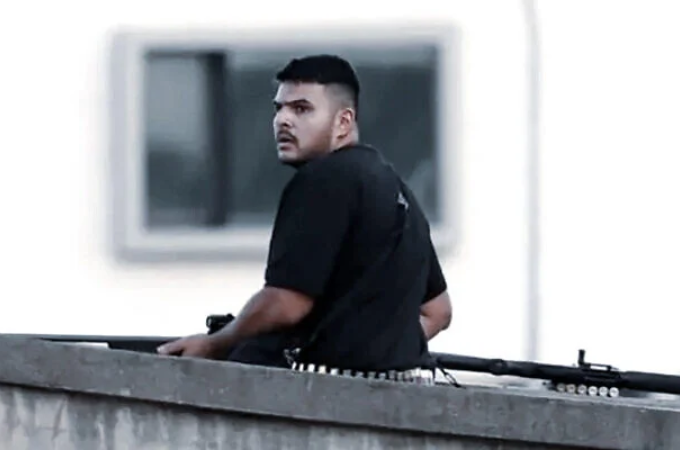
Accused Bondi Beach Gunman Naveed Akram Makes First Court Appearance via Video Link
Naveed Akram, the 24-year-old man charged in connection with the December 14, 2025, mass shooting at a Hanukkah celebration near Bondi Beach, appeared in court for the first time on Monday via video link from Goulburn Correctional Centre, a maximum-security prison southwest of Sydney.
Akram faces 59 serious charges related to the attack, which killed 15 people and injured 40 others during a public event organized by the Chabad community in Archer Park. Authorities have classified the incident as an ISIS – inspired act of terrorism, marking it as one of Australia’s deadliest mass shootings since the 1996 Port Arthur massacre.
Details of the December 14 Attack
Police and court documents state that Naveed Akram and his father, Sajid Akram (50, an Indian national and Australian resident), carried out a planned assault. The pair allegedly threw four improvised explosive devices – none of which detonated – before opening fire on the crowd of approximately 1,000 people. Sajid advanced with straight – pull shotguns at close range, while Naveed provided covering fire from an elevated position using a .308 straight-pull rifle.
Investigations revealed months of preparation, including firearms training in rural New South Wales, reconnaissance visits to the site days earlier, and a trip to Davao City in the southern Philippines in November 2025 (though no evidence of training or external support was found there). Naveed had prior links to extremist networks, including following Sydney-based pro – ISIS preacher Wisam Haddad and appearing in videos preaching to teenagers years earlier. Neither was on an active terrorism watchlist at the time, and Sajid had held a valid firearms license since 2023.
Police engaged the gunmen in a shootout at the scene. Sajid was fatally shot, while Naveed was wounded in the abdomen, treated in hospital, and later transferred to custody.
Monday’s Court Appearance
The brief hearing took place at the Downing Centre Local Court in Sydney. Akram appeared on video from prison, dressed in standard greens, responding only with short affirmations (“yeah” and “yep”) when addressed by the magistrate. No pleas were entered, as the session was administrative rather than substantive.
The magistrate extended existing suppression orders, limiting public disclosure of certain victim details and sensitive information in court documents. The case was adjourned, with the next mention set for April 2026. Prosecutors must submit a full brief of evidence by early April.
Akram remains on remand at Goulburn, classified as high-risk due to the terrorism-related charges.
How Australia Handles Terrorism and Mass Casualty Cases
Australia’s justice system manages serious terrorism and mass-casualty offenses through a combination of state (New South Wales) and federal jurisdiction. Key terrorism charges fall under the federal Criminal Code Act 1995, enforced by the Australian Federal Police (AFP) and prosecuted by the Commonwealth Director of Public Prosecutions (CDPP).
The NSW Joint Counter Terrorism Team – involving NSW Police, AFP, ASIO, and other agencies – laid initial charges shortly after the attack. Federal involvement ensures national security aspects are addressed.
The process typically includes:
-
Initial charging and remand: Defendants are usually held without bail due to flight risk, public safety concerns, and the severity of charges. Terrorism offenses carry a presumption against bail.
-
Committal proceedings: In the Local Court, the matter moves through administrative mentions (like today’s) and committal hearings to test evidence and determine if there’s a prima facie case for trial in the Supreme Court of NSW.
-
Suppression orders: Courts frequently restrict reporting on victim identities, sensitive details, or national security information to protect victims, investigations, and fair trial rights.
-
Trial and sentencing: If committed, trials occur before a judge and jury in the Supreme Court. Murder convictions carry mandatory life sentences (with or without parole eligibility), while terrorism offenses add decades. Federal provisions allow extended sentences and post-release control orders.
Complex cases like this often take years due to digital forensics, international inquiries, witness statements, and psychological assessments. Victims and families can provide impact statements, with support available through state victims’ commissions.
The case continues to fuel national discussion about counterterrorism, firearms regulation, radicalization monitoring, and safety at public events. Authorities maintain the attackers acted independently, with no evidence of a broader network.
