
INTERPOL Operation Red Card 2.0: 651 Arrests and $4.3M Recovered in Africa Cybercrime Blitz
INTERPOL has announced that law enforcement in 16 African countries have arrested 651 individuals suspected of cyber fraud during Operation Red Card 2.0, a two-month initiative running from December 8, 2025, to January 30, 2026 in which authorities recovered more than 4.3 million U.S. dollars and disrupted networks responsible for at least 45 million dollars in estimated global losses.
In a statement released on its website, INTERPOL says the operation focused on dismantling organized groups behind high-yield investment fraud, mobile-money deception, and fake digital-loan applications. These schemes often used social media ads, messaging apps, fabricated success stories, and fake dashboards to lure victims, then blocked withdrawals or imposed hidden charges. Investigators identified 1,247 confirmed victims, seized 2,341 electronic devices, and took down 1,442 malicious IPs, domains, and servers.
Regional Successes
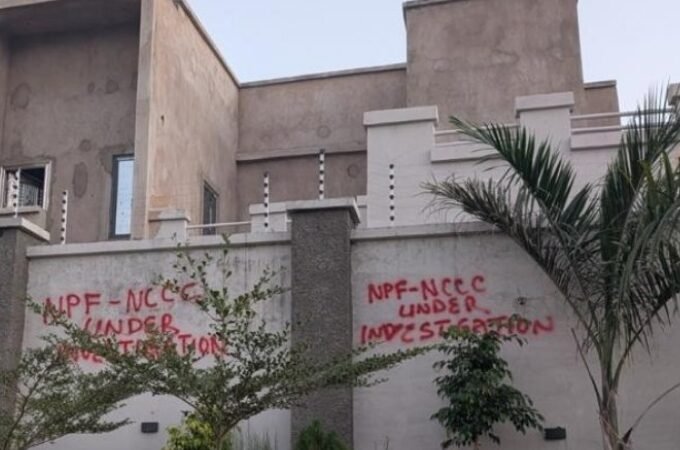
In Côte d’Ivoire, teams dismantled a network running deceptive mobile-loan apps that targeted vulnerable users with quick-credit promises, followed by data theft, harassment, and unauthorized fees. Nigeria saw arrests linked to a group that infiltrated a major telecom provider’s systems using stolen staff credentials to divert airtime and data bundles for resale on illicit markets. Similar patterns emerged in Kenya, Ghana, South Africa, and other participating nations: Benin, Ethiopia, Morocco, Senegal, Tanzania, Uganda, Zambia, Zimbabwe, Cameroon, Tunisia, and Algeria.
The Legacy of Red Card 1.0
This effort builds directly on the original Operation Red Card (November 2024 – February 2025), which INTERPOL coordinated across seven countries – Benin, Côte d’Ivoire, Nigeria, Rwanda, South Africa, Togo, and Zambia. That first phase resulted in 306 arrests and the seizure of 1,842 devices. It targeted similar threats: mobile banking fraud, investment scams promoted via messaging apps, and fraudulent schemes exploiting online trust. The operation affected over 5,000 victims and demonstrated early success in disrupting cross-border networks through INTERPOL’s African Joint Operation against Cybercrime (AFJOC) framework.
Red Card 1.0 highlighted the rapid evolution of cyber-enabled fraud in Africa, with criminals using encrypted channels and social engineering to evade detection. The follow-up Red Card 2.0 expanded the geographic scope to 16 countries, increased victim identification, and achieved higher arrest numbers and asset recovery, reflecting improved coordination, better intelligence sharing, and stronger engagement with private-sector partners for threat data.
Ongoing Investigation and Prevention
INTERPOL officials emphasized that these operations underscore the transnational nature of cybercrime, where groups operate from multiple jurisdictions to exploit gaps in enforcement. The agency stressed the importance of sustained international collaboration to keep pace with evolving tactics. Investigations continue in several countries to trace additional victims, pursue fugitives, and recover further assets.
The back-to-back Red Card operations represent a growing regional commitment to countering digital fraud, which threatens financial inclusion, consumer confidence, and economic stability across Africa. Authorities urged the public to verify unsolicited offers, avoid sharing sensitive information, and report suspicious activity to help prevent future losses.
