
Kim Jong Un Re-Elected: North Korea Vows Nuclear Expansion at 9th Party Congress
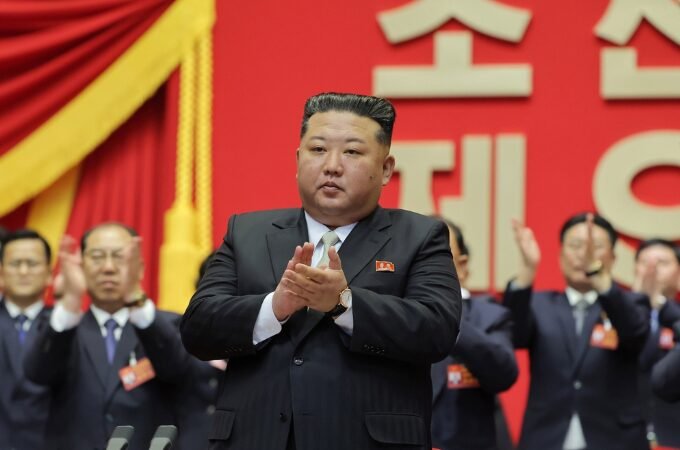
Delegates at the Ninth Congress of the Workers’ Party of Korea (WPK) have unanimously re-elected Kim Jong Un as General Secretary of the ruling party, the highest position within North Korea’s sole governing political organization.
The decision came on the fourth day of the rare high-level gathering that opened on February 19 in the capital. The WPK Congress is the party’s supreme decision-making forum, convening – on paper – every five years to assess past performance, outline future policy, elect central leadership bodies, and confirm the top leader. In practice, it serves primarily as a highly choreographed display of unity and loyalty to the Kim family leadership, with outcomes predetermined in the country’s tightly controlled one-party system.
This congress marks the ninth in the WPK’s history since its founding in 1945 under Kim Il-sung. Previous congresses include the Eighth in January 2021, when Kim Jong Un’s title was formally changed from Chairman to General Secretary, solidifying his position after a decade in power.
State media, through the Korean Central News Agency (KCNA), report that delegates expressed the “unshakable will and unanimous desire” of the entire party in re-electing Kim. Military commanders, senior party officials, and other participants delivered pledges of absolute loyalty during the session. Kim, who assumed leadership following his father Kim Jong Il’s death in late 2011, has now held the party’s top post for over 15 years.
The congress also involved:
-
Election of a new Central Committee, with reports indicating substantial turnover (more than half of executive committee members reportedly replaced).
-
Amendments to party rules, though specifics have not been fully disclosed in initial coverage.
-
Extensive praise for Kim’s leadership, particularly his advancement of the nuclear weapons programme, which state media framed as strengthening national pride, deterrence capability, and regional standing.
In his opening remarks and subsequent reports delivered at the congress, Kim highlighted achievements over the previous five years while acknowledging external pressures, including international sanctions and global disruptions.
Key policy signals included:
-
Continued priority on accelerating the nuclear and missile programmes as the cornerstone of “war deterrence.”
-
Emphasis on economic self-reliance and efforts to raise living standards, though concrete new initiatives remain vague in early reporting.
-
A proclaimed “new struggle strategy” (details not yet public).
-
Reinforced ideological discipline, with measures aimed at youth and restrictions on exposure to outside information.
No significant diplomatic initiatives toward the United States or South Korea were highlighted in initial coverage, consistent with Pyongyang’s recent focus on military self-strengthening and limited external engagement amid stalled negotiations.
Chinese President Xi Jinping sent immediate congratulations, expressing commitment to deepening strategic cooperation and “writing a new chapter” in China-North Korea relations, according to Chinese state media and mirrored on X. Beijing remains Pyongyang’s most important economic and political partner.
With the congress still underway (no closing date has been publicly announced, though it is expected to span several days), additional announcements on leadership reshuffles, economic directives, or military strategy may follow through KCNA. For now, the proceedings reinforce continuity in North Korea’s leadership structure and strategic orientation under Kim Jong Un.
