
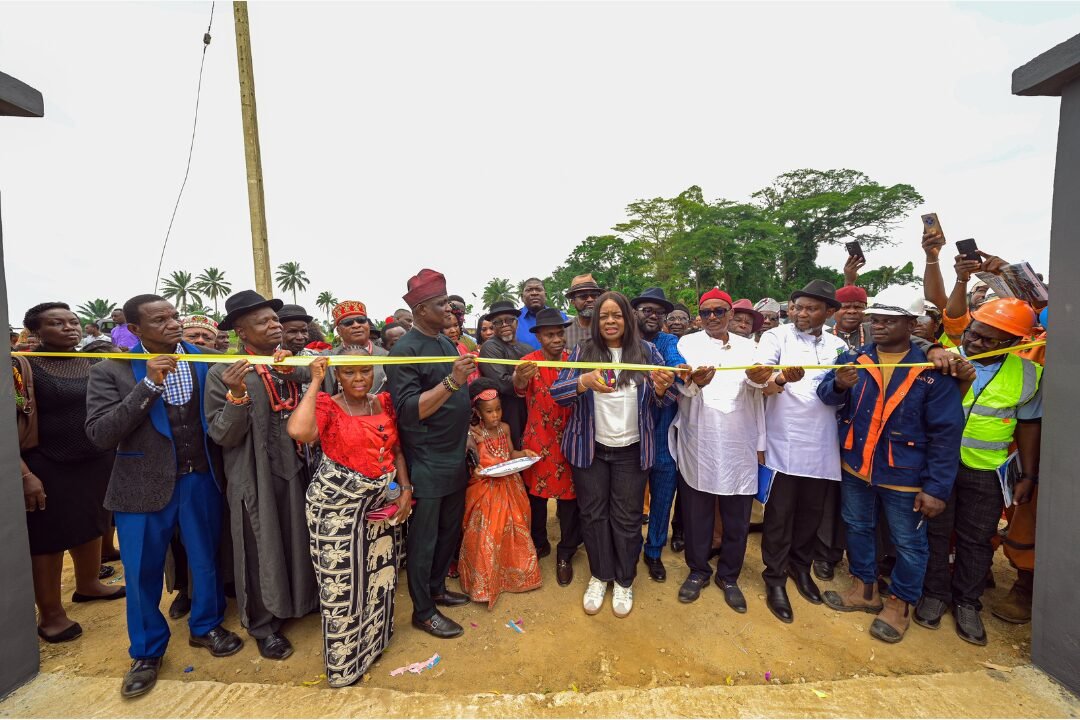
NLNG Commissions 6.5-Ton LPG Facility in Rumuji to Reduce Deadly Household Air Pollution
Nigeria LNG Limited (NLNG) has commissioned a 6.5-ton liquefied petroleum gas (LPG) dispensing facility in Rumuji, Emohua Local Government Area of Rivers State, to improve access to cleaner cooking energy and reduce the severe health risks associated with household air pollution from firewood and kerosene.
The project was executed in partnership with the Rumuji Cluster Development Foundation under the company’s Global Memorandum of Understanding (GMoU) framework.
Speaking yesterday at the commissioning, Sophia Horsfall, NLNG’s General Manager for External Relations and Sustainable Development, described the facility as a practical step toward protecting community health through collaborative development. She emphasised that the initiative forms part of NLNG’s broader efforts to address energy poverty and promote sustainable livelihoods in host communities.
Yemi Adeyemi, Manager for Community Relations and Sustainable Development, also spoke at the event, highlighting the rewarding progress made by previous beneficiaries who received grants and training under the same programme.
The facility is expected to help residents move away from biomass fuels and kerosene, which produce high levels of harmful smoke. According to the World Health Organization, household air pollution from incomplete combustion of solid fuels and kerosene caused an estimated 2.9 million premature deaths globally in 2021, including over 309,000 deaths among children under five. In Nigeria, indoor smoke from traditional cooking methods is linked to more than 100,000 premature deaths annually, with women and young children bearing the heaviest burden due to prolonged exposure near cooking fires.
This latest project aligns with NLNG’s wider sustainability goals, as the company supplies a substantial portion of Nigeria’s domestic LPG market — meeting roughly 40 percent of national demand. The Rumuji station adds to other GMoU interventions in the cluster, including road infrastructure, student scholarships, housing projects, and economic empowerment programmes for women farmers.
Local leaders and community representatives attended the commissioning, which featured demonstrations of the facility’s safety features and operations. NLNG described the development as another milestone in its commitment to enabling host communities to shape their own sustainable future through practical, demand-driven interventions.
