
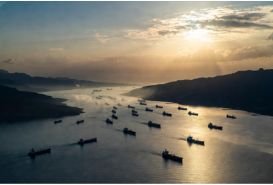
Iran Suspends Tanker Traffic in Strait of Hormuz Following Israeli Airstrikes on Hezbollah in Lebanon
Iran has suspended tanker traffic through the Strait of Hormuz in response to Israeli airstrikes on Hezbollah targets in Lebanon, a move that immediately tests the durability of the newly announced two-week ceasefire between Tehran and Washington.
Iranian state media, including Fars News Agency, report that the suspension follows what Tehran describes as violations of the spirit of the truce. This decision came hours after Iran declared a conditional ceasefire with the United States, which included provisions for coordinated safe passage through the strategically vital waterway.
Under the agreement, Iran had agreed to allow shipping to resume in exchange for a halt in US and allied strikes on Iranian targets. The suspension effectively reverses that commitment in protest against continued Israeli operations in Lebanon.
Israeli forces conducted what the Israel Defense Forces described as one of the largest waves of airstrikes against Hezbollah since the current escalation began. Targets included command centres, intelligence headquarters, rocket and naval infrastructure, and positions in Beirut, the eastern Beqaa Valley and southern Lebanon.
Lebanese authorities reported dozens killed in Beirut, with additional fatalities in Sidon and Tyre. The Israeli strikes occurred despite the US-Iran ceasefire announcement, which was mediated in part by Pakistan.
Pakistani Prime Minister Shehbaz Sharif claimed the truce also covered Lebanon, but both Israeli and US officials rejected this interpretation, insisting that operations against Hezbollah remain independent.
Meanwhile, Hezbollah urged civilians not to return to southern Lebanon or Beirut’s southern suburbs before an official ceasefire for Lebanon is declared.
US Defense Secretary Pete Hegseth, speaking at a Pentagon briefing, reinforced Washington’s position on Iran’s nuclear programme. He stated that Iran must surrender its stockpile of enriched uranium “voluntarily,” warning that the United States reserves the right to take it by force if necessary.
Hegseth described full removal and verification of the material as “non-negotiable.” President Donald Trump had earlier criticised unauthorised individuals circulating agreements and letters related to the negotiations, describing them as fraudsters and charlatans. He emphasised that only a specific set of points acceptable to the United States would form the basis of any ceasefire.
The Strait of Hormuz is one of the world’s most critical energy arteries, carrying roughly one-fifth of global seaborne oil and significant volumes of liquefied natural gas. Any disruption has immediate consequences for energy prices, shipping insurance costs and global supply chains. Oil markets, which had eased on news of the ceasefire, are expected to react sharply to the suspension. Iran has previously used the strait as leverage during periods of heightened tension.
Since the broader conflict intensified, the Islamic Revolutionary Guard Corps has selectively enforced transit rules, attacked or warned vessels, and demanded compensation for alleged war damages. Daily transits, which once averaged over 100 vessels, had already dropped dramatically in recent weeks.
The latest suspension adds to the complexity of the fragile ceasefire. While the US-Iran agreement aimed to create a two-week confidence-building period for technical coordination and further negotiations, the continued Israeli campaign in Lebanon and Iran’s retaliatory measure illustrate how interconnected the regional conflicts remain.
Hezbollah has claimed it is on the cusp of victory and has paused its own attacks on Israel, giving mediators time to secure a broader truce. However, the group has not publicly committed to the ceasefire, citing Israel’s continued operations.
Diplomatic efforts are expected to intensify, with delegations potentially heading to Islamabad for talks on a more permanent settlement. The two-week window is now under significant strain as both sides maintain firm positions on core issues, including Iran’s nuclear activities and its support for regional proxies.
Global energy markets and shipping companies will be closely monitoring developments, as a prolonged suspension could force further rerouting of vessels, increase costs and prompt strategic petroleum reserve releases in affected countries.
The human cost in Lebanon continues to mount, with hundreds of thousands displaced and significant casualties reported from the latest strikes. As events unfold rapidly, verification from multiple independent sources, including maritime tracking data and official statements, will be essential to assess the true extent of the suspension and its potential impact.
The situation remains fluid, with the risk of further escalation if the fragile ceasefire cannot withstand the pressure from ongoing operations in Lebanon and competing interpretations of its scope.
