
U.S. State Department Authorizes Departure of Non-Emergency Personnel from Embassy in Abuja
The United States Department of State has authorized the voluntary departure of non-emergency U.S. government employees and their family members from the U.S. Embassy in Abuja, citing a worsening security situation across Nigeria.
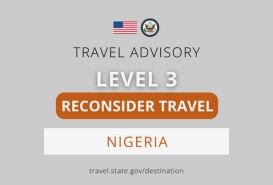
The decision, announced on April 8, 2026, does not alter the country’s overall Travel Advisory Level 3 (“Reconsider Travel”), but it expands “Do Not Travel” (Level 4) designations to additional states.
According to the U.S. Embassy in Abuja, the embassy will remain open but will operate with reduced capacity for emergency services to American citizens. The U.S. Consulate General in Lagos will continue to provide routine and emergency consular support.
Officials stated that the authorized departure will be reviewed regularly based on security developments. The travel advisory continues to highlight risks from crime, terrorism, civil unrest, kidnapping, armed gangs, and inconsistent access to healthcare.
This update adds Plateau, Jigawa, Kwara, Niger and Taraba states to the “Do Not Travel” category, bringing the total number of restricted areas to around 23, depending on how sub-regions are defined. The advisory notes that violence, including attacks by armed groups, can occur unpredictably in many parts of the country, with limited ability for the U.S. government to assist. Travelers are urged to review the full advisory on travel.state.gov for detailed risk assessments by region.
This is not the first time the U.S. has taken such measures. A similar authorized departure was issued in 2022 due to heightened terrorist threats, reflecting persistent U.S. concerns about Nigeria’s security environment. Nigeria faces multiple, overlapping security challenges.
In the northeast, groups such as Boko Haram and its splinter faction, Islamic State West Africa Province (ISWAP), continue to carry out attacks, though at a lower intensity than in previous years. These groups have killed tens of thousands and displaced millions since 2009.
In the northwest and north-central regions, armed bandit groups engage in cattle rustling, village raids, highway ambushes and mass kidnappings for ransom. Such incidents have surged in recent years and have spread into previously less-affected areas. Communal violence between farmers and herders, often exacerbated by competition over land and water resources, remains a major source of conflict, particularly in states like Plateau, Benue and Taraba.
These clashes frequently take on ethnic or religious dimensions and have led to significant loss of life and internal displacement. The authorized departure signals serious concern about the Nigerian government’s ability to guarantee security, even in the capital. Abuja has generally been considered relatively safer than many northern states, but spillover risks from banditry, kidnapping and potential terrorism have increased.
For American citizens and other travelers, the update means they should exercise extreme caution, avoid Level 4 areas entirely, enrol in the Smart Traveler Enrollment Program (STEP) for updates, and prepare independent evacuation and medical plans. Healthcare access outside major cities is often unreliable, with many facilities requiring upfront payment.
The U.S. advisory also notes that foreigners may be targeted by terrorists at crowded or symbolic sites. Past incidents, including threats to U.S. facilities and schools, have prompted heightened vigilance.
Although Nigerian authorities have conducted military operations against bandits and insurgents, challenges persist due to vast ungoverned spaces, allegations of corruption in some security sectors, and the adaptive nature of criminal networks. The advisory update adds to domestic and international criticism of security policies.
Some view the advisory as an indictment of governance failures, while others question the timing or motives. Economically and diplomatically, repeated high-level security warnings can deter investment, tourism and business travel, compounding existing challenges from inflation, unemployment and infrastructure gaps.
Instability in Nigeria, Africa’s most populous nation and a major oil producer, also has regional implications. The situation remains fluid, as the U.S. Embassy advises monitoring official channels for updates.
