
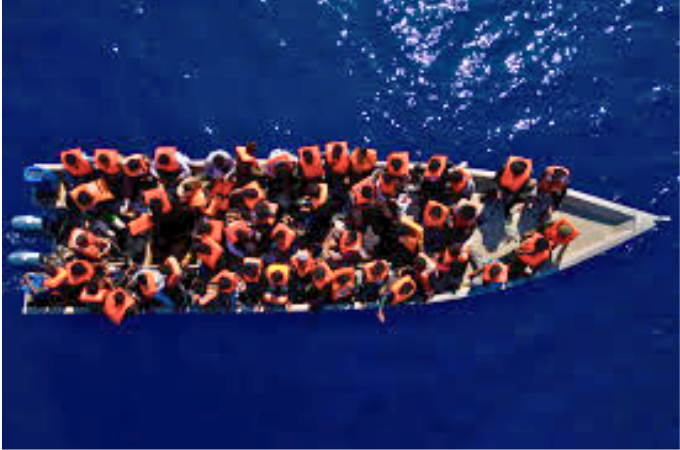
IOM: 53 Dead or Missing Off Libya; 2 Nigerian Women Rescued After Boat Capsizes
Fifty-three migrants, including two babies, are dead or missing after a rubber boat carrying 55 people capsized off the coast of Libya on February 6, 2026.
The International Organization for Migration (IOM) confirmed the tragedy on February 9, 2026, describing it as the latest deadly incident on the Central Mediterranean route – one of the world’s most dangerous migration corridors.
According to survivor accounts, the vessel departed from Al-Zawiya, Libya, at around 11:00 p.m. on February 5, 2026. Approximately six hours later, it capsized north of Zuwara after taking on water. Only two Nigerian women were rescued during a search-and-rescue operation by Libyan authorities. One survivor reported losing her husband, while the other said she lost her two babies in the incident.
IOM teams provided the two survivors with emergency medical care upon disembarkation, in coordination with relevant authorities. The organization mourned the loss of life and renewed calls for stronger international cooperation to address smuggling and trafficking networks exploiting migrants along the route.
IOM Missing Migrants Project Data
According to IOM’s Missing Migrants Project, more than 1,300 migrants went missing in the Central Mediterranean in 2025. The February 6 incident brings the number of migrants reported dead or missing on the route in 2026 to at least 484. In January 2026 alone, at least 375 migrants were reported dead or missing following multiple “invisible” shipwrecks amid extreme weather, with hundreds more deaths believed to be unrecorded due to lack of witnesses or recovery.
Central Mediterranean Migration History
The Central Mediterranean route — connecting North Africa (primarily Libya and Tunisia) to Italy and Malta – has been one of the deadliest migration corridors in the world for over a decade. IOM data (updated Missing Migrants Data, 2026) show:
-
2014–2016: Peak crisis years, with over 1 million arrivals in Italy and more than 10,000 deaths recorded.
-
2017–2019: Sharp drop in arrivals after EU-supported Libyan Coast Guard interceptions and Italy’s port closure policies, but death rate remained high due to unseaworthy vessels.
-
2020–2021: COVID-19 restrictions reduced crossings, but 2021 saw a resurgence with over 67,000 arrivals and 1,500+ deaths.
-
2022–2025: Arrivals fluctuated (around 150,000–180,000 per year), but deaths stayed elevated due to smuggling networks using flimsy rubber boats, extreme weather, and limited SAR capacity. Over 8,000 deaths or missing persons were recorded in this period.
Libya remains the primary departure point due to instability, weak governance, and the presence of smuggling networks that exploit migrants from sub-Saharan Africa, the Middle East, and beyond. Most victims are from Nigeria, Sudan, Eritrea, Somalia, Gambia, and other countries, fleeing conflict, persecution, poverty, or climate impacts.
IOM stresses that trafficking and smuggling networks continue to profit from dangerous crossings in unseaworthy boats while exposing people to severe abuse, detention, and protection risks in Libya. The organization calls for stronger international cooperation, protection-centered responses, dismantling of trafficking networks, and safe and regular migration pathways to reduce risks and save lives.
The Central Mediterranean remains one of the deadliest migration routes globally, with cumulative deaths exceeding 25,000 since 2014 according to IOM records.
