
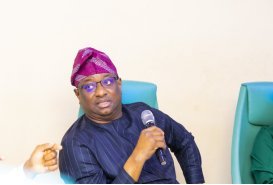
Keyamo Announces Presidential Approval for Airline Debt Waiver and Committee on Aviation Charges
The Federal Government of Nigeria has indicated its readiness to waive a significant portion of the debts owed by domestic airlines to key aviation agencies as part of immediate measures to ease the impact of the sharp rise in the price of aviation fuel.
Minister of Aviation and Aerospace Development, Festus Keyamo, disclosed the development during a high-level meeting with airline operators in Abuja on Wednesday evening. Keyamo said he had briefed President Bola Ahmed Tinubu on the outcome of the meeting and received directives to prepare a formal request for debt relief.
The minister quoted the President as expressing deep concern over the difficulties facing the sector and appreciation for airline operators who had refrained from increasing ticket prices despite the crisis. “The first request that he will consider and grant is a generous discount on the debts the airlines are owing the aviation agencies – NAMA, FAAN, NCAA, and so on,” Keyamo stated. He added that the exact percentage of the discount would be determined by the President.
Keyamo further revealed that President Tinubu had directed the setting up of a committee to review and possibly remove some government levies, taxes and fees currently imposed on domestic air tickets. The committee is expected to submit its report within a short timeframe to provide immediate relief to both operators and passengers.
The minister also mentioned that the President would consider granting airline operators a direct audience for more comprehensive discussions on access to affordable capital and other long-term challenges facing the industry.
Chairman and Chief Executive Officer of Air Peace, Allen Onyema, who spoke at the meeting, attributed the current difficulties primarily to the disproportionate increase in the price of Jet A1 fuel. He noted that the cost had risen from about N900 per litre in late February to over N3,300 per litre in recent weeks – an increase of more than 300 percent – which he described as unsustainable. Onyema pointed out that the surge far exceeded the global rise in crude oil prices, even after the recent tensions in the Strait of Hormuz. “After the Hormuz blockade, crude oil rose by 20 percent, but in Nigeria, Jet A1 increased by about 300 percent,” he said.
The airline chief explained that operators had been forced to borrow heavily from banks just to purchase fuel, leaving little for essential maintenance and other operational needs. The Airline Operators of Nigeria had earlier threatened to suspend operations nationwide from April 20 due to the fuel crisis. The threat was temporarily suspended following appeals from the minister, pending further dialogue with the government.
Onyema expressed gratitude for the President’s intervention, describing Tinubu as a “businessman president who is very responsive and listening.” He recalled that the government had previously removed the four percent Free On Board charge on aircraft imports within 24 hours of a request. While welcoming the proposed debt waiver, Onyema called for a total waiver of all outstanding debts owed by airlines to government agencies and a suspension of further payments until the situation in the Strait of Hormuz stabilises.
He also urged the President to adequately fund the Bank of Industry to enable it to provide single-digit or low double-digit interest loans to the sector, noting that current commercial borrowing rates of 30 to 35 percent were crippling the industry. The meeting highlighted the severe strain the fuel price hike has placed on domestic carriers.
Operators warned that without urgent intervention, they would be unable to sustain operations while maintaining required safety standards. Aviation industry stakeholders have long complained about the multiple layers of government charges and levies that add to the cost of doing business in the sector. The planned committee is expected to identify which of these can be suspended or removed to make domestic air travel more affordable for Nigerians.
Meanwhile, Nigeria’s aviation safety rating recently improved significantly, scoring 91.4 percent in the latest International Civil Aviation Organisation audit, according to the minister. President Tinubu’s intervention is seen as a demonstration of the administration’s commitment to supporting critical sectors of the economy.
As details of the debt waiver percentage and the composition of the review committee emerge in the coming days, airline operators and passengers alike will be watching closely to see how quickly relief measures are implemented.
